Kisumu Nurse Spotlight: Everline Oruko

Kisumu Nurse Spotlight: Everline Oruko

Everline Oruko is a nurse at Migosi sub-County Hospital, one of three sites in Kisumu, Kenya, that offers cervical cancer screening and treatment. As the Nursing Officer in Charge, Everline leads a team of nurses and staff to improve uptake of cervical cancer screening and cryotherapy treatment for those who test positive. Despite many fits and starts, Everline has remained a constant in the effort to reduce cervical cancer among women in Kisumu. Our Kisumu site coordinator, Faith Otewa, sat down with Everline to talk about her job and her commitment to her work in cervical cancer prevention: Everline was first employed by the Ministry of Health at Ahero Health Facility after she graduated in 1993 with a Diploma in Nursing. She further enrolled for certificate courses in Counseling and HIV Testing Services (HTS) because she felt these would make her service delivery better. Everline then became sponsored for a course in counseling supervision because of her commitment at work. Upon...
Read More
It’s a Jungle Out There!

It’s a Jungle Out There!

I was recently given the opportunity to attend DGHI's Regional Partners Workshop “Developing Collaborative Approaches to Global Mental Health and Maternal and Child Health Research" in Nairobi Kenya. The goal in convening this conference was well communicated in the opening remarks by Duke Global Health Institute Director, Dr. Chris Plowe. He told us that the workshop was to be a forum for partners to build skills, share knowledge, and identify new opportunities to work together. I looked around the room bursting with seasoned global health professionals, faculty, researchers, and doctors and couldn't help but think of myself as a “tiny animal in a big jungle" and wonder how well I would meet these goals. But after three days of consuming dense information from presentations and break-out sessions, I found that I had learned a lot in the big jungle, and that my experience was well worth sharing - especially with younger staffers who may be unsure of how to navigate the jungle...
Read More
Continuous Medical Education at Migosi Sub-County Hospital in Kisumu, Kenya

Continuous Medical Education at Migosi Sub-County Hospital in Kisumu, Kenya

Migosi Sub-County Hospital is a government level 4 hospital situated in Migosi sub-location of Kisumu County. The hospital is staffed with a Medical Officer Superintendent, Nursing Officer, Lab Technologists, Clinical Officers, Pharmacy Technologist, Support Staff, HTS Service Providers, Peer Counselors, and a Nutritionist. The facility has a catchment population of over 20,000 and is expected to provide services to over 5,000 women of reproductive age per year. Some of the services offered include Antenatal, MCH services, Anti-Retroviral Therapy, Family Planning, Home-based Care, Basic Emergency Obstetric Care, and Inpatient care. The Hospital has strengthened its cervical cancer department and has been in the forefront of beating cervical cancer. The department embraces a “see and treat” slogan and uses the Visual Inspection with Acetic (VIA) method and treatment by means of cryotherapy. The Hospital has intensively engaged Community Health Volunteers (CHVs) who take advantage of any chance to urge women to come for cervical cancer screening. On 14/02/2019 Dr. Phil Gorrindo visited the facility to...
Read More

Learning about Global Mental Health, and Teamwork, in Haiti

Blogpost by Alex Lichtl, T'19 During the summer of 2017 I traveled to Léogane, Haiti where I, and a team of student researchers, spent two months collecting data on women’s stressors in the community through a Duke SRT program. As a team, we had very little global health research experience, but after one week of orientation we were left on our own to recruit community leaders for interviews and organize focus groups for a project entitled "Mental and Reproductive Health Interventions for Haitian Women: Adapting strategies from community input on coping with stress." At first we were extremely lost, but with the help of our translator team and a lot of perseverance, we managed to reach our data collection goal. We were also fortunate because the women and men we worked with in the community were incredibly welcoming and open to sharing their life experiences regarding reproductive health. Overall, we asked women and men in the community about women’s stressors and coping...
Read More
Community Impacts of Maternal Child Health Care in Kigali, Rwanda

Community Impacts of Maternal Child Health Care in Kigali, Rwanda

Guest Blog by Suzanna Larkin, T21 The Iranzi Clinic is a pioneering medical clinic in Kigali, Rwanda that focuses entirely on maternal and child health services. As an intern through DukeEngage-Rwanda this past summer, I worked directly alongside the midwives, doctors, and administrative staff that have made Iranzi Clinic their home. Only opened one year ago, the clinic is situated on the edge of the impoverished Nyabisindu neighborhood. Many of the women who visit the clinic are unable to pay for their services, and thus the clinic relies primarily on support from the Christian Life Assembly Church and donors. The commitment that the midwives and staff hold for their patients and clinic is clear. Every Monday, the clinic has a devotions session followed by a tea time, and the scene is joyous­–any observer can notice the deep and genuine friendships that grew between the staff members as they built the clinic from the ground up. Their anecdotes about the clinic’s history, from...
Read More

Ensuring Health Care for All in Kenya

According to the World Health Organization (WHO), Universal Health Care (UHC) is aimed at ensuring that all people are able to receive medicine and treatment without suffering financial hardships. Kenya is working to implement this healthcare strategy, with the goal of allowing more Kenyans access to healthcare in public health facilities. Additionally, Kenyans will be able to access the same services in private hospitals without digging very deep into their pockets. Despite this bold move by the Kenyan President to create affordable healthcare for all, human resources, finance, essential medical products, technologies and service delivery remain challenges. The story of a woman under the alias of “Dorothy” exemplifies the financial challenge in assessing care at treatment sites. Dorothy was enrolled in a study looking at integrating HPV testing into community health campaigns, and was ultimately referred to a selected health facility in Kisumu where she was booked for treatment. After she received treatment, she further was referred for biopsy testing. But,...
Read More
Notes from the Field: Dissemination Meeting for a Community Health Volunteer Study

Notes from the Field: Dissemination Meeting for a Community Health Volunteer Study

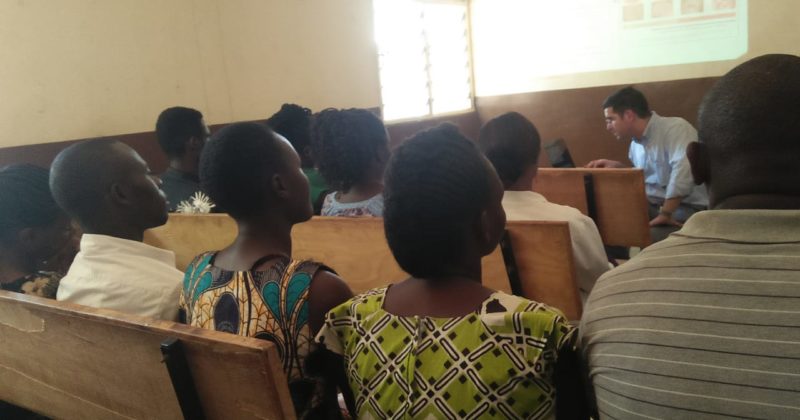
The Center for Global Reproductive Health's Research Coordinator, Yujung Choi, and I held a dissemination meeting on October 19th to share the findings from one of our studies. The study describes the characteristics, motivations, and experiences of community health volunteers (CHVs) in Kisumu county, and looks to understand CHV knowledge and self-efficacy of reproductive health counseling and services. The purpose of the meeting was to share the study outcomes with key stakeholders and elicit feedback in order to inform future interventions to measure CHV performance and increase CHV retention rates. Among those who attended the meeting were CHV supervisors who had participated in the study, Sub-County Community Health Strategy Focal Persons, a former study staff, and a Program Officer from the NGO Community Initiatives Concerns. We summarized the study findings on various topics, including: -CHVs’ reasons for becoming CHVs -CHV level of comfort in teaching health topics such as family planning -child care and nutrition -HIV, malaria, and cervical cancer -challenges in carrying out daily tasks -relationship...
Read More
Embracing My Role as a Researcher – Sharing My Small Slice of the HPV Research Pie

Embracing My Role as a Researcher – Sharing My Small Slice of the HPV Research Pie

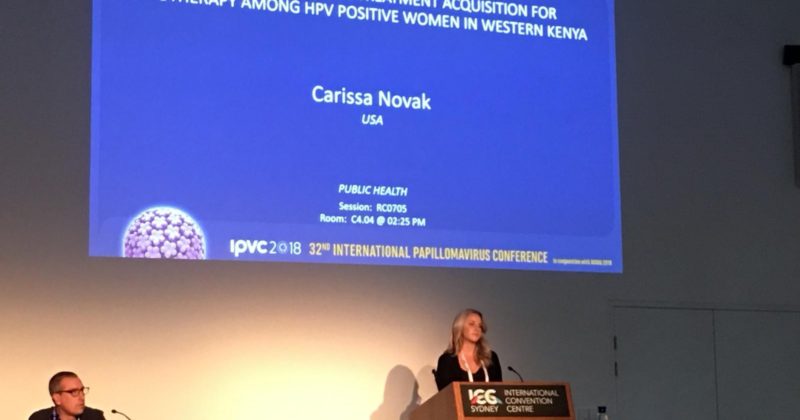
Guest Blog: Carissa Novak Throughout my recently completed Masters in Global Health Science, Duke’s Global Health Institute faculty regularly stressed the importance and potential impact of disseminating research findings. Therefore, I felt presenting the research findings from my thesis at the 32nd International Papillomavirus Conference inSydney, Australia, this fall was not only appropriate but necessary. Due to ongoing conversations regarding HPV vaccination coverage and HPV screening for cervical cancer communities are witnessing a tremendous increase in screening rates, especially in low-resource settings, where cervical cancer is most common. However, most programs still face significant challenges in addressing HPV positive women’s low rates of follow-up and treatment. My attendance at the conference was an opportunity to share the findings of my thesis work, in which we found that in western Kenya, a setting where resources were limited for all HPV positive women, stigma and isolation were the main differentiating features between women who accessed follow-up and those who did not. Interestingly, I presented...
Read More
Notes from the Field: Equipping Kenya County Health Facilities Remains a Challenge

Notes from the Field: Equipping Kenya County Health Facilities Remains a Challenge

Cryotherapy is a method used to destroy precancerous cells to keep them from turning into cancer later on. According to medical experts, early detection and treatment of cervical cancer has demonstrated to dramatically improve the chances of survival. This is good news, as cervical cancer remains the most prevalent form of cancer in women in many developing countries, Kenya included and worst more to HIV+ women who are more likely to suffer from this type of cancer due to compromised immunity. There have been concerted efforts by both the Kenyan government and the private sector to raise awareness and scale up screening and treatment services across the country, which has led to a steady rise and improvement in treatment facilities. The ability of a patient to attend a screening clinic and to return to clinic follow-up evaluation and possible treatment is an important component to the success of a screening program.  Once she surpasses the myriad barriers she may face in understanding...
Read More

Notes from the Field: “If only I stepped up to the gate of a school” life could have been better

Reproductive health remains a health problem in Sub-Saharan Africa, Kenya included. Unless efforts to reduce maternal and newborn mortality and morbidity, improving access to family planning, and preventing HIV infection are scaled up, the majority of Kenyans remain at risk for poor health outcomes. Women face unsafe abortions, early marriage, and various forms of gender-based violence. They suffer silently from sexually transmitted diseases that make them vulnerable to cervical cancer and infertility, without access to the simple preventive measures like screening and vaccination. My experience working directly in the community and in health facilities has given me the opportunity to interact with various partners and many disadvantaged young men and women. Listening to their stories of teenage pregnancy, their beliefs in myths related to use of contraception, and experiences with HIV has made me keen to understand and try to address issues related to reproductive health. I met "Aisha" (not her real name) when her child was enrolled in a study I...
Read More