HPV Vaccine Launch in Kisumu, Kenya

HPV Vaccine Launch in Kisumu, Kenya

Article by: Sandra Y. Oketch The launch of the HPV vaccination into the routine immunization schedule available for all 10-year old girls from September 2019 onward is a great milestone for Kenya. The Kisumu County launched the HPV vaccine Program on October 25th, 2019 at the Kisumu County Referral Hospital, accompanied by several activities such as HPV health information, speeches and educational entertainment. The Chief Guest of honor was Dr. Dickens Onyang, the Kisumu County Director of Health Services. Onyango voiced that the vaccine has been successfully included in the healthcare cascade of all Government of Kenya health facilities, and that the Ministry of Health will work hand in hand with the Ministry of Education and all other partners to ensure an effective and efficient implementation of the program. He reiterated the benefits of the launch stating, “The HPV vaccine is the silver bullet to prevention of cervical cancer that will greatly reduce the cervical cancer burden as has been in the 115...

Read More

Sandra Oketch: The Voice of Cervical Cancer Prevention in Kisumu County

Sandra Oketch, the Kisumu Research Director for the Center has been making the rounds of the radio talk shows to share information about human papillomavirus testing in anticipation of this week’s cancer awareness activities. During this media blitz, Oketch has been speaking on radio shows in Luo, Kiswahili and English, she is working with key members of the Ministry of Health to raise awareness of cervical cancer, educate women on their risk and how to get screened. Activities will include in-person education, screening and a cancer awareness walk on the second and third of October. Key stakeholders will take advantage of the momentum to convene of meeting of partners actively engaged in cancer prevention and treatment to help develop a cancer prevention alliance that works synergistically, without duplication of activities. The First Lady of Kisumu, Dorothy Nyong’o, long a supporter of cancer control activities in the region, has promised to serve as a patron for the Kisumu County Cancer Alliance....
Read More
Trump, Faith, and Reproductive Healthcare

Trump, Faith, and Reproductive Healthcare

This summer I worked as a Legislative Assistant on the Government Relations, Advocacy, and Community Engagement (GRACE) team at the Anti-Defamation League (ADL) in Washington, DC.  The mission of the ADL is to stop the defamation of the Jewish people and secure justice and fair treatment for all. Among the organization's core policy issues is protecting religious freedom by ensuring separation of Church and State. The ADL advances separation of Church and State by filing amici briefs in nearly every religious freedom case. Moreover, the ADL supports legislation such as the Do No Harm Act that ensures religious freedom cannot be misused to discriminate. Throughout my internship, I had the opportunity to attend hearings, write blog posts, and write public comments in response to different issues related to religious freedom such as LGBTQ equality and access to healthcare. Throughout college, my policy interests have been focused on domestic and global women’s health issues. My passion for reproductive health is rooted in...
Read More
What I Learned

What I Learned

It’s been about a month since I returned from Kisumu, where I spent eight weeks working on the development of an mHealth pilot study at the Duke Center for Global Reproductive Health. I really feel that I gained so much out of those two months, and I’m hoping to bring these lessons with me to my senior year at Duke. I was able to experience what it really means to do research in the field, and that a lot of the time this means being flexible and prepared for plans to constantly change. The local team at the Center taught me the importance of communication and planning ahead, but how to also be ready for scheduling changes when working with outside teams. More than that though, the team showed me how easily one can feel connected to a new group of coworkers that welcome you with open arms. I think I speak for myself and the rest of the SRT...
Read More
Learning Backwards

Learning Backwards

I traveled this summer to Kisumu, Kenya expecting to work on a project we had poured hours of work into through the Center for Global Reproductive Health. After much time spent discussing our project, conducting literature reviews, and finalizing on our in-depth interview guides, it was disappointing to learn that we would not have our necessary IRB approvals for our project until after our departure from Kisumu. While we are glad to know that our project is in amazing hands here at the Center for Global Reproductive Health, it was frustrating to come to terms with the fact that we would not be the ones to carry out the interviews we had worked so hard on. As I look back on my summer, I am compelled to reflect on why this change of plans changed my trip for the better. Much discussion around research, especially when it comes to global health research, focuses on the importance of flexibility. Figuring out what...
Read More
Learning Lessons the Harder Way

Learning Lessons the Harder Way

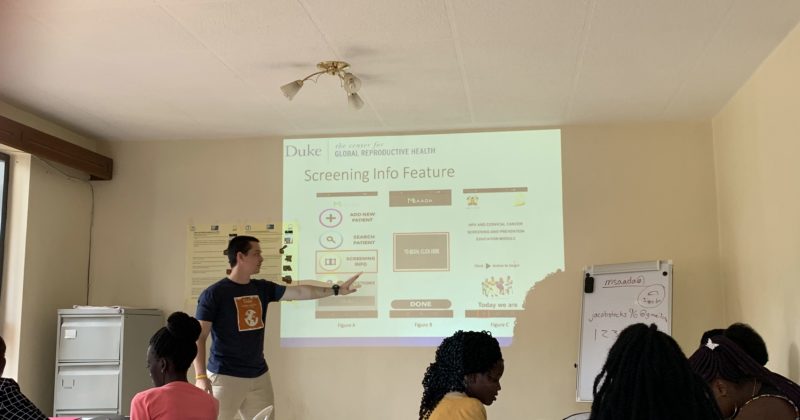
Fieldwork is all about learning, and sometimes that means learning things the hard way. My summer in Kenya taught me a lot about app development, about the process of global health research, and, of course, about myself.  My apologies to those of you who have been following the student pieces throughout the summer, but I’ll give a quick summary of my thesis project for first time readers: mSaada is a mobile phone application intended for use by community health volunteers (CHVs) during cervical cancer screening in Western Kenya. The app has multiple features including patient education and counseling materials, protocol support for CHVs, and patient data collection capabilities, to name a few. We hope the app will increase patient understanding of HPV and cervical cancer and act as an efficient and effective resource for CHVs throughout the screening process, leading to greater uptake of cervical cancer screening and treatment services and ultimately improved health outcomes for Kenyan women. Since the app...
Read More
Post-Abortion Care in Kenya

Post-Abortion Care in Kenya

Abortion is a loaded term in the United States, conjuring up many years of history and debate from political, medical and social contexts. However, in Kenya, there are even more challenges around perception of and access to abortion and post-abortion care services. In 2010, the new Kenyan Constitution legalized abortion when a provider deems that life or health of a woman are in danger. Although this is less restrictive than previous legislation, abortion is generally considered illegal throughout the country. While post-abortion care has always been legal in Kenya, it remains stigmatized, particularly because most often post-abortion care occurs after unsafe abortions that are occurring in the community due to the current restrictive policies. Indeed, post-abortion care guidelines were restricted from use for a number of years due to worry that the post-abortion care guidelines would help individuals perform these services illegally and were just re-released in February of this year back to health facilities throughout the country. Despite the...
Read More
Learning Backwards

Learning Backwards

We came to Kisumu, Kenya expecting to work on a project we had poured hours of work into. After much time spent discussing our project, conducting lit reviews, and finalizing In-depth Interview questionnaires, it was disappointing to learn that we would not have our necessary approvals for our project until after our departure from Kisumu. While we are glad to know that our project is in amazing hands here at the Center for Global Reproductive Health, it was frustrating to come to terms with the fact that we would not be the ones to carry out the interview guides we had worked so hard on. As our time in Kisumu comes to a close, however, I am compelled to reflect on why this change of plans changed my trip for the better. Much discussion around research, especially when it comes to global health research, focuses on the importance of flexibility. Figuring out what to do when plans change and how to...
Read More
Putting the Clinical Back in Research

Putting the Clinical Back in Research

Choosing to come back to Kisumu, Kenya for my resident research project was an easy decision. I had worked in Kisumu over multiple years in medical school through the University of California, San Francisco – Family AIDS Care and Education Services, and had always known I wanted to return to continue to build on those relationships I had formed over the prior years. My research project, “Clinical Knowledge of Essential Maternal and Child Health Services in Kenya” involved interviewing health providers in Kisumu, Homa Bay, and Migori counties in western Kenya about their commodities, training, and knowledge around four maternal and child health topics – pre-eclampsia, postpartum hemorrhage, post-abortion care, and neonatal resuscitation. As I was awaiting my elective block, I looked forward to transitioning back into a research role after primarily focusing on my clinical work for the past two years during residency. Once I arrived, I realized that untangling my research and clinical roles was not as easy as...
Read More
Three Tips for when Research Plans Change

Three Tips for when Research Plans Change

This summer, I embarked on a trip to the lakeside city of Kisumu, Kenya to work with Dr. Megan Huchko and the Center for Global Reproductive Health on the development of a survey tool to measure cervical cancer and HPV stigma among HIV-positive women and health care providers. The first step in the research study would involve in-depth interviews (IDIs) to develop a framework for our survey tool. In preparation during the spring semester, fellow researcher Emma Mehlhop (T’21) and I produced four IDI guides which would lead the interviewers through our exploratory questions, and we even attended a training on qualitative interviews. I was eager to see our preparatory work come to fruition during the summer, as I was certain the study would continue moving forward at our intended pace. When our study on cervical cancer stigma had hiccups with the IRB approval and left us unable to move forward with the IDIs, Emma and I joined another study --...
Read More