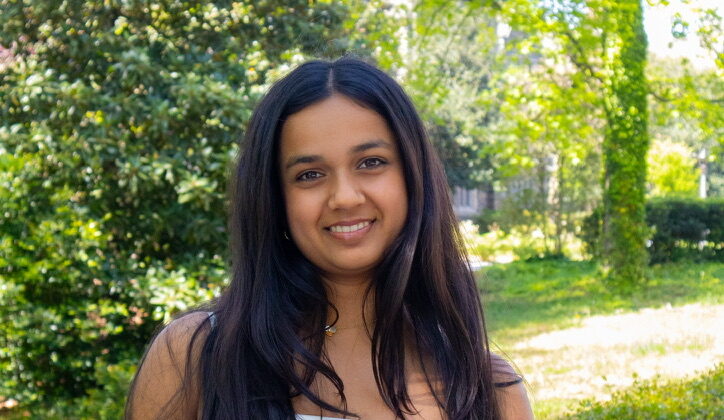
Meet Divya Subramanian, 2026 SRT Program

Meet Divya Subramanian, 2026 SRT Program

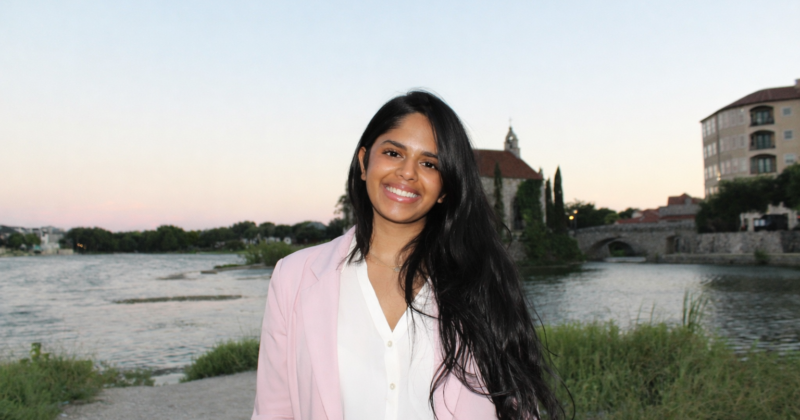
Divya Subramanian is a sophomore in Program II, studying Global Health Policy and Reproductive Health. Divya will be travelling to Kisumu with the 2026 SRT cohort in a few weeks! Question: What about your upcoming trip to Kenya are you most looking forward to? Answer: I am most excited to work with the research assistants and community health promoters who are working with mSaada in Kisumu. I am eager to learn how Kenya’s health system navigates reproductive health stigma at the clinic level, and how much this context shapes how effective mobile health tools like mSaada are. I look forward to hearing directly from patients and providers about their experiences with mSaada, as it will inspire our sustainability and implementation work. Beyond research, I am looking to build relationships with the Kisumu team and learn firsthand what global health research looks like!   Q: What sparked your interest in global health? A: I became interested in global health after learning about my grandmother’s experiences with...
Read More
Meet Navya Kancharla, 2026 SRT Program

Meet Navya Kancharla, 2026 SRT Program

My name is Navya Kancharla, and I am currently a junior at Duke, majoring in Biology and minoring in Global Health and Chemistry on the pre-medicine track. During my time in Kenya, I am most excited to engage directly with women from diverse backgrounds and hear firsthand stories that will deepen my understanding of women’s health and the systemic barriers that shape access to health care. My interest in global health developed long before I knew a field existed that matched my interests. During one summer in Berkeley, California, I volunteered at a women’s homeless shelter where I worked alongside an incredible team to provide free meals, clothing, hygiene, contraceptives, and mental health support to local unhoused women and their families. It was the conversations with these women that stayed with me. I began to see health not as an absence of illness, but as a state of true well-being. For the first time, I felt like my initiative could truly...
Read More
Meet Isabella Banan, 2026 SRT Program

Meet Isabella Banan, 2026 SRT Program

Isabella Banan is a sophomore double majoring in Global Health and Biology with a concentration in Pharmacology. Isabella is headed to Kenya with the 2026 SRT cohort in a few weeks!   Question: What about your upcoming trip to Kenya are you most looking forward to? Answer: I am most excited to meet the team in Kisumu and learn from the people directly involved in the project. After spending the past semester learning about and discussing this work, I am really looking forward to seeing it in practice and better understanding how it all comes together.   Q: What sparked your interest in global health? A: I first became interested in global health during the fall semester of my freshman year when I took my first global health class at Duke. That course introduced me to the field, but more importantly, it challenged me to think about health as something shaped not only by biology and medicine, but also by broader social, economic, and structural forces....
Read More
Meet Gayathri Vanka, 2026 SRT Program

Meet Gayathri Vanka, 2026 SRT Program

Gayathri Vanka is a sophomore majoring in Biomedical Engineering with a certificate in Documentary Studies. Get to know this member of the 2026 SRT cohort headed to Kenya in a few short weeks! Question: What about your upcoming trip to Kenya are you most looking forward to? Answer: I’m looking forward to learning about a completely new culture and working on an interdisciplinary team with people I look up to. Q: What sparked your interest in global health? A: Growing up between Texas and India, I saw early on that healthcare looks completely different depending on where you're born and where you live. I came to Duke to study BME specifically because I wanted tools to help close those gaps. Q: What are you involved in outside of your studies? Can you tell us more? A: I'm on a Bass Connections team collecting oral histories from reproductive care providers post-Roe, and I do more oral history work with the Museum of Durham History. Outside of that,...
Read More
Menstrual Rhetorics and Reproductive Justice

Menstrual Rhetorics and Reproductive Justice

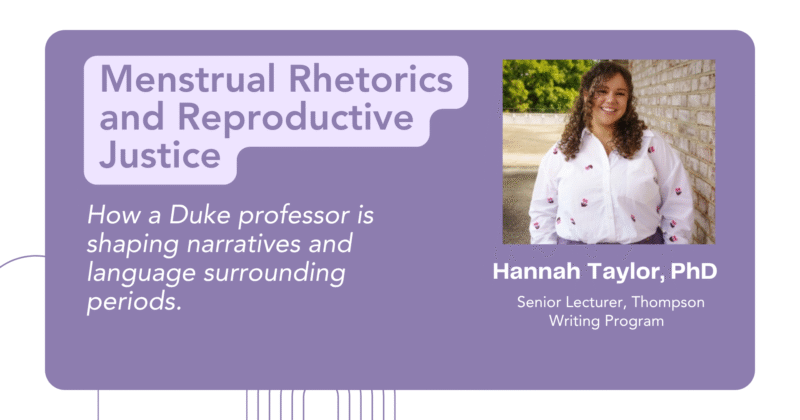
The afternoon my mother first told me I would get my period, we stood under the kind of Texas summer sun that threatened to peel off my skin. I was nine then: my crushes on boys were sexless and based upon who could run the quickest in our PE class. We floated in our slow-leaking inflatable fruit, and my mother told me I would bleed—that it happened so that I could have a baby one day. When we got home, a book sat on my bed: The Care and Keeping of You, with its pictures of vaginas and encouragement that puberty was normal. I was an “early bloomer,” by all accounts, and by the time my mother began to discuss puberty with me, little mounds of flesh were already budding on my chest. I brought the book to school, and my friends and I gathered beneath the swing set to guess what our adult bodies would look like.    It happened on...
Read More
Criminalizing Care: South Carolina’s Dangerous Proposed Total Abortion Ban 

Criminalizing Care: South Carolina’s Dangerous Proposed Total Abortion Ban 

Since the Dobbs decision stripped Americans of the constitutional right to obtain an abortion, 29 states have passed abortion bans based on gestational duration and 12 have passed total bans (Guttmacher Institute, 2025). Anti-abortion legislators in South Carolina are pushing to become the 13th, with a senate-proposed total ban to be heard in October. If advanced, this bill will exacerbate the region’s already extreme Ob-Gyn care deserts (March of Dimes PeriStats, 2023), threaten providers with imprisonment, and burden an already strained system of reproductive healthcare. The Current Landscape of Abortion Care in South Carolina Currently, South Carolina operates under a ban on abortion once cardiac activity is detectable in the embryo or fetus, often occurring around 6-weeks gestation. This means that it is illegal to provide an abortion to a pregnant patient 6 weeks after their last menstrual period (LMP). This is 4 weeks after a pregnancy begins with implantation in the uterine lining and when many may not know that they...
Read More
From the Field: Sierra’s End of Summer Reflection

From the Field: Sierra’s End of Summer Reflection

Working on this research project was one of the most rewarding experiences in my college life. At the start, we were all very timid and just trying to understand the scope of the project and where we fit in. By the end, we were improving the CHP trainings and giving direct advice for the project, as well as trying to find gaps in care that we could help fill with our own research and brainstorming that hopefully could turn into its own intervention.     I will miss Kenya and the amazing people and staff we had the pleasure of working with and hearing all the schoolchildren say 'hi' on our way home. The team was always open to hearing our ideas and rolling with our suggestions for training, while also being very informative about the cultural norms and helping to translate. The open pipeline of mutual learning was increasingly beneficial to both parties and reminded me of how important cross-cultural collaboration is....
Read More
Ella’s Final SRT Reflection: Notes on Stigma

Ella’s Final SRT Reflection: Notes on Stigma

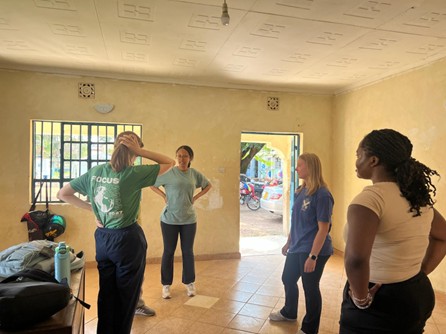
Our final weeks in Kisumu were bustling with travel to Siaya County. Our team is focused on leading the most effective CHP and provider trainings possible. Provider training introduces clinicians to their responsibilities as part of the R33 study and instructs them on treating HPV-positive women with thermoablation.   Perhaps the most fulfilling aspect of our time on the study has been leaving an imprint on the training materials. We’ve developed several iterations of training slides, assessments, and study guides to enhance the providers’ knowledge and confidence in conducting treatment. After the first training session, the team asked us, “Do you think you could perform thermoablation now?” That’s when we decided to clarify the anatomy and treatment details that left us confused. We approached the materials from the perspective of a busy clinician with several other services to provide and counseling scripts to remember. We created a succinct summary of the most important aspects of cervical anatomy and thermoablation instructions. The next...
Read More
From the Field: Hope’s End of Summer Reflection

From the Field: Hope’s End of Summer Reflection

As our final week in Kisumu comes to a close, I find myself in awe of everything we’ve accomplished—and just trying to soak in the beauty of this place before we leave. I know I’ll miss watching the sunset over Lake Victoria from our apartment, walking home from the office, and spending time with the amazing SRT team.     Looking back, each week here felt like we hadn’t done much—but in reality, we’ve achieved quite a lot. Our first week was especially busy as we worked closely with Dr. Huchko and the team to finalize training materials for Community Health Promoters (CHPs) to provide HPV screening to eligible women. During weeks two and three, we attended the first round of trainings for both the control and intervention arms and saw how our preparation came to life. These trainings were often long days, but they quickly became a highlight of my SRT experience. Not only did they allow us to see the behind-the-scenes...
Read More
From the Field: Sierra’s Midsummer SRT Reflection

From the Field: Sierra’s Midsummer SRT Reflection

As we approach the midpoint of our time here and the midpoint of the training portion of the R33 study, I feel I am really getting a sense of what global health work entails, including all the challenges, hard work, and problem-solving it requires. We started our first week here with Dr. Huchko, which was nice to have a familiar face and to help with all the logistics one week before the start of CHP training. She was very impressive with her delegation skills and outside-the-box thinking that brought together all of the pieces of the project. The team here has also been amazing, working non-stop to finish everything put on their plates and always with a smile. They have been so helpful in and out of the job, showing us around Kisumu and helping translate at the trainings so we understand how the CHPs are performing.   First control training finished   One of my favorite parts so far has been the feeling...
Read More