Faculty Spotlight: Joy Noel Baumgartner

Faculty Spotlight: Joy Noel Baumgartner

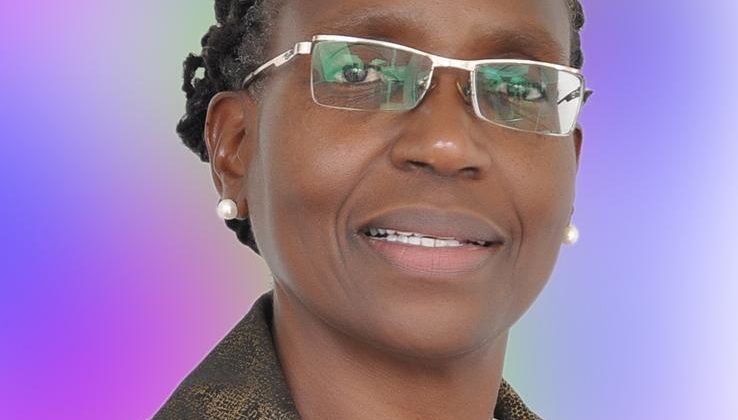
By: Angela Huang Across the past 6 years with Duke, Dr. Joy Noel Baumgartner has done incredible work within the fields of global mental health, studying maternal mental health, psychotic disorders and HIV/RH services in low resources settings across the world. She acts as the Director of the Evidence Lab and the Global Mental Health Working Group in Duke’s Global Health Institute. Furthermore, she acts as an Associate Research Professor of global health teaching classes related to maternal and child health. She also collaborates as a Faculty Network Member of the Duke Institute for Brain Sciences. She has conducted research everywhere from Tanzania to Jamaica, exploring how various community interventions may improve mental health and reproductive health. To highlight her recent work, she’s worked with other researchers in Duke and Guatemala to examine the factors that may prevent or promote implementing a perioperative patient safety program in the Roosevelt Hospital in Guatemala. They found that limited resources, leadership engagement, and knowledge were...
Read More
Dr. Elizabeth Bukusi’s Work on HIV Prevention and Care

Dr. Elizabeth Bukusi’s Work on HIV Prevention and Care

To commemorate World AIDS Day held each year on December 1, we are highlighting Dr. Elizabeth Bukusi’s HIV research in Kenya! Dr. Bukusi is one of the foremost advocates for HIV care. She has conducted various studies in evaluating treatment options for high-risk populations. In one of her recent studies, she explored the value of post-exposure prophylaxis (PEP) and the antibiotic doxycylcine (dPEP) as an STI prevention strategy in African women taking PrEP, PrEP, or HIV pre-exposure prophylaxis, has been used over the past decade to prevent against HIV, however, there has also been a rising incidence of curable STIs in populations taking PrEP. The disproportionate risk that African women face from overlapping HIV-STI epidemics makes them an essential study population. dPEP is beneficial because it can be "woman-controlled," meaning that the effectiveness is not determined by partner participation, and that it's been shown to be safe for women. Dr. Bukusi predicts that dPEP will lead to a substantial reduction in the amount of...
Read More
Re-building Rwanda’s Access to Ob/Gyn Services

Re-building Rwanda’s Access to Ob/Gyn Services

"In 2011 the Rwandan government embarked on a novel medical education program to improve their health care system.  Human Resources for Health (HRH) Rwanda, a partnership between the government of Rwanda and a consortium of 22 U.S. academic institutions, was designed as a 7-year training program to produce qualified medical personnel with the aim of increasing quality and access to health care for Rwandans."  As one of the earliest ob/gyn specialists to work in Rwanda with HRH, Duke's Dr. Maria Small led an evaluation of the first five years of the program with the aims of 1) examining the number of trained ob/gyn specialists who graduated from the University of Rwanda as beneficiaries of the HRH program, and 2) conducting a geospatial analysis of pregnant women’s access to Rwandan public hospitals with trained Obstetrics and Gynecology providers using a WorldPop data set. Study Results: "In 2011, there were only 14 ob/gyns in the country.  By the end of HRH year 5,...
Read More
Kisumu Nurse Spotlight: Everline Oruko

Kisumu Nurse Spotlight: Everline Oruko

Everline Oruko is a nurse at Migosi sub-County Hospital, one of three sites in Kisumu, Kenya, that offers cervical cancer screening and treatment. As the Nursing Officer in Charge, Everline leads a team of nurses and staff to improve uptake of cervical cancer screening and cryotherapy treatment for those who test positive. Despite many fits and starts, Everline has remained a constant in the effort to reduce cervical cancer among women in Kisumu. Our Kisumu site coordinator, Faith Otewa, sat down with Everline to talk about her job and her commitment to her work in cervical cancer prevention: Everline was first employed by the Ministry of Health at Ahero Health Facility after she graduated in 1993 with a Diploma in Nursing. She further enrolled for certificate courses in Counseling and HIV Testing Services (HTS) because she felt these would make her service delivery better. Everline then became sponsored for a course in counseling supervision because of her commitment at work. Upon...
Read More

Professor Spotlight: Dr. Nunn

Dr. Nunn is a professor of Evolutionary Anthropology and Global Health and is currently teaching the course “Human Health in Evolutionary Perspective” here at Duke. The following is the transcript of an in-person interview conducted with Dr. Nunn. What inspired you to teach “Human Health in Evolutionary Perspective” at Duke? In particular, what long-term perspectives do you hope students will gain from this course? “I came to Duke in 2013 from Harvard where I taught this course and it was called Evolutionary Medicine. I was really excited to teach it there because it was in the General Education Curriculum and a colleague of mine, Peter Ellison, and I developed a course that was aimed at people without any background in evolution or background in pre-med. It was meant to be a course that attracted any student and it was amazing. It allowed me to engage with the material in a more basic level and I came to realize the material is something...
Read More

Teammate Spotlight: Sandra Oketch

Sandra Yvonne Oketch has been working with Dr. Megan Huchko and the FACES team the Nyanza Region of western Kenya for the past ten years. She has 10 years’ work experience in both health research and program set up in maternal reproductive health and HIV/ AIDS care and prevention. She started as a Clinical and Community Health Advisor at FACES, where she became interested in the cervical cancer screening and prevention program. After going back to school to complete her degree, she is now the study coordinator of a cluster randomized trial testing two implementation strategies for HPV testing. Her roles include managing the study team, partnering with the reproductive health team to implement study activities and evaluating some of the study data. The work of enrolling and following up almost ten thousand women is not without challenges. In addition to the inherent challenges of coordinating a study that size, Oketch has had to deal with flooding, flyaway tents, political...
Read More

Nimmi Ramanujam

Faculty Profile: Nimmi Ramanujam Dr. Nimmi Ramanujam serves as the Robert W. Carr, Jr., Professor of Biomedical Engineering, a Professor of Pharmacology and Cancer Biology, and a Research Professor of Global Health at Duke University. Since arriving at Duke twelve years ago, Dr. Ramanujam has founded the Global Women’s Health Technologies Center and the Tissue Optical Spectroscopy Laboratory, through which she researches cervical and breast cancers, women’s health disparities, and the development of diagnostic tools for implementation in low-resource settings. Her team is currently developing a Point of Care Tampon (POCkeT) Colposcope, which will allow women to screen themselves for cervical cancer.   Dr. Ramanujam took a break from her work to discuss cancer research, technology uptake, and the importance of focusing on the horizon of global health innovation.   How did you decide what technologies to work on?   For Dr. Ramanujam, who had already conducted research on cervical and breast cancers, choosing to concentrate on cervical cancer was about prioritizing the “next generation of problems”...
Read More

Melissa Watt

Faculty Profile: Melissa Watt  With research projects in Tanzania and Ghana, and interests ranging from mother-to-child-transmission of HIV to prevention of fetal alcohol syndrome to family planning to sexual trauma, Associate Professor of the Practice Dr. Melissa Watt is a proficient and passionate force in the field of gender-based health research at Duke.   We sat down with Dr. Watt in her office at the Duke Global Health Institute (DGHI) to learn what sparked her interest in global health, what has defined her time as a Duke faculty member, and what excites her about the future.   How did you become involved in global health and choose reproductive health as a focus for your work?   Referencing a process of self-discovery to which her students might relate, Dr. Watt recalled her undergraduate work in African Studies and Public Policy, which aligned with her passion for “international development and how development can best be transformative for women’s equality and women’s rights.”   After completing her undergraduate program at the...
Read More
Cervical Health Awareness Month

Cervical Health Awareness Month

People across the U.S. are kicking off 2018 right with health-conscious resolutions. According to Statista, 45% of Americans hope to “lose weight or get in shape” in 2018. But January offers another opportunity to celebrate and jump-start health awareness: it’s Cervical Health Awareness Month. In the U.S. there are between 11,000 and 13,000 new cases of cervical cancer annually, and cervical cancer is the fourth most prevalent form of cancer among women globally. While patients diagnosed with early-stage cervical cancer have 5-year survival rates of up to 91%, the disease becomes far more deadly as cancerous cells spread to other parts of the body. Fortunately, proactive methods like HPV vaccinations and screenings can keep cervical cancer at bay, and mitigate almost all deaths related to cervical cancer. However, access to such healthcare often depends on a woman’s geographic location and socioeconomic status. According to the WHO, “approximately 90% [of] the 270,000 deaths from cervical cancer in 2015 occurred in low- and middle-income countries.” Duke...
Read More

Blandina Mmbaga

Faculty Profile: Blandina Mmbaga Dr. Blandina Mmbaga is the Director of the Kilimanjaro Clinical Research Institute and a pediatrician at the Kilimanjaro Christian Medical Center (KCMC). She has collaborated with Duke University for over 10 years and currently serves as a site leader for the KCMC-Duke collaboration. Her work in reproductive health includes evaluating strategies to prevent mother-to-child-transmission of HIV and working to improve transitions of care and addressing RH needs for perinatally infected adolescents. We sat down with Dr. Blandina Mmbaga to talk about her work in Tanzania and what she believes are some of the biggest reproductive health challenges in her region. What are the key reproductive health priorities for Tanzania? Dr. Mmbaga described several systemic health challenges such as infant nutrition, maternal health, and unmet need for family planning.  She feels that one of the biggest challenges, despite available treatment mechanisms, is the prevention of mother to child transmission of HIV. “It remains a challenge because there are still new infections”....
Read More
12