Kisumu Nurse Spotlight: Everline Oruko

Kisumu Nurse Spotlight: Everline Oruko

Everline Oruko is a nurse at Migosi sub-County Hospital, one of three sites in Kisumu, Kenya, that offers cervical cancer screening and treatment. As the Nursing Officer in Charge, Everline leads a team of nurses and staff to improve uptake of cervical cancer screening and cryotherapy treatment for those who test positive. Despite many fits and starts, Everline has remained a constant in the effort to reduce cervical cancer among women in Kisumu. Our Kisumu site coordinator, Faith Otewa, sat down with Everline to talk about her job and her commitment to her work in cervical cancer prevention: Everline was first employed by the Ministry of Health at Ahero Health Facility after she graduated in 1993 with a Diploma in Nursing. She further enrolled for certificate courses in Counseling and HIV Testing Services (HTS) because she felt these would make her service delivery better. Everline then became sponsored for a course in counseling supervision because of her commitment at work. Upon...
Read More

South Korea Poses Amendment for Anti-Abortion Law

South Korea has fostered an anti-abortion law for 66 years which names abortion a crime with repercussions of heavy fines and women facing up to a year in jail and doctors facing up to two years. Last Thursday, South Korea’s Constitutional Court ruled this law unconstitutional and concluded that Parliament must revise the law by 2020 or else it will become invalid. There are a few exceptions to the law which allow for abortions under the situations of pregnancy from rape or incest, pregnancy which poses great risk to the mother’s health, or pregnancy that will result in a child with a serious deformity. However, a study does prove that since the law has been enacted, there have been huge amounts of illegal abortions—49,7000 abortions took place in 2017 and an estimated 94% of those were performed illegally. There also seems to be a general shift in trends of what South Koreans think of abortion because a poll shows that...
Read More
Updates on Research With Male Birth Control

Updates on Research With Male Birth Control

     Last week, the drug 11-beta-MNTCD, a male contraceptive pill, was introduced at the Endocrine Society annual meeting. There has been a lot of efforts in both the scientific and medical communities to develop male birth control in recent years. Dr. Christina Wang, associate director of the Clinical and Translational Science Institute at the Los Angeles Biomedical Research Institute, noted how this new pill works to mimic testosterone’s effects, but does not allow for sperm production in the testicles. Dr. Wang then also predicted that this pill will not actually be able to be sold in the market for another decade due to the need of much more research and specific trials testing the pills effectiveness. In addition to the production of pills, the idea of a contraception through a body gel that men apply to their back and shoulders where it is absorbed by their skin is also being researched and made for trials. The production of the...
Read More
Introducing the New mSaada Mobile App for Community Health Volunteers

Introducing the New mSaada Mobile App for Community Health Volunteers

Guest Blog by Catie Grasse Meaning "help" in Swahili, the mobile "saada"  application aims to improve the efficacy and efficiency of community health volunteers screening patients for cervical cancer in Kisumu, Kenya. This project is the extension of a previous project for the Duke class CS408: Delivering Software to Client, which pairs student developers and designers with a client team to build a specialized application. The mSaada developer team is composed of four Duke seniors: Our designer, Rachel Settle is a Computer Science major, Visual Media Studies minor, and pursuing the Information Science certificate. Working on the user experience is Carly Levi, a senior studying Computer Science and Global Health who is particularly interested in women's and reproductive health and hopes to use her background in technology to come up with effective interventions around the world. Focusing on the back-end database design is Catie Grasse, a senior majoring in Computer Science and minoring in Visual Media Studies.  Also working on the...
Read More
Big Data for Reproductive Health Team Goes to DC!

Big Data for Reproductive Health Team Goes to DC!

The Duke Big Data for Reproductive Health (bd4rh) team, part of the Center for Global Reproductive Health, is working on novel ways to visualize contraceptive calendar data collected by the Demographic and Health Survey (DHS) program. The interdisciplinary group of researchers has created online, user-friendly tools to promote accessibility of this important but underutilized data. They aim to facilitate its use by researchers, program implementers and advocates. On Friday, March 22nd, team leaders Dr. Amy Finnegan and Kelly Hunter and undergraduate students Nicole Rapfogel, Celia Mizelle, Saumya Sao, Molly Paley, and Daisy Fang travelled to the DHS Program office in Rockville, Maryland to meet with key stakeholders who collect and use the contraceptive calendar data. They shared novel approaches to visualizing the calendar data: specifically, a chord diagram tool that allows users to see how contraceptive users flow from using one contraceptive method during a selected starting month to non-use (contraceptive discontinuation) or a different method (contraceptive switching). They also shared...
Read More
It’s a Jungle Out There!

It’s a Jungle Out There!

I was recently given the opportunity to attend DGHI's Regional Partners Workshop “Developing Collaborative Approaches to Global Mental Health and Maternal and Child Health Research" in Nairobi Kenya. The goal in convening this conference was well communicated in the opening remarks by Duke Global Health Institute Director, Dr. Chris Plowe. He told us that the workshop was to be a forum for partners to build skills, share knowledge, and identify new opportunities to work together. I looked around the room bursting with seasoned global health professionals, faculty, researchers, and doctors and couldn't help but think of myself as a “tiny animal in a big jungle" and wonder how well I would meet these goals. But after three days of consuming dense information from presentations and break-out sessions, I found that I had learned a lot in the big jungle, and that my experience was well worth sharing - especially with younger staffers who may be unsure of how to navigate the jungle...
Read More
Director’s Blog, Spring 2019

Director’s Blog, Spring 2019

On March 8, we celebrated International Women’s Day, which coincided with the one year anniversary of the Center’s launch in 2018. We took this opportunity to celebrate the activities and achievements of the past year with a tweetstorm celebrating the amazing women who have worked with the Center—from our team in the field, to the team of Duke undergraduates running our communications strategy, and a lot in between! Check out our twitter feed (@RHatDGHI) to keep up to date on all of students, faculty, residents and fellows who have contributed to the Center this year. This’s year’s IWD theme, “think equal, build smart and innovate change,” was a call to address the need for truly transformative solutions to advance gender equality and empowerment for women and girls. There is increased recognition that the growing gender divide in STEM fields will continue to hinder innovation and development of the disruptive solutions necessary to address disparities in reproductive health outcomes in the US...
Read More
Smoking During Pregnancy is Linked to SUID

Smoking During Pregnancy is Linked to SUID

    “Every cigarette counts,” stated Tatiana Anderson, a neuroscientist at Seattle Children’s Research Institute and a head author of a new study published relating SUID, sudden unexpected infant death, to smoking during pregnancy. The research analyzed more than 20 million births which included 19,000 SUID cases and concluded that one cigarette a day smoked by a pregnant woman can double the risk of SUID for her baby. In the United States, there are approximately 338,000 women each year who self-report they smoke during their pregnancy. The study also found that “if no woman smoked in pregnancy, SUID rates in the United States could be reduced substantially.” Ongoing studies analyzing exactly how SUID and smoking are related are being conducted and one possible theory is that smoking increases serotonin levels in infants during sleep which may affect the ability of the brain stem to regulate the respiratory system and therefore leads to SUID. There is also evidence that cigarette usage...
Read More
Continuous Medical Education at Migosi Sub-County Hospital in Kisumu, Kenya

Continuous Medical Education at Migosi Sub-County Hospital in Kisumu, Kenya

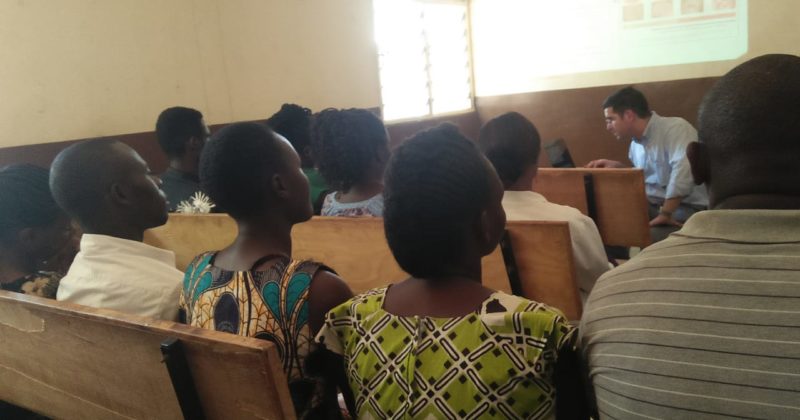
Migosi Sub-County Hospital is a government level 4 hospital situated in Migosi sub-location of Kisumu County. The hospital is staffed with a Medical Officer Superintendent, Nursing Officer, Lab Technologists, Clinical Officers, Pharmacy Technologist, Support Staff, HTS Service Providers, Peer Counselors, and a Nutritionist. The facility has a catchment population of over 20,000 and is expected to provide services to over 5,000 women of reproductive age per year. Some of the services offered include Antenatal, MCH services, Anti-Retroviral Therapy, Family Planning, Home-based Care, Basic Emergency Obstetric Care, and Inpatient care. The Hospital has strengthened its cervical cancer department and has been in the forefront of beating cervical cancer. The department embraces a “see and treat” slogan and uses the Visual Inspection with Acetic (VIA) method and treatment by means of cryotherapy. The Hospital has intensively engaged Community Health Volunteers (CHVs) who take advantage of any chance to urge women to come for cervical cancer screening. On 14/02/2019 Dr. Phil Gorrindo visited the facility to...
Read More

Professor Spotlight: Dr. Nunn

Dr. Nunn is a professor of Evolutionary Anthropology and Global Health and is currently teaching the course “Human Health in Evolutionary Perspective” here at Duke. The following is the transcript of an in-person interview conducted with Dr. Nunn. What inspired you to teach “Human Health in Evolutionary Perspective” at Duke? In particular, what long-term perspectives do you hope students will gain from this course? “I came to Duke in 2013 from Harvard where I taught this course and it was called Evolutionary Medicine. I was really excited to teach it there because it was in the General Education Curriculum and a colleague of mine, Peter Ellison, and I developed a course that was aimed at people without any background in evolution or background in pre-med. It was meant to be a course that attracted any student and it was amazing. It allowed me to engage with the material in a more basic level and I came to realize the material is something...
Read More