Missing and Murdered Indigenous Women in Canada and United States

In 2014, Tina Fontaine, a member of the Sagkeeng First Nation in Canada was murdered. Her death garnered national attention as it highlighted the alarmingly high rate of violence against indigenous women in Canada. Such violence prompted the creation of the National Inquiry into Missing and Murdered Indigenous Women and Girls. After nearly three years of investigation, a report was published earlier this week that calls the treatment of indigenous women “a genocide.” The report included policy recommendations that seek to mitigate the violence and address its causes. As in Canada, native women in the United States disproportionately experience violence. A report conducted by the Department of Justice (DOJ) found that some counties in the U.S. have murder rates against indigenous women that are more than ten times the national average. Moreover, limited data and reporting on crimes against indigenous women and girls in the United States make it more difficult to understand the extent of the violence. According to a...
Read More
International Pelvic Health Physical Therapy

International Pelvic Health Physical Therapy

Part 2: How Physical Therapists Are Helping Women’s Health on the Global Stage In January, I attended a presentation by Dr. Laura Keyser, a prominent figure in world of pelvic and global health. Keyser has been a physical therapist for 12 years and has developed public health expertise in maternal and child health. She also is the co-founder of Mama, LLC, which is a physical therapy and public health consulting firm that specializes in women’s and girl’s health. I had the wonderful opportunity to pick Dr. Keyser’s brain about global women’s health issues and how she sees physical therapy helping solve those problems. For the past ten years, Dr. Keyser has acted as a consultant to local and international organizations such as Global Strategies, EngenderHealth, the Harvard Humanitarian Initiative, Panzi Hospital and Foundations and HEAL Africa DRC. Through this role she has developed rehabilitation programs and community outreach initiatives in many parts of Africa and south Asia. When asked about her first...
Read More

Summer SRT team joins Kisumu office

This summer the Center office in Kisumu will be hosting three students through a Student Research Training (SRT) summer program. They will be joined by a Masters in Global Health student, an ob/gyn resident and a post-doctoral fellow, all researching various aspects of cervical cancer prevention and health systems strengthening for reproductive health.  They've just arrived in Kenya, and I've asked them to share some of their plans and expectations for the summer.  Follow this page to see updates on their projects and reflections throughout the summer. Emma Mehlhop, T'21 Since this summer will be my first experience in field work of any kind, I have much to anticipate. First, I am looking forward to reflecting on not just why I am passionate about Global Health, but what I am personally able to contribute to the field. During the Global Health Ethics course, we spent time reflecting on the work of Boniface Mwangi, a Kenyan photojournalist, who asks Global Health workers and...
Read More
OMEGA FOUNDATION MEETING WITH HARUN KODIAGA – HEAD OF PROGRAMS

OMEGA FOUNDATION MEETING WITH HARUN KODIAGA – HEAD OF PROGRAMS

I had the opportunity to meet with Harun, the Head of Programs at the Omega Foundation (OF) at the Kisumu Office. The OF mission is, “to strengthen the capacity of communities to live meaningful lives through integrated health and innovative livelihood solutions” across 12 counties in Kenya: Kisumu, Siaya, Migori, Homa Bay, Busia, Bungoma, Nandi, Uasin-Gishu, Kakamega, Vihiga, and Bomet. OF undertakes various projects including Sexual and Reproductive Health Service Delivery and Advocacy projects funded by Planned Parenthood Global. The projects are being implemented in Kisumu, Siaya, and Homa Bay counties respectively with an objective to increase awareness of, access to, and use of quality family planning (FP) and Post Abortion Care (PAC) services. Twenty facilities in Kisumu are supported in delivery of the services and focus on strengthening the capacity of partners to provide facility-based FP and PAC services and advocate for expansion of Sexual and Reproductive Health (SRH) rights and services. To achieve their goals, the OF supports provision of...
Read More
Duke Students in Action

Duke Students in Action

This past year, I had the opportunity to work on a Bass Connections research team: Big Data for Reproductive Health (BD4RH). Bass Connections projects are interdisciplinary teams of undergraduate and graduate students, professors, and researchers. I became interested in reproductive health research after taking Dr. Megan Huchko’s global reproductive health course in the spring of 2017. It was through her course that I developed my understanding of and passion for reproductive health policy and gender equality. The BD4RH team reflected my passion for reproductive health through the project’s commitment to reduce contraceptive discontinuation rates.  The initial goals of our research were to create and disseminate data visualization tools that use reproductive health data from USAID’s Demographic and Health Surveys (DHS). The DHS collect data in over 80 different countries, and the surveys’ contraceptive calendar tracks women’s month-by-month contraceptive use over a five-year period. Our project began in the summer of 2018 when undergraduate student, Saumya Sao, and Masters student, Melanie Wai,...
Read More
Conflict Affects Women in Unique Ways

Conflict Affects Women in Unique Ways

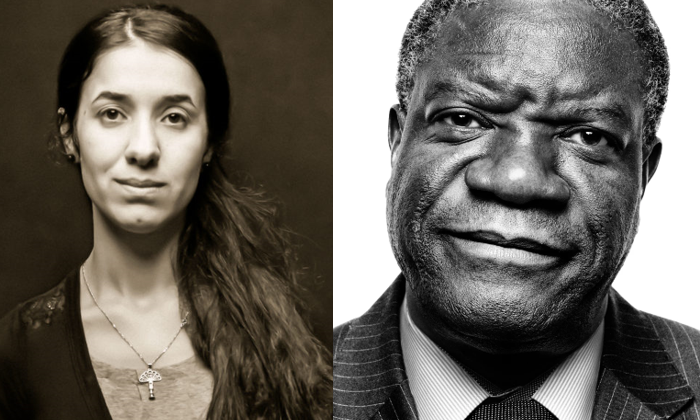
The Helper and the Witness Guest post by Kelly Hunter In 2018 the Nobel Peace Prize was shared by two very different individuals: Denis Mukwege, a 63-year-old Congolese doctor who founded the Panzi Hospital, and Nadia Murad, a 24-year-old Iraqi Yazidi human rights activist, who at age 19 was kidnapped by ISIS. What cause united these unique individuals from disparate parts of the globe? The Nobel committee recognized their advocacy for victims of wartime sexual violence, defined by scholars as “rape; sexual slavery and forced marriage; forced prostitution, pregnancy, and sterilization; sexual mutilation; and sexual torture” (Elizabeth Jean Wood, 2018). Dr. Mukwege has dedicated his career as a gynecologist to physically healing victims of conflict-related sexual violence in Africa and Ms. Murad, a survivor of such violence has founded an organization to raise funds and awareness to support other women brutalized by this increasingly common war crime/crime against humanity. The Nobel committee’s recognition reflects what scholars and international organizations have long realized:...
Read More
Expect the Unexpected

Expect the Unexpected

As students and faculty start lifting their heads from the end of semester rush and head off to Summer adventures, we have a chance to reflect on all we have accomplished this past year and to celebrate our graduating students. I had the opportunity to think more about this as I prepared my remarks for DGHI's undergraduate commencement on May 10. The opportunity to speak to graduates and their families was one of the most meaningful experiences I’ve had since joining the Duke faculty in 2016. Asked to talk about my journey from Duke student to a career in medicine and global health, I told the students that they need to expect the unexpected, be prepared for— and maybe even proud of— the inevitable failures, and to take chances on new adventures and challenges. As we embark on new and exciting projects with learners across the university and medical school this summer, I am encouraged to see a new generation of researchers and...
Read More
Expect the Unexpected

Expect the Unexpected

As students and faculty start lifting their heads from the end of semester rush and head off to Summer adventures, we have a chance to reflect on all we have accomplished this past year and to celebrate our graduating students. I had the opportunity to think more about this as I prepared my remarks for DGHI's undergraduate commencement on May 10. The opportunity to speak to graduates and their families was one of the most meaningful experiences I’ve had since joining the Duke faculty in 2016. Asked to talk about my journey from Duke student to a career in medicine and global health, I told the students that they need to expect the unexpected, be prepared for— and maybe even proud of— the inevitable failures, and to take chances on new adventures and challenges. As we embark on new and exciting projects with learners across the university and medical school this summer, I am encouraged to see a new generation of researchers and...
Read More
How Marie Stopes Works to Promote Access to Reproductive Health Services

How Marie Stopes Works to Promote Access to Reproductive Health Services

I had the privilege to meet Rose Omia, the Regional Marketing Coordinator for Marie Stopes on March 27th, 2019. Marie Stopes is a non-governmental organization focused on sexual and reproductive health and provides contraception, safe abortion, and post-abortion services. The services are offered through a network of clinics and mobile outreach clinics to enhance accessibility to as many people as possible. Marie Stopes delivers services through its AMUA Clinics that offer high quality and affordable (subsidized prices) health services to women, young people, and communities’ regardless of anyone's ability to pay. In order to empower and promote the well-being of the adolescents (ages 15 -19), services are offered to them free 3 days a week. Through their network of mobile outreach clinics, Marie Stopes promotes freedom and choice by conducting monthly outreaches for 5 days in all the various counties they work. Many services such as permanent family planning methods like tubal ligation are offered by the mobile outreach team comprised of...
Read More

Alabama and Georgia Pass Restrictive Abortion Laws

  On Wednesday, Alabama Governor Kay Ivey signed into law the most restrictive anti-abortion legislation in the country. The bill not only bans abortion at nearly every stage of pregnancy, it also criminalizes the procedure for doctors who perform abortions. Although women who receive an abortion will not be prosecuted, the new law targets doctors who could face up to 99 years in prison for performing an abortion. The bill includes protections when a mother’s life is endangered, but it does not include exceptions for rape or incest. While the courts have continued to reaffirm a woman’s constitutional right to an abortion since the decision in Roe v. Wade, the Alabama law is most recent attempt to challenge the 1973 precedent. Since the beginning of 2019, nearly 300 restrictive abortion laws have been introduced in state legislatures across the country. Earlier this month, Georgia governor Brian Kemp signed into law a fetal heartbeat bill that prohibits abortion after a doctor can detect...
Read More