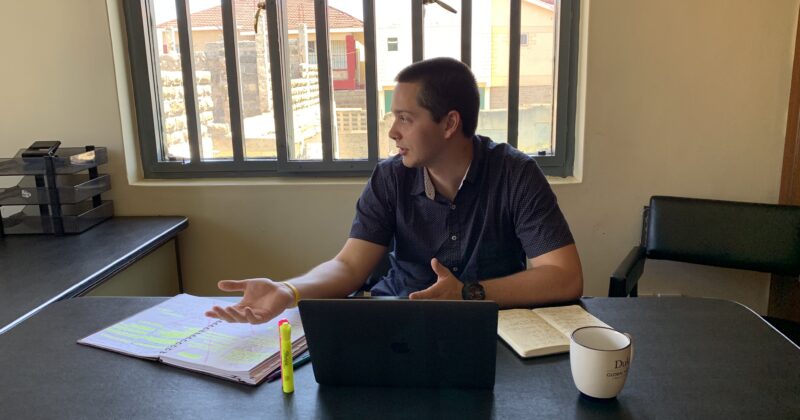
In March 2022, I was able to return to Kenya to resume my dissertation research. It was wonderful to be back after two years away and to see and work with Kenyan colleagues in person again. I spent part of the time conducting follow-up interviews with sexual and reproductive health NGOs in Kisumu and part of the time preparing to conduct a survey in Migori County later this year. My qualitative work began in February 2020 when I was last in Kenya. I met with several Kisumu-based sexual and reproductive health NGOs to learn about how the US’s global gag rule had impacted their operations, relationships with donors, and relationships with other NGOs. When the pandemic hit and Kenya experienced lockdowns, I along with my undergraduate research assistants Ema Kuczura and Sarah Hubner, conducted semi-structured interviews over zoom with roughly 35 NGOs to understand how they were responding to issues related to the COVID-19 pandemic, including increased demand for their services,...
By: Michele O'Shea During October to November 2021, I spent 6 weeks Kisumu Kenya working with our collaborators at Jaramogi Oginga Odinga Teaching and Referral Hospital. Our specific project is aimed at evaluating a new set of illustrations to assess for symptomatic pelvic organ prolapse and urinary incontinence. It is an early step in the process of understanding the burden of pelvic floor disorders in Kenya and informing strategies to better diagnose and treat patients with these conditions. As part of the study, we are asking patients presenting for outpatient care to tell us whether they have the symptoms represented in different illustrations of prolapse, urgency urinary incontinence and stress urinary incontinence. Then, to determine whether the patient clinically has symptomatic prolapse or urinary incontinence, we speak with the patient about her symptoms and perform a brief pelvic exam. From the study’s start, we were plagued by slow recruitment, primarily related to patients declining to undergo a pelvic exam. My co-investigators, Dr....
Duke MsGH ’20, Jacob Stocks, talks about his experience working on an mHealth app to support cervical cancer screening in western Kenya. The app was developed by four Duke seniors (‘T20) as part of their Computer Science Capstone course. Stocks’ experience co-designing the app with end-users, clinicians and community health volunteers in Kenya, was published recently in JMIR Formative Research. In 2019, I worked alongside members of the Center for Global Reproductive Health to develop and pilot test mSaada, a mobile phone app for use by lay-providers during cervical cancer screening. This experience was an exercise in self-reflection, flexibility, and perseverance, as the study team had to acknowledge the gaps in our intervention and work effectively and efficiently to address them while adapting to additional challenges as they arose. Our team, working face-to-face with local collaborators as well as virtually with app developers, conducted feedback sessions with community health volunteers and clinicians in Kisumu and Migori, Kenya. The main findings of this...
In fall 2019, when Rachel Mundaden and Ramya Ginjupalli (T’22) applied to spend the following summer in Kisumu, Kenya, as part of the Center’s Student Research Training program, no one could have predicted the COVID-19 pandemic, and the resultant global disruptions in almost every aspect of people’s lives. Travel and fieldwork were soon out of the question, but these two were able to pivot to develop the content expertise and skills in qualitative methods necessary to carry out an analysis of focus groups discussions designed to better understand stigma related to cervical cancer and human papillomavirus in Kenya. They spoke to DGHI about their experience and how it felt to have a published manuscript resulting from this work. Check it out here: https://globalhealth.duke.edu/news/dormmates-research-collaborators ...
The new year often inspires us to reflect on our goals and priorities, an endeavor supported by a series of opportunities to recognize, learn about and celebrate different events and people. January was Cervical Cancer Awareness Month, February is Black History Month and March is Women’s History Month, including International Women’s Day on March 8. This year’s International Women’s Day theme is #BreaktheBias, offering to challenge various the biases people face around the world, including gender and race. The subjects explored over these months are all central to the work of the Center, and among other things, illustrate the impact of marginalization and discrimination on health outcomes. The intersection of race, gender and reproductive health is perhaps best shown by the experience of Henrietta Lacks, the Black woman whose cervical cancer cells gave rise to the immortal “HeLa” cell line. HeLa cells have played an extraordinary role in scientific research, underlying multiple Nobel Prize-winning discoveries and enabling medical advances for...
Dr. Sumedha Gupta Ariely is an associate Professor in the Global Health department and teaches courses such as Research methods in Global Health (GLHLTH371) and Global Health Ethics (GLHLTH373). She is also a faculty lead for Duke Global Health Institute’s Durham Research and Service work, demonstrating her commitment to the “Local-is-Global” approach in global health endeavors. She has mentored a variety of undergraduate and graduate students through Bass Connections and DukeEngage projects. In her research, she investigates maternal, child, and adolescent health across international contexts. Notable, she has worked extensively with Uganda, Kenya, and India across her time at Duke. Using her background in developmental psychology, she examines how cultural and social factors relate to a community’s health behaviors and outcomes. To explore more of Dr. Ariely’s revolutionary work, I interviewed her on her experiences and initiatives in the global health field during her time at Duke to see how they have informed her research. 1. You’ve led initiatives in the “Global Is...
Our team seeks to understand how conflict impacts contraceptive use using data from Sub-Saharan African countries. More specifically, we are looking at trends in contraceptive use for women in the time preceding, during, and following the conflict period--to do so, we are utilizing geocoded data for sub-Saharan Africa from the Uppsala Conflict Dataset and contraceptive calendar data from the Demographic and Health Surveys. This research has important implications for women’s health: firstly, it can help us understand the demographic consequences of conflict on family planning, births, and outcomes, and secondly, it can help inform policy interventions that can target and improve reproductive health in humanitarian settings. We are personally interested in this project because, collectively, our team is passionate about understanding health inequities and empowering women by leveraging policy as a tool. Participation in this project can help to provide us a foundational understanding of how conflict interacts with women’s reproductive autonomy in a way that gives us independent research...
We are the Natural Language Processing group from the Big Data for Reproductive Health Bass Connections team. Our names are Lynne Wang, Foxx Hart, Alexandra Lawrence, and Neha Shrishail. Currently, we are working through “Text Mining with R” to gain a better understanding of text mining, sentiment analysis, and topic modeling. Additionally, we are examining the stigma summary scale as well as other texts related to stigma to form a solid foundation on the resources at hand. We are interested in this project for the opportunity to learn new technical and project management skills, as well as dive deeper into the emerging interdisciplinary space between quantitative machine learning and qualitative social science research. We’re especially excited to apply these methods to an important area in global reproductive health. At the end of our research, we hope to become proficient in using natural language processing and gain a better understanding of how it can be applied to future projects....
The reproductive health needs of persons with intellectual and developmental disabilities (IDDs) have been historically overlooked. Despite having an equal or greater chance of pregnancy, women with IDDs face significant barriers to accessing contraception. Publicly available survey data exclude individuals who live in institutional settings or require communication assistance, and little is known about the landscape of sexual and reproductive health services within residential facilities. To address these gaps, this Bass Connections Student Research Award project aims to analyze differences in access to and use of contraceptive services among women of reproductive age in North Carolina, as well as understand offerings, needs, facilitators, and barriers relating to contraception within public and private residential facilities. Linear regression and clustering techniques will be applied to a robust Medicaid claims dataset to evaluate contraceptive insertion, surveillance, and removal by disability status. In addition, in-depth interviews will be conducted with administrators, clinicians, and social workers at six residential facilities in North Carolina. The final...
The Student Advisory Board aims to increase engagement with the Center by fostering academic collaboration and advocacy efforts. Now in its third year, the SAB has grown to encompass undergraduates and graduate students across Duke. Over the past few years, student work has been featured on the Center's website as well as newsletters. Students have also helped bring in multiple speakers from various backgrounds, including researchers and SRH advocacy organizations. This year, the Student Advisory Board consists of the Communications Working Group and the Events Working Group. I'm pleased to be working with Angela and Lauren as they are leading both of these groups and are planning incredible ways for students to get more involved with the Center. Hear more about the work they are doing below. From Angela Huang, the Communications Working Group Chair: The Student Advisory Board Communications Committee, made up of both undergraduate and post-graduate students, sets out to form connections between the Duke student populace with the Center for...