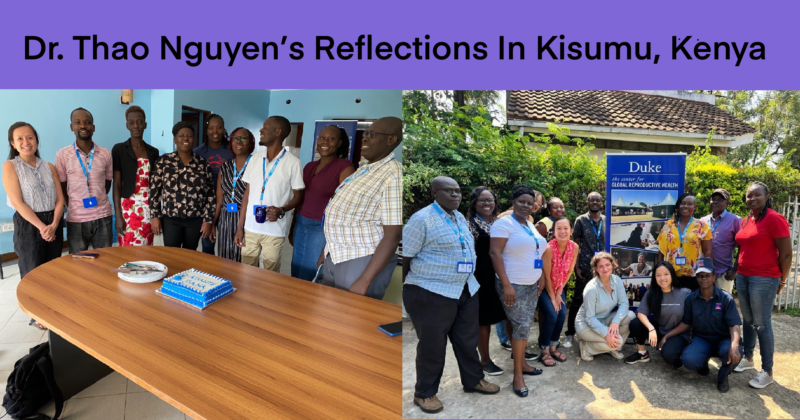
In 2021 I had the opportunity to join a start-up that provided support for schools and businesses to safely reopen in the COVID-19 pandemic. We developed an app to support symptom monitoring, created a vaccine navigator program, and collaborated with local organizations to host vaccine clinics in historically marginalized communities. That was the first time I began to dream about what it could mean to center technology within local communities to bridge disparities in healthcare. When Dr. Huchko offered me the opportunity to join her team to develop a new iteration of a mobile app, I couldn’t have been more excited. Our app, mSaada, is an integrated digital platform that provides support for community health volunteer-led cervical cancer prevention services. It seeks to improve completion of the key steps in the cervical cancer screening cascade by providing patient education and screening reminders, specimen tracking, result management, follow-up support, and treatment scheduling as needed. I started developing the barebones of the app in...
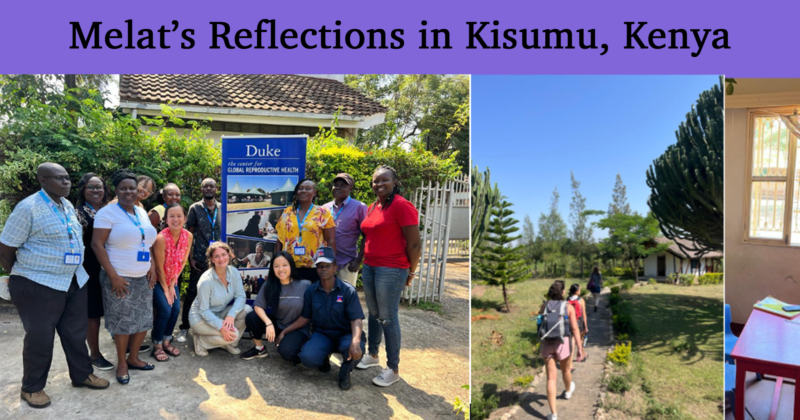
We’re on the last week of our trip, and these eight weeks have flown by fast! Our summer trip is winding down, and we’re wrapping up our plans as we prepare to leave in one week, but it feels like we should stay a few more. The app mSaada is really coming together (go Thao!), and we’ve learned SO much on the daily challenges of global health projects. Currently we’re wrapping the Standard Operating Procedure, FAQs, and training manuals for Community Health Volunteers (CHVs), research assistants, and other members of the team. There are still many logistical challenges to work though like how to mobilize over 400 CHVs to the different communities that they serve, and how to register each CHV and their clients. We’re here only over the summer, but the team here in Kisumu does so much work for mSaada, and I’ll miss them when we leave. The best part about being in the office is being able...
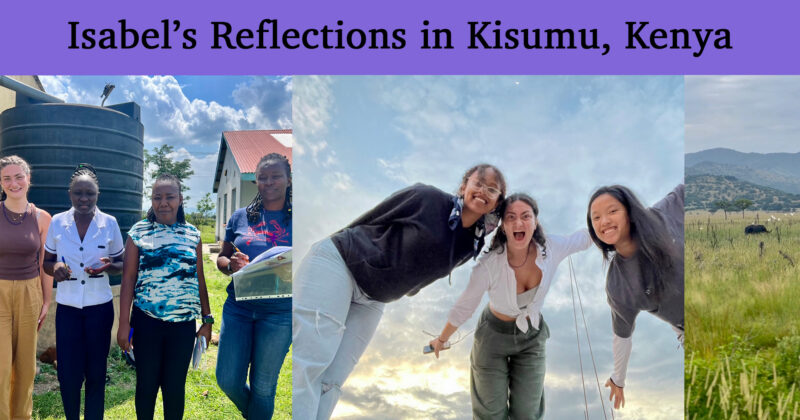
Starting right where Sydney left off, I, too, just had my first experience going into the field. As Sydney mentioned, each of us will get a chance to tag along for a site visit to a sub-county, and after spending thirty days in Kenya, it was finally my turn! I accompanied Breandan, Jennifer, and Purity to the Nyando sub-county. After meeting with the MoH representative at Ahero Hospital, we conducted site visits for Ahero and four other hospitals in the county. As I quietly took notes, I couldn't help but notice the passion and dedication of every director, community volunteer, doctor, administrator, and healthcare provider. Unlike the privatized systems in the U.S., the healthcare system in Kisumu relies heavily on community involvement. As a global health research team, it is our responsibility to work closely with the community, and our meetings have created a collaborative space where all parties are enthusiastic about our proposed project.
Our collaborative efforts aren't limited to...
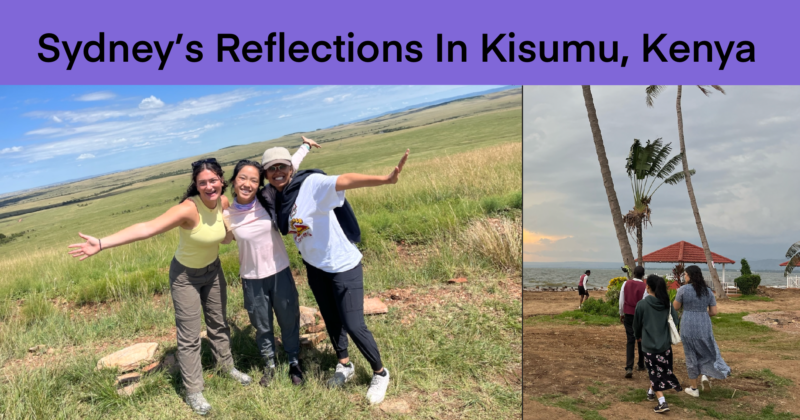
Flew internationally totally alone; bargained for prices; saw a male lion (pictured); saw a dead, half-eaten buffalo that two lionesses just killed (not pictured); ate smokies (a hot dog with tomatoes, onion, and a spicy sauce inside). These are some highlights from my “first time ever” list since leaving the U.S.. Novelty and unfamiliarity were our neighbors for the first two weeks living in Kisumu, Kenya. At the end of the third week, we were off to another “first time ever”: a visit to the Lumumba Hospital. We – okay, hold on. “We” refers to my fellow researchers (and now my friends) Isabel and Melat. They are both proud Seattlites (first time ever learning that’s how you refer to people from Seattle) which has led to times where I learn more about Seattle than I do Kenya. We’ve really gelled as a unit no matter how fast I walk, how many limes Melat eats, or how many random romcoms Isabel suggests. Anyways,...
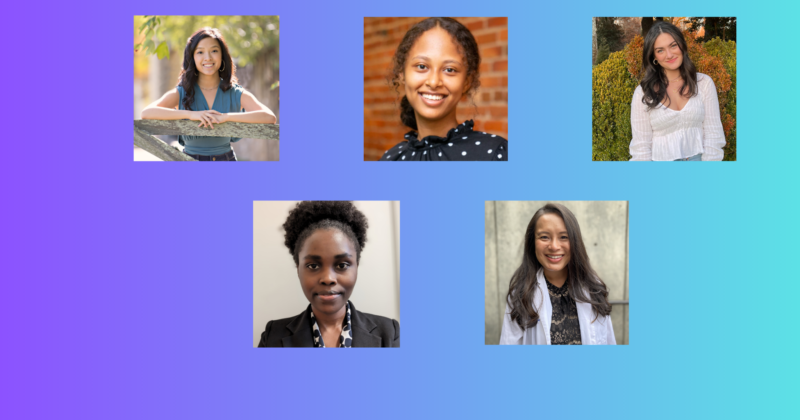
This summer, we have 5 Duke Scholars working with the Duke Center for Global Reproductive Health in Kisumu, Kenya. We have 3 undergraduate students joining the Center as part of the Student Research Training Program (SRT), a Masters of Global Health Student, and a 3rd year OB/GYN resident all conducting research in Kenya. Read below to learn a bit about these passionate students and hear about their work and what they are most looking forward to. SRT Students: Sydney Chen (she/her) Sydney is a double major in Global Health and International Comparative Studies with a Biology Minor. She calls Herndon, Virginia home. When asked about what her time spent in Kisumu looks like, she reflected that “The team and I are working on various ways to improve an app called mSaada which helps women in East Africa receive screening for cervical cancer. I’m specifically working on the FAQ portion of the app by making sure that the answers are clinically accurate and using...
Be an Outlier for Change Next week marks almost five months since the Supreme Court handed down their decision in Dobbs versus Jackson Women’s Health, overturning the constitutional protection for abortion enshrined by Roe v Wade in 1973. Although the past fifteen years have seen an incredibly successful assault on reproductive rights and access to essential health care for pregnancy, the Dobbs decision led to the enactment of trigger bans in thirteen states, with an additional thirteen states having restrictive or very restrictive laws that are anticipated to lead to bans in the near future. In the first 100 days post-Dobbs, much has been written about the legal climate, how individuals and families have been affected and the legislative victories on both sides of the debate. One of the most striking things I’ve read, however, was a policy analysis by the Guttmacher Institute classifying the US as a global outlier on abortion rights. While the US has often taken pride in...
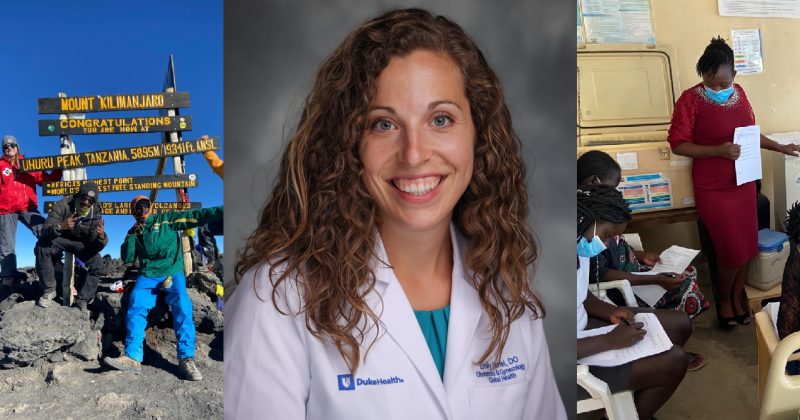
Emily Herfel, DO, Msc-GH, FACOG (Fellow of the American College of Osteopathic Obstetricians and Gynecologists), is an assistant professor at Duke Department of Obstetrics and Gynecology, an affiliate at the Duke Center for Global Reproductive Health, and a volunteer professor at Kilimanjaro Christian Medical Center in Moshi, Tanzania. Dr. Herfel completed her undergraduate work at John Carroll University in Cleveland, Ohio followed by a Doctor of Osteopathy at Heritage College of Osteopathic Medicine in Athens, Ohio. She completed residency at OhioHealth Doctors Hospital in Columbus, Ohio. She then went on to receive her Masters of Science in Global Health through a Women’s Global Health Fellowship at Duke University. During that fellowship, she received an NIH-Fogarty grant to complete her project in Kisumu, Kenya. I had an enriching conversation with Dr. Herfel to learn more about her experiences within the global health sphere and her passion for reproductive health care. “Right in the heart of COVID, in July 2020, I moved to...
I recently landed back home in Boston after spending most of my summer in Nairobi, Kenya researching cross-cultural early childhood development with Universal Baby. Universal Baby is a public health, caregiver coaching intervention that creates videos to share current neuroscience and child development information across the globe. Towards the end of my time in Kenya, I visited a Maasai Village in Kajiado South sub-county, about 5-6 hours outside of the Nairobi. The Maasai are one of Kenya’s ethnic tribes, originally from the lower Nile Valley. I embarked on this journey, acutely aware of how the injustice and violence of colonialism has shaped the education systems and subsequent socioeconomic advancements in Kenya. We stopped for the night in the rural town of Bisil before starting off early the following morning for the village, passing giraffes and ostriches on the drive there. Our first stop was Loolkair Primary School, a K-8 school with nearly 400 students and only eight teachers. As we arrived, hundreds of...
The Center for Global Reproductive Health and the Center for Policy Impact in Global Health recently partnered to convene a webinar on “The unfinished agenda of maternal and child health in Africa and Asia: promising directions to address maternal mortality challenges.” The panel, moderated by Dr. Megan Huchko, included: Dr. Mariam Claeson, former Director of the Global Financing Facility for Every Women Every Child at the World Bank and now at the Karolinska Institute
Dr. Qjan Long, Assistant Professor at Duke Kunshan University, formerly worked at the Department of Reproductive Health and Research, WHO
Ms. Jacquelyn Caglia, Director of Learning, Communications for Merck for Mothers Experts discussed the historic and current challenges in addressing maternal and child mortality in the region, and brought up some promising innovations and strategies with the potential to effect these disparities in the future. The webinar can be seen here, with a fill description of the background and discussion on the CPIGH website....
It is hard to believe I have called Kisumu home for almost a year, with time cut short by the elections set for early August. Our team is busy, skillfully orchestrating multiple studies concurrently. The stigma education study, looking at the impact of a stigma-responsive educational video on cervical cancer screening behavior, is in full swing. The six health facility sites are offering research-supported HPV self-testing as part of their cervical cancer screening program, led by community healthcare volunteers (CHVs). Our three intervention sites are also showing the HPV stigma-responsive education video. The team then visits each site once a week to ask women to participate in a validated HPV/cervical cancer stigma measurement tool. Jeniffer, our study clinician, is leading the project with grace, balancing the day-to-day activities with each facility. Getting positive feedback from the CHVs and women of the community about a cervical cancer screening technique that avoids a speculum helps to keep us motivated. Some of the sites are...