Law meant to limit access to abortion in the Ohio state legislature

Law meant to limit access to abortion in the Ohio state legislature

Story by Amelia Steinbach, T '21 State legislators in Ohio are currently debating House Bill 565, a piece of proposed legislation that imposes strict limitations on access to abortion. The law changes the definition of person to include “any unborn human,” which results in the criminalization of abortion. If the law is signed into law, it would effectively criminalize abortion. Any woman who undergoes the procedure, as well as any doctor who performs it, would face charges for murder. Because the death penalty is permitted in the state of Ohio, women and doctors could also be sentenced to death because of their role in the procedure. Despite the fact that many modern abortion regulations include exemptions of pregnancies resulting from rape or incest, as well as those that pose a threat to the pregnant woman’s life, House Bill 565 includes no such provisions. Notably, the group of legislators sponsoring and co-sponsoring the bill is overwhelmingly male, with only two out of sixteen...
Read More
Analyzing High Abortion Rates in Pakistan

Analyzing High Abortion Rates in Pakistan

The country of Pakistan has one of the highest rates of abortions in the world; it is noted there are 50 abortions for every one thousand women. However, this procedure is “legal only in very limited circumstances” according to the Guttmacher Institute. Pakistan states an abortion can occur if there is a “need” for it such as if a woman’s health is in danger. But, otherwise, the term “need” is very vaguely defined—culturally, abortions are not accepted or promoted in Pakistan. As a deeply conservative and Muslim country, most hospitals and doctors refuse to perform abortions for religious and moral reasons and beliefs. As a result, a huge underground abortion industry thrives. This contributes to the statistic that ⅓ of all women who undergo abortions in Pakistan suffer complications largely because those who are performing the operations are likely not properly qualified. The high amount of abortions comes from the fact that there is a large unmet need for family...
Read More
Progress Period: An Introduction to Menstrual Activism

Progress Period: An Introduction to Menstrual Activism

October 28, 2018 was not merely a day of yellow sunlight and cool fall air, but rather, the origin of a radical transformation of my being facilitated by Progress Period, a menstrual activism club at Duke University. The screen of my phone reported “12:27pm,” lighting anew a sense of urgency beneath my already frantic feet. The event was set to begin at 12:30pm and with the panicked realization that I was indeed going to be late, I barreled down the stairs towards Schiciano Auditorium. At 12:29pm, just as I allowed myself a breath of assured relief that I would make the event on time, I was stopped dead in my tracks. “Outside the (tampon) box: menstruating isn’t just for women,” declared a flyer taped to the glass door. Confusion clouded my awareness and my mind raced with questions, relegating my aspirational punctuality to a non-possibility. Among this maelstrom of questions, the loudest bubbled to the surface: Is menstruation not a qualifier of womanhood?...
Read More
HIV Patients Sue Government Over Lack of Septrin

HIV Patients Sue Government Over Lack of Septrin

Co-trimoxazole preventive therapy is a feasible intervention for people living with HIV. It works to reduce HIV-related morbidity and mortality through an off-patent drug, which is widely available in resource-limited settings. The World Health Organization (WHO) conditionally recommends the use of co-trimoxazole as treatment for opportunistic infections in people living with HIV/AIDS. In Uganda, previous reports by the State Minister for Health stated that there was a funding shortage for the drug. The Global Fund, with headquarters in Geneva, Switzerland has since stepped in to provide all funds for the drugs available from July 2018 onwards. This is good news, as daily intake of co-trimoxazole relieves symptoms and prolongs life for people living with HIV/AIDS. However, a human rights organization and two people living with HIV have sued the Ugandan Government and the National Medical Stores (NMS) for alleged failure to supply public health centers with septrin as one of the essential drugs for treatment of AIDS for the months of March...
Read More
Eradicating Human Diseases: Opportunities and Risks

Eradicating Human Diseases: Opportunities and Risks

The Director of the Center for Global Reproductive Health, Dr. Megan Huchko, participated in a panel on November 28th entitled "Eradicating Human Diseases: Opportunities and Risks." Dr. Gavin Yamey (Director for the Center for Policy Impact in Global Health) moderated the event, which featured Dr. Christopher Plowe (Director of the Duke Global Health Institute), Dr. Lavanya Vasudevan (Assistant Professor in Community and Family Medicine) and Dr. Osondu Ogbuoji (Deputy Director of the Center for Policy Impact in Global Health) as additional panelists. While the panelists disagreed on the definition of eradication, they all commented upon 'donor fatigue' and the economic and political difficulty of completing eradication as cases dwindle. The panel discussed the difficulty global health programs face in second-world countries, which don't benefit from the same economic resources as first-world countries or as many donations as third-world countries. The panelists stressed the importance of continued screenings, especially in the case of cervical cancer, and emphasized the necessity of childhood vaccinations....
Read More
The KCHSSIP 2018-2022 Validation Meeting

The KCHSSIP 2018-2022 Validation Meeting

The KCHSSIP (Kisumu County Health Sector Strategic and Investment Plan) 2018-2022 validation meeting held at the Acacia Hotel on 9th Nov 2018 saw the Kisumu County Health Department and a consortium of partners come together to finalize a plan, which is based on data from county health services over the last 5 years, as well as experiences and lessons learned during implementation of the first strategic plan from 2013 to 2017. The plan attempts to effectively position the County Health Department in the correct contexts of the health system pillars: human resources for health, health technology and infrastructure, pharmaceutical and medical supplies, health governance and leadership, health service delivery, health financing, health information system, health sector policies and context and health sector social outcomes. It also examines county health burdens such as malaria, HIV/AIDS, diarrheal diseases, skin diseases, pneumonia, tuberculosis and other respiratory diseases and non-communicable diseases. The document has gone through a process of stakeholder’s participation and input and is now...
Read More
Kenyan Women Victorious in “I AM 2.0” Competition

Kenyan Women Victorious in “I AM 2.0” Competition

Global Fund for Women is an organization which supports the efforts of women’s groups who work to improve the quality of safety and happiness for women and girls around the world. Recently, the Global Fund for Women, partnered with the United Nations Population Fund, Graca Machel Trust, and Nairobi Incubation Lab, facilitated a competition titled “I AM 2.0” to reward women’s groups who develop the most scalable, unique, sustainable, and impactful solutions for reproductive health challenges. Three organizations- Inteco Kenya ARI, Silmak Agencies and Mums Village- all run by Kenyan women, have been declared the winners, with each receiving $10,000. Inteco Kenya ARI provides menstrual hygiene product distribution services through a network of accessible ARI vending machines. Silmak Agencies produces adult diapers, menstrual hygiene products, product dispensers, and product disposals, which it then provides for Kenyan schools at a subsidized cost. Mum’s village has cultivated a peer-interactive network which supports women experiencing gender-based violence. These three organizations will appear before...
Read More
Community Impacts of Maternal Child Health Care in Kigali, Rwanda

Community Impacts of Maternal Child Health Care in Kigali, Rwanda

Guest Blog by Suzanna Larkin, T21 The Iranzi Clinic is a pioneering medical clinic in Kigali, Rwanda that focuses entirely on maternal and child health services. As an intern through DukeEngage-Rwanda this past summer, I worked directly alongside the midwives, doctors, and administrative staff that have made Iranzi Clinic their home. Only opened one year ago, the clinic is situated on the edge of the impoverished Nyabisindu neighborhood. Many of the women who visit the clinic are unable to pay for their services, and thus the clinic relies primarily on support from the Christian Life Assembly Church and donors. The commitment that the midwives and staff hold for their patients and clinic is clear. Every Monday, the clinic has a devotions session followed by a tea time, and the scene is joyous­–any observer can notice the deep and genuine friendships that grew between the staff members as they built the clinic from the ground up. Their anecdotes about the clinic’s history, from...
Read More
Small Fish, Big Conference: Lessons from an early career researcher on navigating your first international conference

Small Fish, Big Conference: Lessons from an early career researcher on navigating your first international conference

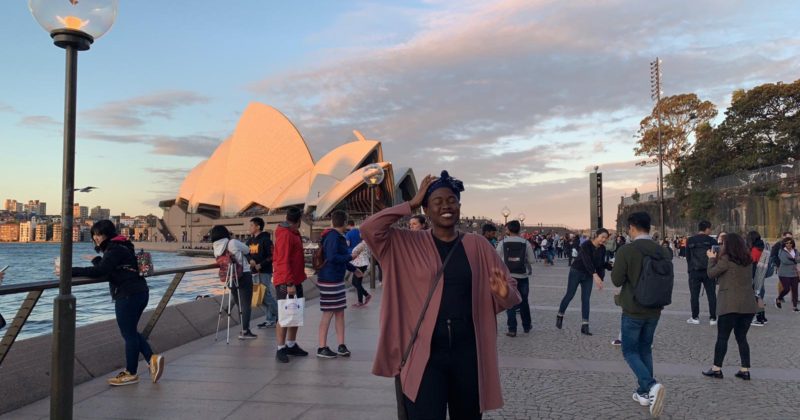
Guest Blog by Konyin Adewumi, MSc-GH '17 Last month, I was given the opportunity to present my research work at the International Papillomarvirus Conference in Sydney, Australia. I submitted an abstract entitled, “Female perspectives on male involvement in a human papillomavirus-based cervical cancer screening program in western Kenya”; a qualitative analysis that was part of an ongoing study at Duke’s Center for Global Reproductive Health. After taking the time to reflect on my experiences navigating such a great opportunity, I found that I had learned a few lessons that may be beneficial to others who are in my shoes – anyone that is early in their research career, unsure where the path is headed, but eager to make the most of the opportunities presented to you.     So here are my five lessons: One. Similar to your fieldwork, what can go wrong will go wrong. Plan accordingly—and when all else fails, learn to pivot. From arriving to the airport to find out that I...
Read More
World Health Organization Releases New App

World Health Organization Releases New App

The World Health Organization has recently launched its new app entitled “Medical Eligibility Criteria For Contraceptive Use.” The purpose of the app is to allow anyone with a smartphone to be able to access recommendations for the best and proper contraceptive methods according to one's medical conditions. The WHO released the fifth edition of the medical eligibility criteria (MEC) in 2015 as a 276 page document as “part of the process for improving the quality of care in family planning” for “guidance on the safety of various contraceptive methods for use in the context of specific health conditions and characteristics.” The app condenses this information into an easily accessible and user-friendly interface. MED takes into account a woman’s medical condition and history in order to note which contraceptive methods would adversely affect the woman and to note if the condition could interfere by making the contraceptive method less effective. It truly emphasizes safety as a priority to promote female reproductive...
Read More