April 2020 Director’s Message

April 2020 Director’s Message

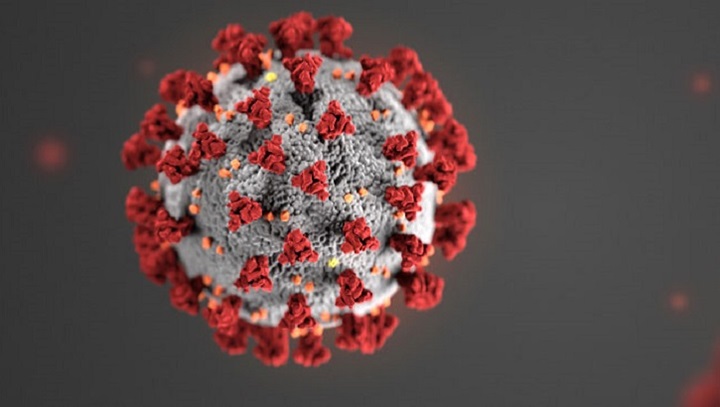
As this very unusual semester comes to an end, the world around us is filled with uncertainty. The Covid-19 crisis has changed our learning, working, and social environments in profound ways that would have seemed unimaginable just a few months ago. The challenges of transitioning to online learning are capped by the disappointment of missing out on the rituals that come with spring at Duke, especially LDOC and graduation activities. We are faced with uncertainty about when we’ll see friends and classmates again, stress associated with working at home while ostensibly caring for and schooling our children, and navigating the continuously changing work demands and structures. On top of this, most of us are worried about the health and safety of loved ones and are wondering when we will get back to normal—and what normal will look like. It may seem that now is not the time to focus on sexual and reproductive health and to prioritize issues directly related...
Read More
An Update on the Rakellz Dream Initiative from Robert Zulu

An Update on the Rakellz Dream Initiative from Robert Zulu

Most cervical cancer is highly preventable and can be cured if diagnosed early, yet women across the world suffer high rates of cervical cancer. One such place is Zambia, where the Rakellz Dream Initiative was founded. After losing his wife to cervical cancer in 2015, Robert Zulu decided to launch a cervical cancer education program in Zambia. Now at 36 years old, he is the the founder and executive director of the Rakellz Dream Initiative, a non-governmental organization with a team of over 50 youth volunteers working to raise awareness around cervical cancer through outreach activities and informational films. The long-term vision of the Rakellz Dream Initiative is to help increase cervical cancer knowledge across Zambia to mitigate and prevent terminal diagnoses by the year 2025. When he spoke about his reasons for forming the Rakellz Dream Initiative, Zulu said he wanted to help reduce the ignorance about cervical cancer among the people of Zambia. “When I was nursing my late wife,...
Read More
Trump and “Birth Tourism”

Trump and “Birth Tourism”

A development to the U.S. visa policy instituted by President Trump occurred this past week on January 24th—officials now have the authority to deny a woman a tourist visa if they think that the woman is pregnant and coming to the U.S. in order to give birth (CNN). In analyzing this rule, it is pertinent to note the 14th amendment which states, “All persons born or naturalized in the United States, and subject to the jurisdiction thereof, are citizens of the United States," and it is relevant because even if a child’s parents are not citizens of the U.S., if they are born on U.S. soil, they can claim citizenship (NPR). The State Department defended the rule by stating “birth tourism poses risks to national security” and women wanting to secure citizenship for their children should not be allowed into the country (NPR). This rule however does not apply to 39 countries, the majority of which are in Europe, that...
Read More
ICPD: 25 Years Later

ICPD: 25 Years Later

Article by Diya Chadha The International Conference on Population and Development held in 1994 in Cairo, Egypt, brought 179 countries together behind the common goal of bringing improved reproductive health care and rights to the forefront of international policy and development efforts. Though the call for action primarily dealt with the state of healthcare access in more developing parts of the world, as well as the way women are structurally excluded from such accessibility, the inherent link between health and empowerment was established. Thus, the idea that this access to healthcare is instrumental in achieving women’s empowerment and further gender equality was highlighted. Now 25 years later, the ICPD met in Nairobi, Kenya for ICPD25 to “re-energize” the vision put forward back in Cairo. Specifically, they have resolved to end “all maternal deaths, unmet need for family planning and gender-based violence and harmful practices against women and girls by 2030.” The price tag for this task? $264 billion. Public sector civil organizations,...
Read More
New York Passes Anti-Discrimination Laws on Basis of Reproductive Healthcare History

New York Passes Anti-Discrimination Laws on Basis of Reproductive Healthcare History

Article by Diya Chadha In the wake of attacks on reproductive health rights over the past year, a number of states have taken countering actions by passing pieces of statewide legislation that protect such rights. This has manifested in different ways. Earlier this year, parts of New York listed sexual and reproductive health rights as protected under the New York City Human Rights Law, with coverage ranging from being able to use birth control and contraception to having access to an abortion. New Jersey has been looking towards allocating nearly $9 million worth of state funds to organizations like Planned Parenthood to cover the gap in their funding caused by the defunding of Title X. These are just a few examples among many across the country. Just this past week, New York has again added to this set of protections by passing an antidiscrimination law protecting laborers from discrimination because of their reproductive health decision-making histories. There are three overarching sections:...
Read More
The American Anti-Abortion Strategy

The American Anti-Abortion Strategy

Article By: Diya Chadha Over the past year, a series of restrictive anti-abortion legislation have been passed in states like Georgia, Kentucky, and Alabama. Courts have blocked their constitutionality, with the last case (Alabama) struck down this past month. Passage of such legislation would have resulted in a reversal of Roe v. Wade as many have called for six-week bans, which for many women, would limit their opportunity to get an abortion to a timeline before they may even realize they are pregnant. In other cases, states have called for outright bans on abortion at any stage of pregnancy, with no exceptions for rape and incest. The actions that are taking place “behind the scenes” of this more publicized series of events is equally as problematic. What’s worse is that they receive far less recognition as a relevant force in the anti-abortion effort. These “incremental” laws are state-by-state restrictions that impose what may seem to be minor restraints on the capabilities...
Read More

Evaluating Quality in Maternal Health Interventions Moderator Reflection

By Uma Govindswamy November, as a part of the Center for Global Health’s Reproductive Health in Africa Speaker Series, sponsored by the Africa Initiative, Dr. Joy Noel Baumgartner and Dr. Rohit Ramaswamy lectured on the topic: Evaluating Quality in Maternal Health Interventions. Dr. Joy Noel Baumgartner is the Director of the DGHI Evidence Lab, the lead of the DGHI Global Mental Health Working Group, and a professor here at Duke University. She has been an active public health practitioner and researcher for over 20 years and has worked in countries such as Cameroon, Kenya, India, South Africa, Jamaica, Tanzania, Ghana, and Uganda. Dr. Rohit Ramaswamy is Director of the Center for Global Learning and a Professor in the Department of Maternal and Child Health at UNC’s Gillings School of Global Public Health. His past research has focused on implementing delivery systems that improve the quality of healthcare for women in low-resource settings including India, Ghana, Nigeria, and Uganda, to name a...
Read More

Stigma and Reproductive Health Moderator Reflection

By Saumya Sao On November 1st, 2019, the Center had its first lunch talk in the 2019-2020 Reproductive Health in Africa lunch series. The panel focused on HIV stigma and reproductive health. I had the pleasure of moderating the panel, which was made up by: Megan Huchko, MD, MPH who is an OB/GYN and directs the Center for Global Reproductive Health at DGHI; Michael Relf, PhD, RN who is the Associate Dean for Global and Community Affairs in the School of Nursing; and Godfrey Kisigo, MBChB, who is a second year MSc-GH student and Tanzanian physician. Over the past year, I’ve had the privilege of working with Godfrey on a team led by Dr. Melissa Watt. Our team has been developing and carrying out an HIV stigma reduction intervention in Moshi, Tanzania. Throughout just two years of studying global sexual and reproductive health, I’ve seen how critical it is to consider the impact of stigma on care engagement and reproductive health education, so I...
Read More
Sexual Reproductive Rights – The Case of Social Exclusion

Sexual Reproductive Rights – The Case of Social Exclusion

Article by Sandra Y. Oketch Globally, access to sexual reproductive health rights (SRHR services) have been greatly hampered by social exclusion, more so in Africa. In November 2019, Kenya was privileged to host the United Nations summit -  International Conference on Population and Development (ICPD 25) - which focused on diversity, abortion care, ending gender based violence, elimination of female genital mutilation, FGM, ending unmet need for family planning, comprehensive sexuality education, mental health and psychosocial support, HIV prevention for adolescent girls and women. Women and other minority groups experience social exclusion when women and girls get abortions, when girls fail to undergo traditional practices of some communities, like the FGM, and are considered outcasts, and when individuals identify as Lesbian, Gay, Bisexual, or Transgender, LGBT. There exists high maternal morbidity and mortality in women due to unsafe abortion practices. In Kenya, abortion is illegal and only legalized in instances where the health care provider assesses that the life or health of the...
Read More
Sensitization meeting on RMNCAH and immunization budgeting in Kisumu County

Sensitization meeting on RMNCAH and immunization budgeting in Kisumu County

By: Sandra Y. Oketch The Duke Center for Global reproductive health Kenya team had an interactive session on October 29, 2019 with the Ministry of Health and CSOs to discuss on Reproductive Maternal Neonatal Child and Adolescent Health (RMNCAH) and Immunization advocacy to ensure proper budgeting and sustainability. The discussions revolved around the critical pillars in budgeting that include: transparency and accountability; public participation and strategic planning. Some of the gaps in the Kisumu County Annual Development Plan (ADP) included: The lack of clear cut priorities for the FY 2019/20 and the public participation is not prioritized nor costed. All members present acknowledged the need for advocacy on the key stages in budgeting that include budget formulation, approval, implementation and Auditing. It was an exciting 1st advocacy collaborations to push for more transparent budget cycle on RMNCAH + Immunization with the CSO roles revolving around providing support in dissemination of the National County RMNCAH + Immunization policies and guidelines; Organize and conduct sensitization...
Read More