Faculty Spotlight: Joy Noel Baumgartner

Faculty Spotlight: Joy Noel Baumgartner

By: Angela Huang Across the past 6 years with Duke, Dr. Joy Noel Baumgartner has done incredible work within the fields of global mental health, studying maternal mental health, psychotic disorders and HIV/RH services in low resources settings across the world. She acts as the Director of the Evidence Lab and the Global Mental Health Working Group in Duke’s Global Health Institute. Furthermore, she acts as an Associate Research Professor of global health teaching classes related to maternal and child health. She also collaborates as a Faculty Network Member of the Duke Institute for Brain Sciences. She has conducted research everywhere from Tanzania to Jamaica, exploring how various community interventions may improve mental health and reproductive health. To highlight her recent work, she’s worked with other researchers in Duke and Guatemala to examine the factors that may prevent or promote implementing a perioperative patient safety program in the Roosevelt Hospital in Guatemala. They found that limited resources, leadership engagement, and knowledge were...
Read More
Adolescent girls and young women are disproportionately affected by COVID-19

Adolescent girls and young women are disproportionately affected by COVID-19

This last summer I worked as a Policy Intern at Friends of the Global Fight Against AIDS, Tuberculosis, and Malaria. Friends of the Global Fight Against AIDS, Tuberculosis, and Malaria advocates for U.S. support and investment in the Global Fund and other health programs by engaging with U.S. policymakers, connecting with key stakeholders, and educating the broader community about improving global health. The COVID-19 pandemic presents serious threats to progress made in the fight against AIDS, tuberculosis, and malaria—specifically, analyses from Imperial College, UNAIDS, the Stop TB Partnership, WHO, and others suggest that the annual death tolls of these three diseases could nearly double due to consequences of COVID-19. As a result, Friends has shifted gears to directly recognize COVID-19 as a leading global health threat. Friends is actively involved in actions to mitigate the spread and effects of COVID-19 and is currently focused on boosting U.S. investment in a global response to the virus.  During my internship, I had the...
Read More

Studying Global, Staying Local

By: Ema Kuczura and Sarah Hubner  When we entered the Student Research Training Program, we were preparing ourselves to deal with many challenges, including learning new research skills and navigating cultural differences. Working with DGHI Doctoral Scholar, Kelly Hunter, our goal was to understand the impact of the Global Gag Rule on health care providers and non-governmental organizations in Western Kenya. The Global Gag Rule formally referred to as the Protecting Life in Global Health Assistance Policy, “aims to ensure that US tax-payer funding does not support foreign non-governmental organizations that perform or actively promote abortion as a method of family planning” (Michael Pompeo, US Secretary of State). We were planning on using our time in Kisumu to conduct in-person interviews with stakeholders in the reproductive health sector. However, when we heard the news that pandemic would make it impossible to travel to Kenya as we initially anticipated, we knew achieving the goals we set forth for the summer would require newfound...
Read More
October 2020 Director’s Message: Let’s make 2020 count, while it lasts

October 2020 Director’s Message: Let’s make 2020 count, while it lasts

When I wrote my last newsletter, Covid had sent students home for the rest of the spring semester, and many in the reproductive health community were wondering whether and how to engage in advocacy during the pandemic. In the past five months, Covid has transformed from a time-limited public health emergency, into our daily public health reality. Duke has settled into a new normal with a transformed campus life, including more social distancing, online and hybrid classrooms and an active surveillance program for faculty, staff and students. Our teams in Kenya and Uganda have used the research pause to strengthen their relationships with the local partners in sexual and reproductive health, mental health and cancer care, utilizing zoom workshops and webinars to build their networks and develop strategies to reimagine health care for the Covid and post-Covid era. Similarly, Blue Devils have risen to the occasion. Students have worked hard to engage online, balancing the new demands of masking, social...
Read More
Settings and Preparedness in Protecting the Most Undeserved in Humanitarian and Fragile Settings During the COVID-19 Pandemic

Settings and Preparedness in Protecting the Most Undeserved in Humanitarian and Fragile Settings During the COVID-19 Pandemic

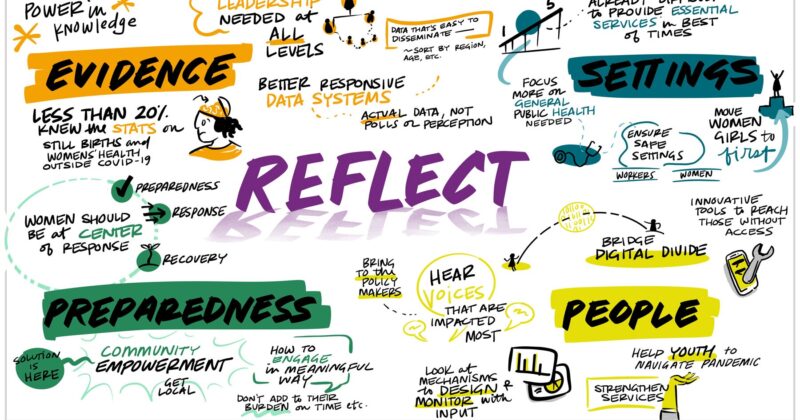
By: Sandra Yvonne Oketch COVID-19 has impacted negatively the women’s, children and adolescents’ health and wellbeing in immeasurable ways. The Lives in the balance COVID- 19 virtual summit held on July 1 and 2, 2020 brought together experts from different fields for an opportunity to listen, discuss and actually reflect on COVID-19 impact and collectively work on a healthy recovery. The breakout sessions included reflections on: One, understanding the humanitarian and fragile settings around protecting the most undeserved including women, children and adolescents; Two, the preparedness in protecting the most undeserved including women, children and adolescents in humanitarian and fragile settings. SETTINGS. Protecting the most undeserved: women, children and adolescents in humanitarian and fragile settings This session was facilitated by Marydale Oppert from International Rescue Committee, IRC who discussed on ways to protect the undeserved in humanitarian and fragile settings. IRC works in over 40 countries in the world mostly with displaced populations and refugees. The pandemic has led to increased disparities in...
Read More
Building Evidence on COVID-19’s Impact on the Health of Women, Adolescents and Children

Building Evidence on COVID-19’s Impact on the Health of Women, Adolescents and Children

By: Sandra Yvonne Oketch The Lives in the balance COVID- 19 virtual summit on July 1 and 2 had an interesting breakout session examining evidence on COVID-19 impact on the health of women, children and adolescents. This session was facilitated by Joy Lawn, Professor, London School of Hygiene & Tropical Medicine. It is important to note that in 2019, there were already over 9 million deaths of women and children, with over 50% of these deaths related to pregnancy and birth. This current pandemic exacerbates this situation and undermines the ‘Every Woman Every Child’ campaign efforts.  The ‘Every Woman Every Child’ campaign is a global movement launched by the United Nations that mobilizes and intensifies actors including International and National action by Governments, multilaterals and civil societies to address the major health challenges facing women and children globally. Some of the campaign’s targets to end preventable death for women and children and ensure their health and well-being include: No woman should die...
Read More

Barriers of Access to HIV Treatment Speaker Event

On March 5, 2020, speakers Dr. Tolu Oladele and Dr. Carl Mhina presented on the topic "Barriers of Access to HIV Treatment" as part of the Center for Global Reproductive Health's Reproductive Health in Africa Speaker Series, sponsored by the Africa Initiative. Dr. Oladele is an obstetrician and gynecologist from Nigeria, visiting Duke as a Policy Fellow. Dr. Mhina has studied Health Economics and currently works as a researcher in the Department of Population Health Science who works to understand the impact of HIV on different populations. Dr. Oladele began the presentation speaking about the Prevention of Mother to Child Transmission (PMTCT) of HIV in Nigeria. Only around 50% of expectant mothers are tested for HIV, and attendance at antenatal clinics is low, with around 18% of expectant mothers attending in their first trimester. This inadequate maternal care is in part due to low numbers of facilities that provide such services. In Nigeria, there are approximately 50,000 to 60,000 women with...
Read More

Effects of COVID-19 on Sexual Reproductive Health and Rights (SRHR) among Young People in Africa

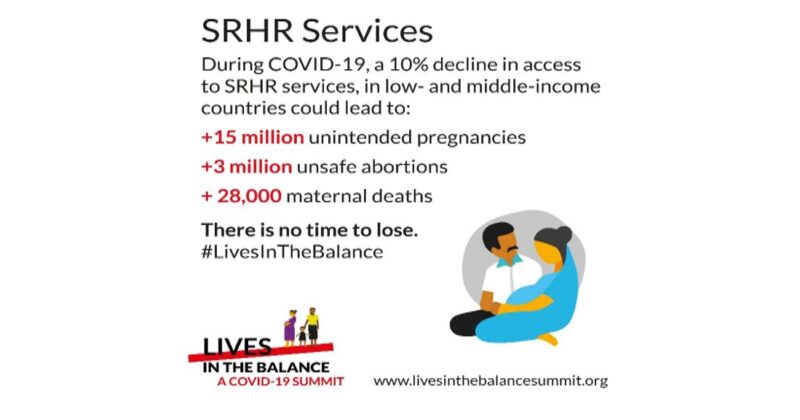
By: Sandra Y. Oketch Mid-April, I was privileged to join the Live webcast on discussions around the Effects of COVID-19 on Sexual Reproductive Health and Rights (SRHR) among young people in Africa. The panelists included experts in the medical, advocacy, and policy fields: Dr. Charlene Biwott (KEMRI, Kenya), Millicent Sethaile (Her Voice Ambassador, Botswana), and Levi Singh (Youth SRHR Strategy Officer, South Africa). The moderator was Evelyne Odhiambo (AfNHi Youth Cohort, Kenya). Important to note were conversations around the vulnerability of young people during this pandemic where the younger populations have so far been the least vulnerable to complications and death from COVID-19 and yet play a very key role in flattening the COVID-19 curve by minimizing transmissions to the vulnerable populations in our society that include the immune-compromised and the elderly. Currently, there has been a great shift of focus in Africa to cater to the COVID-19 pandemic thereby impacting negatively in other areas including SRHR. Some of the effects on...
Read More

COVID-19 and Gender

During the current COVID-19 pandemic, it is important to view aspects of how the virus and its crisis affect men and women differently across the world and specifically in the United States (COVID-19: A Gender Lens). It seems that in areas where thousands have been diagnosed with COVID-19, more men appear to be infected and dying than women—although the biologic reasons behind these observations are not yet fully clear. A news article published on April 7, 2020, figures reported from New York City’s Health Department show “there have been nearly 43 Covid-19 deaths for every 100,000 men in the city, compared with 23 such deaths for every 100,000 women” (Rabin). According to the article “The gendered dimensions of COVID-19” in The LANCET, an organization called Global Health 50/50 tracks sex-disaggregated infection and mortality COVID-19 data from 39 countries (The Lancet). This data from Global Health 50/50 shows more men are dying from COVID-19 and finds that particularly threatening outcomes of the...
Read More
Feature Collaboration: Kenya Medical Education Trust (KMET)

Feature Collaboration: Kenya Medical Education Trust (KMET)

By: Sandra Y. Oketch The Kenya Medical Education Finance Trust (KMET) is a non-governmental organization founded in 1995 with a focus to promote innovative and sustainable health and education programs among underserved communities. KMET operates in 35 out of the 47 Counties in Kenya, as well as regionally in East and Central Africa. The organization engages in a number of sexual reproductive health and rights (SRHR) programs. Reproductive, Maternal, New-born and Child Health (RMNCH)  KMET endeavors to promote maternal and child health (MCH) services through its RMNCH program. These include: increasing awareness to and use of contraception and comprehensive abortion care services and strengthening the capacity of the health care providers to offer youth-friendly services; Provide gynecological, antenatal and postnatal care services; wide range contraception methods, cervical cancer prevention efforts through early screening and treatment in partnership with the Cure Cervical Cancer Organization. KMET, in partnership with Harvard School and Izumi Foundation, has developed an innovative and affordable device in the management of postpartum...
Read More