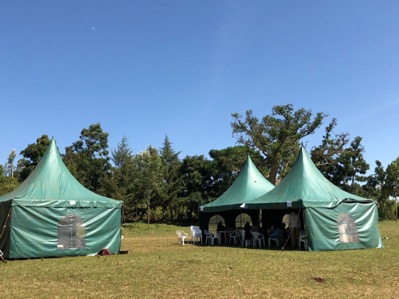
Not much changes yet everything seems different whenever I return to my home country of Kenya. I was reminded of my first time in Kisumu last year with Dr. Megan Huchko & Katelyn Bryant-Comstock and how anxious I was, even though I was in Kenya, I was completely unfamiliar with this region, the local language, and the culture. Last year, I was a rising junior filled with high hopes, yet naïve of the intricacies of proposing a project and carrying it out. This year, I have returned with much more practical expectations as well as a greater capacity to carry out my project: using GIS spatial mapping to enumerate the risk of loss-to-follow up for treatment of HPV. My project is taking place in Migori, Kenya as a part of the ongoing Cervical Cancer Screening & Prevention Study. The use of geographic information systems will help us create correlations between women’s sociodemographic variables as risk-factors and treatment loss-to-follow up rates....
Starting at age 21, you get regular pap smears. You get in your car, drive on a paved road to an Ob/Gyn or primary care clinic, and have the pap done, with relatively little effort on your part. That’s how cervical cancer screening works for most women in the United States and most other developed countries. In these countries, pap smears have significantly reduced rates of cervical cancer and resulting deaths. It’s a different story in developing countries like Kenya. In East Africa, cervical cancer is the most common cancer in women, even surpassing breast cancer. In Kenya, only 3.5%[1] of eligible women ever get screened for cervical cancer, and it’s difficult for those that screen positive for precancer or cancer to access treatment. Some barriers relate to infrastructure, as cervical cancer prevention and treatment requires resources including skilled providers, supplies, and transportation of specimens. To try to overcome some of these systems issues, Dr. Megan Huchko (director of the Center for...
When people ask how my summer internship is going, I never know what exactly to say. I usually end up blurting out a rapid mix of emotions: “It’s great!” “I love it!” “But it’s also really sad!” “Super depressing day to day, but I care a lot about the work.” “An awesome place to work but a sad field to be working in right now.” I’m interning at the United Nations Foundation in Washington, DC on the Universal Access Project, which convenes donors and advocates working to improve women’s and girls’ access to family planning around the world. Family planning is a fundamental human right and undeniably one of the best investments countries can make towards sustainable development—it can enable girls to stay in school, prevent maternal deaths, improve women’s financial independence and economic productivity, and has even been identified as a top solution to combat climate change. The Duke Center for Global Reproductive Health and other NGOs have reported frequently about...
As we close out the academic year and head into the hot North Carolina summer, the halls of Trent get a lot quieter. To some, this calm may suggest a mass exodus to the beach or some other vacation destination. However, for faculty, students and staff, the empty offices belie a frenzy of work, as many head off to field sites around the world. Summer break represents a time to re-focus on the work that inspires students, trainees and faculty to put in the hours teaching, writing and learning throughout the year. We use this time to launch new projects, reconnect with their research teams and develop or deepen our partnerships. As we previously described, we have a very busy summer planned with work and site visits in western Kenya, while back at home, continuing with the launch of the Collaboratory project and the Big Data for Reproductive Health Summer team. I spent the last two weeks in June in Nairobi,...
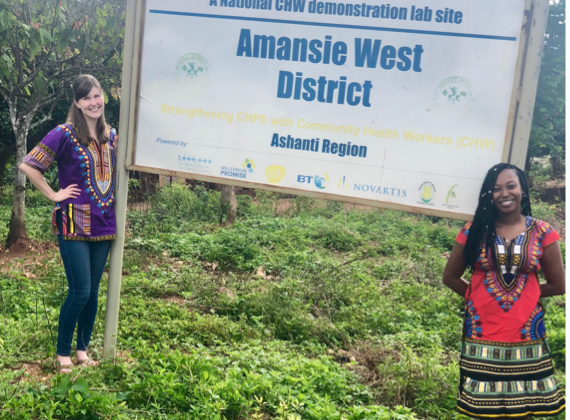
I’m currently in Amansie West, Ghana as part of a team conducting research on the barriers and facilitators to family planning use and the role community health workers play in family planning uptake. During this time, I was invited to attend Ghana Health Service’s first National Maternal, Child Health and Nutrition Conference by Millennium Promise, a co-sponsor of the conference and our collaborator in country. The collaboration with Millennium Promise first began back in September when Chief Nat Ebo Nsarko, the Country Director visited Duke University. From the beginning this team has been our guide for conducting research in Ghana through assisting us in each task and facilitating our learning experience. It is through their contributions and dedication which have allowed this research to not only be possible but successful. The theme of the conference was “Strengthening Partnerships for Achieving Universal Health Coverage in Reproductive, Maternal, Newborn, Child and Adolescent Health and Nutrition.” Gladys Ghartey (Head of UN System Unit at...
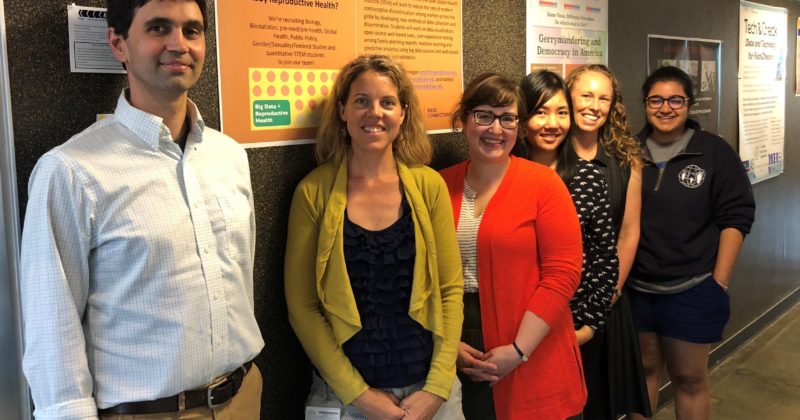
On Monday afternoon, the Big Data for Reproductive Health Data+ Team met with Alex Pavluck and Alison Mitchell LeFew from RTI to describe their project and get direction in how to develop a “minimally viable product.” The meeting represents one of the first educational engagements of the Duke-RTI Collaboration. The goal for the 10-week Data+ project is to build a web-based application that will allow users to visualize and analyze contraceptive calendar data from the DHS. Students presented their research on currently available tools, identifying core elements they liked and key areas a new tool could improve. Pavluck, a senior manager for information and communication development for the Global Health Division of the International Development Group at RTI, shared his experience and provided advice on how to develop an MVP for user testing. The active discussion ranged from big picture needs to the technical details necessary to move the project forward. The meeting was a great example of key stakeholder...
Cost concerns now dominate considerations for the expanded use of HPV screening for cervical cancer prevention in high and low-resource settings. As part of a trial comparing two implementation strategies for HPV testing offered via self-collection, our team recently published innovative analyses of the material and time costs for each strategy. In the larger trial, the team showed that HPV-screening through community-health campaigns (CHCs) reached more women than testing in government-supported health facilities. These new papers show that HPV-screening through CHCs was also lower in cost and provided a quicker and more efficient experience for women compared to offering HPV screening at health clinics in rural Kenya. The next step is a cost-effectiveness analysis to compare alternative screening and treatment strategies using primary data from this study along with, published data to determine the cost per disability-adjusted life year (DALY). These results can be used to help policy-makers and funders make key decisions about how to implement cervical cancer prevention...
I’m excited to introduce a new monthly feature in which we reflect on current Center activities, upcoming events, and important reproductive health topics in the news. For my first blog, I want to reflect a little on why we wanted to create a Center for Global Reproductive Health at Duke, and what we are planning to do. We created this Center to help catalyze new relationships, research ideas and advocacy that will address the reproductive and sexual health disparities we see around the world. These stark disparities in health outcomes and human rights disproportionately impact women, and have remained present in the face of phenomenal expansions in technology, financing and health systems. They are driven by poverty, gender disparities, restrictive policies, and failure to recognize or implement effective, evidence-based solutions. We’ve all heard about the World Bank report that says more people have access to cell phones than toilets—well, certainly cell phone access is substantially greater than access to cervical cancer...
Earlier this week, Willie Parker challenged members of the Duke Ob/Gyn Department to remember their role as patient advocates in an inspiring grand rounds lecture, “Advocacy for Reproductive Justice: How Much Fight is there in the Dog?” Dr. Parker, author of Life’s Work: A Moral Argument for Choice, a memoir of how his evangelical upbringing influenced his decision to become an abortion provider, talked about racial and ethnic disparities in unwanted pregnancies, and how the Reproductive Justice movement evolved to address these and broader inequities in sexual and reproductive health. He described how limitations in Medicaid coverage for pregnancy and childcare services disproportionately impact the same groups of women at highest risk for unplanned pregnancy. When access to abortion services is limited, as has been steadily happening for the past 15 years, it is these women who are most vulnerable to not be able to exercise their own choice in determining when and how they want to raise their family. Dr....
It’s been a busy spring semester here at the Center for Global Reproductive Health. We opened the semester with the inaugural Global Reproductive Health Leadership Symposium which brought together ten east African researchers and over 25 Duke fellows, researchers and students for a three-day hands-on meeting at Duke. Attendees shared areas of research, participated in grant writing workshops, and received in-depth training on leadership and mentorship. One of the key events from the Symposium was a lunch session “How Gender, Race, and Ethnicity Can Impact Leadership Opportunities”. With a standing room only crowd, Lola Fayanju from general surgery, Nimmi Ramanujam from Pratt, and Provost Sally Kornbluth engaged in a lively discussion moderated by Kathy Sikkema on their career paths, decision points, and how they have defined themselves as leaders. They also shared key insights on what it felt like to be trailblazers in their respective fields. It was an incredible panel that brought together multiple different sectors and provided real-life context...