Director’s Blog: May 2018

I’m excited to introduce a new monthly feature in which we reflect on current Center activities, upcoming events, and important reproductive health topics in the news. For my first blog, I want to reflect a little on why we wanted to create a Center for Global Reproductive Health at Duke, and what we are planning to do. We created this Center to help catalyze new relationships, research ideas and advocacy that will address the reproductive and sexual health disparities we see around the world. These stark disparities in health outcomes and human rights disproportionately impact women, and have remained present in the face of phenomenal expansions in technology, financing and health systems. They are driven by poverty, gender disparities, restrictive policies, and failure to recognize or implement effective, evidence-based solutions. We’ve all heard about the World Bank report that says more people have access to cell phones than toilets—well, certainly cell phone access is substantially greater than access to cervical cancer...
Read More
Guttmacher-Lancer Commission on Sexual and Reproductive Health and Rights releases report in special Lancet edition

Guttmacher-Lancer Commission on Sexual and Reproductive Health and Rights releases report in special Lancet edition

Last week, the Lancet published a series of articles resulting from the Guttmacher-Lancet Commission on Sexual and Reproductive Health and Rights. This important commission highlighted the links between SRH and rights, and the crucial role that both play in sustainable development. The commission advocates for inclusion of SRH services into universal health coverage, as one step in making them accessible and affordable to all individuals, regardless of age, race, SES, sexual orientation or sexual identity. Finally, they extol countries to make crucial reforms to promote gender equality and give women greater control over their bodies.  This timely series of articles can be found at the Lancet website....
Read More
Advocacy for Reproductive Justice

Advocacy for Reproductive Justice

Earlier this week, Willie Parker challenged members of the Duke Ob/Gyn Department to remember their role as patient advocates in an inspiring grand rounds lecture, “Advocacy for Reproductive Justice: How Much Fight is there in the Dog?” Dr. Parker, author of Life’s Work: A Moral Argument for Choice, a memoir of how his evangelical upbringing influenced his decision to become an abortion provider, talked about racial and ethnic disparities in unwanted pregnancies, and how the Reproductive Justice movement evolved to address these and broader inequities in sexual and reproductive health. He described how limitations in Medicaid coverage for pregnancy and childcare services disproportionately impact the same groups of women at highest risk for unplanned pregnancy. When access to abortion services is limited, as has been steadily happening for the past 15 years, it is these women who are most vulnerable to not be able to exercise their own choice in determining when and how they want to raise their family. Dr....
Read More
Bringing Multi-Purpose Prevention Technology Development into the Global Spotlight

Bringing Multi-Purpose Prevention Technology Development into the Global Spotlight

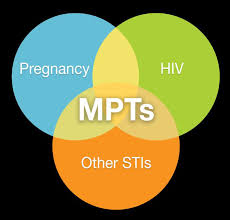
Multi-purpose prevention technologies (MPTs) are the future for female-driven sexually transmitted infection (STI) and unplanned pregnancy prevention. Although dozens of products are in the MPT development pipeline, including several at the final stages of clinical trials, progress in development has been slow, and investment paltry. In my last post, I discussed the technical and scientific barriers that are slowing down MPT research. Today I will highlight the comparable societal barriers, namely: lack of government willpower, widespread poor understanding of the depth and breadth of these health issues, and funding troubles. First, though HIV and unplanned pregnancies receive substantial attention in the fields of global health and development, other STIs tend to be much more overlooked. Fewer global health organizations conduct regular surveillance of non-HIV STIs, preventing more funding from going to their prevention. For instance, the World Health Organization’s (WHO) 2015 Report on global sexually transmitted infection surveillance reported an estimated 357.4 million new infections worldwide (roughly 1 million per...
Read More
What We’ve Been Up To and What’s Next

What We’ve Been Up To and What’s Next

It’s been a busy spring semester here at the Center for Global Reproductive Health. We opened the semester with the inaugural Global Reproductive Health Leadership Symposium which brought together ten east African researchers and over 25 Duke fellows, researchers and students for a three-day hands-on meeting at Duke. Attendees shared areas of research, participated in grant writing workshops, and received in-depth training on leadership and mentorship. One of the key events from the Symposium was a lunch session “How Gender, Race, and Ethnicity Can Impact Leadership Opportunities”. With a standing room only crowd, Lola Fayanju from general surgery, Nimmi Ramanujam from Pratt, and Provost Sally Kornbluth engaged in a lively discussion moderated by Kathy Sikkema on their career paths, decision points, and how they have defined themselves as leaders. They also shared key insights on what it felt like to be trailblazers in their respective fields. It was an incredible panel that brought together multiple different sectors and provided real-life context...
Read More
Why don’t we have more MPTs already?

Why don’t we have more MPTs already?

The term “multi-purpose prevention technologies” (MPTs) refers to any single technology that simultaneously protects users against sexually transmitted infections (STIs) and unintended pregnancy. As I discussed earlier this month, MPTs have recently garnered substantial attention and devotion from researchers, as well as a major increase in financial backing from donors. MPTs hold a tremendous potential to transform the lives of women everywhere, especially those in low- and middle-income countries (LMICs), where access to family planning and condoms for STI prevention can be a major challenge. Yet, despite innovative research and vast potential, the only MPTs currently on the market are still internal and external condoms. So, why haven’t more MPTs become available? At first glance, MPTs seem like a pretty simple concept—if a woman is already using a ring that emits drugs to prevent pregnancy, why not add in some prophylactic drugs that prevent HIV transmission as well? Yet, MPT research and development face a multitude of complex hurdles that need...
Read More
Thoughts from the Global Reproductive Health Leadership Symposium

Thoughts from the Global Reproductive Health Leadership Symposium

Godfrey Kisigo participated in our Global Reproductive Health Leadership Symposium in February. Godfrey is currently a study coordinator for Center core member Dr. Melissa Watt's Implementation science study on PMTCT care in Tanzania. "Attending the Global Reproductive Health Leadership symposium presented a unique experience to interact with notable researchers from East Africa and Duke University. I enjoyed the mentorship session the most, as it was featured with the presence of my mentor. I believe we have created potential collaborations in reproductive health research across East Africa and Duke University at large. I should not forget to mention that food was amazing, and the organizing committee was rocking." Read more about his experiences here!    ...
Read More
The Future (of STI Prevention) is Female

The Future (of STI Prevention) is Female

Currently, condoms are the only product on the market that provide individuals with dual protection against pregnancy and sexually transmitted infections (STIs), including HIV. The United Nations (UN) Department of Economic and Social Affairs recently reported a worldwide increase in condom use from 1994 to 2015. During this time, the percentage share of male condoms of all contraceptives used globally among married or in-union women aged 15 to 49 increased from 8% to 12%. In addition to condom prevalence, contraceptive use overall has increased rapidly since the creation of various modern methods (such as the pill and IUD) in the 1960s and 1970s. More women are using contraceptives now than ever before. Nonetheless, the UN also reported, “in at least one of out every four countries or areas with data, a single method accounts for 50 per cent or more of all contraceptive use among married or in-union women.” The most commonly used methods included the pill, injectables or IUDs—none of...
Read More

Despite Government Policy, Cervical Cancer Progress Stalls in India

In what might have been a leap forward for reproductive health, the Indian government unveiled an national oral, breast and cervical cancer detection protocol in 2016.  At the time, the initiative was lauded by public health professionals.  However, with little progress to show, the Ministry of Health and Family Welfare is attracting criticism. India leads the world in cervical cancer mortality with over 70,000 deaths per year.  Yet, its women often can't access appropriate screenings, and the government immunization schedule fails to include the HPV vaccine.  This contradicts vaccination recommendations by the WHO and the country's own National Technical Advisory Group on Immunization. It seems India may suffer from misgivings similar to those driving the worldwide anti-vaxxing movement.  A 2009 HPV vaccination trial of 25,000 Indian girls was stopped after the unrelated deaths of seven participants sparked public outcry. Stigma and logistical challenges also complicate cervical cancer screening efforts.  Considering India's "burgeoning youth population that is sexually experimenting at a younger age," this might prove an...
Read More

Nimmi Ramanujam

Faculty Profile: Nimmi Ramanujam Dr. Nimmi Ramanujam serves as the Robert W. Carr, Jr., Professor of Biomedical Engineering, a Professor of Pharmacology and Cancer Biology, and a Research Professor of Global Health at Duke University. Since arriving at Duke twelve years ago, Dr. Ramanujam has founded the Global Women’s Health Technologies Center and the Tissue Optical Spectroscopy Laboratory, through which she researches cervical and breast cancers, women’s health disparities, and the development of diagnostic tools for implementation in low-resource settings. Her team is currently developing a Point of Care Tampon (POCkeT) Colposcope, which will allow women to screen themselves for cervical cancer.   Dr. Ramanujam took a break from her work to discuss cancer research, technology uptake, and the importance of focusing on the horizon of global health innovation.   How did you decide what technologies to work on?   For Dr. Ramanujam, who had already conducted research on cervical and breast cancers, choosing to concentrate on cervical cancer was about prioritizing the “next generation of problems”...
Read More