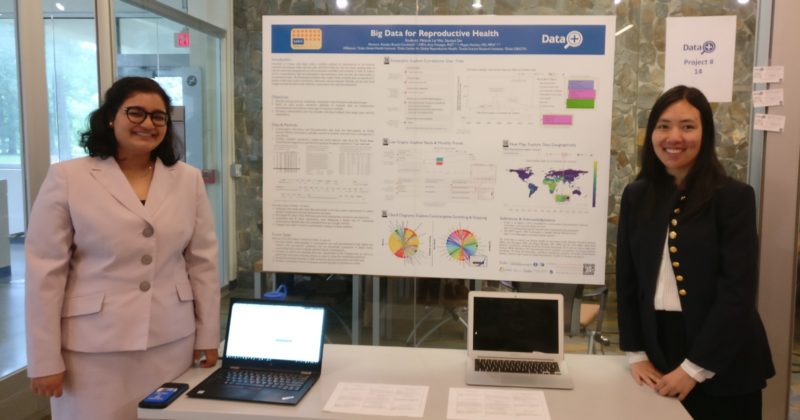
A month into the start of the new school year is a good time to reflect on the value the Center can bring to an academic setting like Duke. More salient is the recognition of the value that students and learners bring to Center. This is my third semester teaching Global Sexual and Reproductive Health, one of the core Center courses. The undergraduates continue to impress me with the experience and passion they bring to the classroom, to their research assignments and to their lives in the Duke community. Every year, I learn new things and gain new perspective from the discussions and viewpoints in brought forth in the course. This year, I’m leading two additional student research initiatives in which I already recognize that I’ll learn much more than I will teach the students. I have been working with students through the Big Data for Reproductive Health project since May, when Amy Finnegan and I helped manage a Data Plus...
Cryotherapy is a method used to destroy precancerous cells to keep them from turning into cancer later on. According to medical experts, early detection and treatment of cervical cancer has demonstrated to dramatically improve the chances of survival. This is good news, as cervical cancer remains the most prevalent form of cancer in women in many developing countries, Kenya included and worst more to HIV+ women who are more likely to suffer from this type of cancer due to compromised immunity. There have been concerted efforts by both the Kenyan government and the private sector to raise awareness and scale up screening and treatment services across the country, which has led to a steady rise and improvement in treatment facilities. The ability of a patient to attend a screening clinic and to return to clinic follow-up evaluation and possible treatment is an important component to the success of a screening program. Once she surpasses the myriad barriers she may face in understanding...
Reproductive health remains a health problem in Sub-Saharan Africa, Kenya included. Unless efforts to reduce maternal and newborn mortality and morbidity, improving access to family planning, and preventing HIV infection are scaled up, the majority of Kenyans remain at risk for poor health outcomes. Women face unsafe abortions, early marriage, and various forms of gender-based violence. They suffer silently from sexually transmitted diseases that make them vulnerable to cervical cancer and infertility, without access to the simple preventive measures like screening and vaccination. My experience working directly in the community and in health facilities has given me the opportunity to interact with various partners and many disadvantaged young men and women. Listening to their stories of teenage pregnancy, their beliefs in myths related to use of contraception, and experiences with HIV has made me keen to understand and try to address issues related to reproductive health. I met "Aisha" (not her real name) when her child was enrolled in a study I...
By Faith Otewa: One of our goals of the Center is to highlight some of the important work in Sexual and Reproductive Health taking place in Kisumu and Nyanza. We were thrilled to sit down with the Director of KMET (Kisumu Medical and Education Trust), a Kisumu-based NGO working to promote innovative and sustainable reproductive health and education programs among underserved communities. KMET works in the areas of Maternal, Child, Adolescent and Child Health, livelihoods and nutrition, education and youth/adolescent empowerment and quality healthcare financing. The organization has adopted an integrated model to provide a holistic care to women by offering specialized diagnostic services like Family Planning Services (FP), Immunization, and HIV Testing, Cervical Cancer Screening and Laboratory services. A well-stocked dispensing pharmacy is also in place. KMET also houses a Youth Friendly Clinic for its youthful clients of reproductive age. The services offered at the center are affordable. With growing evidence that a substantial number of girls, children and women in Kisumu...
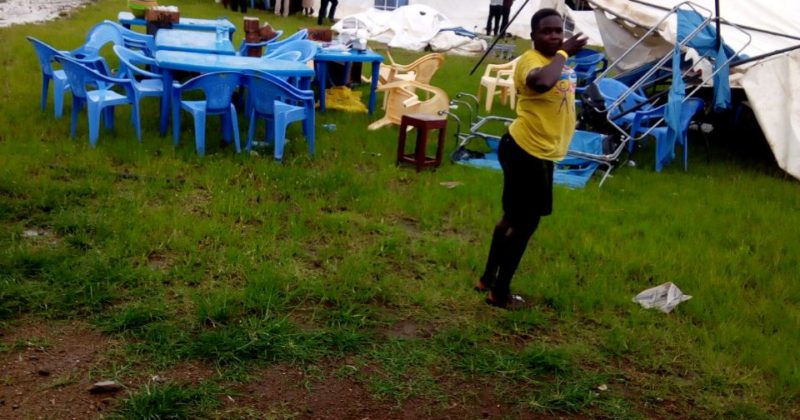
Sandra Yvonne Oketch has been working with Dr. Megan Huchko and the FACES team the Nyanza Region of western Kenya for the past ten years. She has 10 years’ work experience in both health research and program set up in maternal reproductive health and HIV/ AIDS care and prevention. She started as a Clinical and Community Health Advisor at FACES, where she became interested in the cervical cancer screening and prevention program. After going back to school to complete her degree, she is now the study coordinator of a cluster randomized trial testing two implementation strategies for HPV testing. Her roles include managing the study team, partnering with the reproductive health team to implement study activities and evaluating some of the study data. The work of enrolling and following up almost ten thousand women is not without challenges. In addition to the inherent challenges of coordinating a study that size, Oketch has had to deal with flooding, flyaway tents, political...
Blog by Faith Otewa In my role as site coordinator of the Kisumu Center office, I’ve had the opportunity to oversee the “Hybrid Study,” in which we are looking at integrating HPV testing into community health campaigns providing multiple other disease services, including HIV testing, family planning and TB testing. Many of the experiences will linger on with us for many years to come; while some illustrate the challenges encountered in conducting research and community-based care in Africa, others show the power of community mobilization and knowledge. It is the 10th week out in the field and the study team are getting ready to recruit at the 3rd set of campaigns. However, as if often the case in western Kenya, and certainly when we are working in tents set out in the middle of fields, the climate has had a big impact on study. The harsh weather and copious rainstorms experienced in the month of May this vastly affected recruitment. There has...
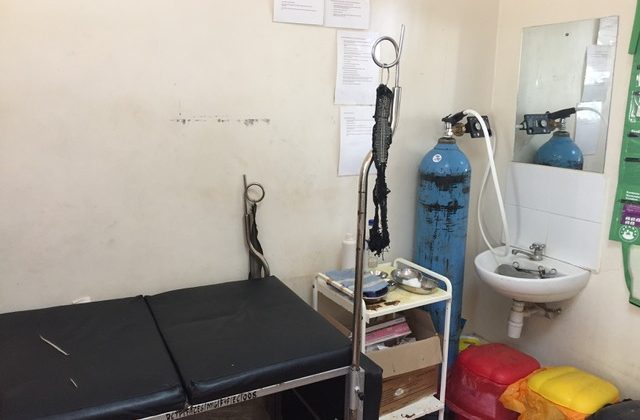
Blog by Charlotte Page, Ob/Gyn Resident: This is a follow-up post to “Patient Barriers to Cervical Cancer Prevention in Kenya”. I’ve realized while in Kenya that there are a lot of things I take for granted in bathrooms in the US: running water, a toilet that flushes, toilet paper, soap, and electricity. If you’re missing one of these things, the restroom is that much more uncomfortable – or perhaps even unfunctional. Similarly, small systems issues here in Kenya can inhibit women from receiving the healthcare they need. For the HPV-positive women in the study I’m working on, such problems can significantly increase the amount of time and effort required to get treated with cryotherapy, to the point that some women don’t obtain treatment at all. To paint a picture: yesterday I was at Migori County Referral Hospital (MCRH), one of the sites where cryotherapy is provided in our study. This procedure uses compressed gas to freeze precancerous cells on the cervix, thereby preventing them...
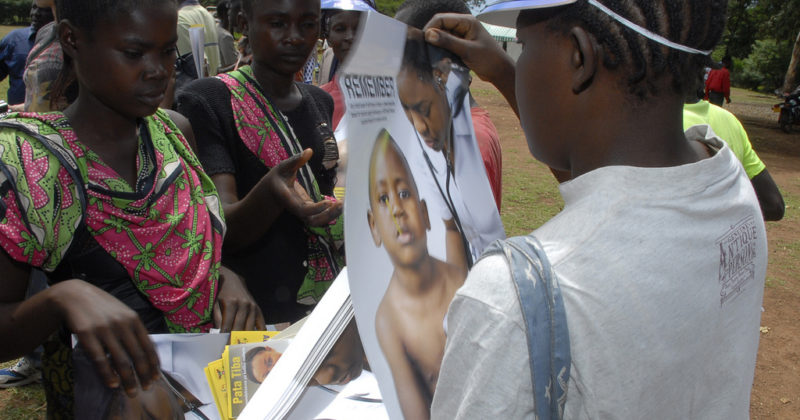
Blog by Amber Fleck, MS2, University of Colorado: In the United States, health education is seemingly everywhere: ads online reminding women of the importance of pap smears, TV commercials advising against smoking, or posters in bar bathrooms providing safe sex advice. With this abundance of exposure to health education, it is a striking difference to visit a country where many communities don’t have regular access to this kind of information, especially if that information regards sexual or reproductive health. In an effort to bridge this gap and enhance community health education the Kenya Ministry of Health began using lay workers, also known as community health volunteers (CHVs). CHVs travel door-to-door in their assigned communities to educate individuals about disease management, including reproductive and maternal health, and provide referrals to the clinic when necessary. In theory, this is an excellent way to increase access to health information and care; however, these programs have had some significant challenges. One challenge is that these are...
Saumya Sao (T ’20, Gender, Feminist and Sexuality; Global Health) and Melanie Lai Wei (Masters’ Candidate, Statistical Science) were proud to share the results of their 10-week Data+ project, Big Data for Reproductive Health, or BD4RH. The pair was just one of 25 teams that spent the summer using data-driven approaches to solve interdisciplinary challenges. The BD4RH team, led by Amy Finnegan and Megan Huchko, sought to build a web-based application that will allow users to visualize and analyze contraceptive calendar data from the DHS. To ground their project, they did a mapping exercise to identify currently available tools, identifying core elements they liked and key areas a new tool could improve. Using this data, and user feedback from various stakeholders in the field, they created a website that hosts four different data visualization methods to interpret trends in contraceptive use from the DHS contraceptive calendar. The site currently uses Kenya data to demonstrate efficacy, but datasets will be added...
By Moreen Njoroge, T-19 Cervical cancer is the second most common cancer in women worldwide and the most common cancer among women in sub-Saharan Africa. The risk for cervical pre-cancer and cancer is increased by the biological effects of co-infection with HIV and HPV, both of which have a higher prevalence in sub-Saharan Africa and especially in Migori, Kenya where the seroprevalence of HIV/AIDS is not uncommon. The social and economic factors in Migori, Kenya make cervical cancer control more difficult to achieve with the established standard of care in developed countries. A major barrier to accessing screening and treatment services for cervical cancer in this region is poor health literacy associated with the lower educational-attainment rates in Kenya, especially for women. Structural barriers associated with increased cervical cancer mortality rates include lack of diagnostic tools for screening, understaffing in clinics and hospitals, a paucity of pathology laboratories and the long waiting times associated with screening-result transmission. The lack of treatment...