Blogpost by Alex Lichtl, T'19 During the summer of 2017 I traveled to Léogane, Haiti where I, and a team of student researchers, spent two months collecting data on women’s stressors in the community through a Duke SRT program. As a team, we had very little global health research experience, but after one week of orientation we were left on our own to recruit community leaders for interviews and organize focus groups for a project entitled "Mental and Reproductive Health Interventions for Haitian Women: Adapting strategies from community input on coping with stress." At first we were extremely lost, but with the help of our translator team and a lot of perseverance, we managed to reach our data collection goal. We were also fortunate because the women and men we worked with in the community were incredibly welcoming and open to sharing their life experiences regarding reproductive health. Overall, we asked women and men in the community about women’s stressors and coping...
October 28, 2018 was not merely a day of yellow sunlight and cool fall air, but rather, the origin of a radical transformation of my being facilitated by Progress Period, a menstrual activism club at Duke University. The screen of my phone reported “12:27pm,” lighting anew a sense of urgency beneath my already frantic feet. The event was set to begin at 12:30pm and with the panicked realization that I was indeed going to be late, I barreled down the stairs towards Schiciano Auditorium. At 12:29pm, just as I allowed myself a breath of assured relief that I would make the event on time, I was stopped dead in my tracks.
“Outside the (tampon) box: menstruating isn’t just for women,” declared a flyer taped to the glass door.
Confusion clouded my awareness and my mind raced with questions, relegating my aspirational punctuality to a non-possibility. Among this maelstrom of questions, the loudest bubbled to the surface: Is menstruation not a qualifier of womanhood?...
The Director of the Center for Global Reproductive Health, Dr. Megan Huchko, participated in a panel on November 28th entitled "Eradicating Human Diseases: Opportunities and Risks." Dr. Gavin Yamey (Director for the Center for Policy Impact in Global Health) moderated the event, which featured Dr. Christopher Plowe (Director of the Duke Global Health Institute), Dr. Lavanya Vasudevan (Assistant Professor in Community and Family Medicine) and Dr. Osondu Ogbuoji (Deputy Director of the Center for Policy Impact in Global Health) as additional panelists. While the panelists disagreed on the definition of eradication, they all commented upon 'donor fatigue' and the economic and political difficulty of completing eradication as cases dwindle. The panel discussed the difficulty global health programs face in second-world countries, which don't benefit from the same economic resources as first-world countries or as many donations as third-world countries. The panelists stressed the importance of continued screenings, especially in the case of cervical cancer, and emphasized the necessity of childhood vaccinations....
Guest Blog by Suzanna Larkin, T21 The Iranzi Clinic is a pioneering medical clinic in Kigali, Rwanda that focuses entirely on maternal and child health services. As an intern through DukeEngage-Rwanda this past summer, I worked directly alongside the midwives, doctors, and administrative staff that have made Iranzi Clinic their home. Only opened one year ago, the clinic is situated on the edge of the impoverished Nyabisindu neighborhood. Many of the women who visit the clinic are unable to pay for their services, and thus the clinic relies primarily on support from the Christian Life Assembly Church and donors. The commitment that the midwives and staff hold for their patients and clinic is clear. Every Monday, the clinic has a devotions session followed by a tea time, and the scene is joyous–any observer can notice the deep and genuine friendships that grew between the staff members as they built the clinic from the ground up. Their anecdotes about the clinic’s history, from...
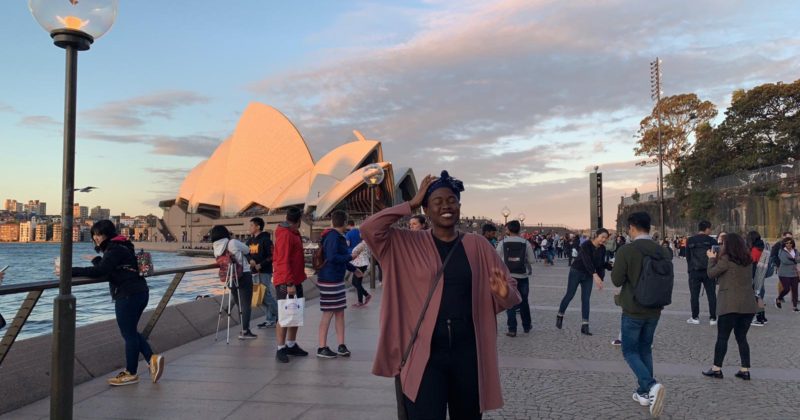
Guest Blog by Konyin Adewumi, MSc-GH '17 Last month, I was given the opportunity to present my research work at the International Papillomarvirus Conference in Sydney, Australia. I submitted an abstract entitled, “Female perspectives on male involvement in a human papillomavirus-based cervical cancer screening program in western Kenya”; a qualitative analysis that was part of an ongoing study at Duke’s Center for Global Reproductive Health. After taking the time to reflect on my experiences navigating such a great opportunity, I found that I had learned a few lessons that may be beneficial to others who are in my shoes – anyone that is early in their research career, unsure where the path is headed, but eager to make the most of the opportunities presented to you. So here are my five lessons: One. Similar to your fieldwork, what can go wrong will go wrong. Plan accordingly—and when all else fails, learn to pivot. From arriving to the airport to find out that I...
According to the World Health Organization (WHO), Universal Health Care (UHC) is aimed at ensuring that all people are able to receive medicine and treatment without suffering financial hardships. Kenya is working to implement this healthcare strategy, with the goal of allowing more Kenyans access to healthcare in public health facilities. Additionally, Kenyans will be able to access the same services in private hospitals without digging very deep into their pockets. Despite this bold move by the Kenyan President to create affordable healthcare for all, human resources, finance, essential medical products, technologies and service delivery remain challenges. The story of a woman under the alias of “Dorothy” exemplifies the financial challenge in assessing care at treatment sites. Dorothy was enrolled in a study looking at integrating HPV testing into community health campaigns, and was ultimately referred to a selected health facility in Kisumu where she was booked for treatment. After she received treatment, she further was referred for biopsy testing. But,...
The Center for Global Reproductive Health's Research Coordinator, Yujung Choi, and I held a dissemination meeting on October 19th to share the findings from one of our studies. The study describes the characteristics, motivations, and experiences of community health volunteers (CHVs) in Kisumu county, and looks to understand CHV knowledge and self-efficacy of reproductive health counseling and services. The purpose of the meeting was to share the study outcomes with key stakeholders and elicit feedback in order to inform future interventions to measure CHV performance and increase CHV retention rates. Among those who attended the meeting were CHV supervisors who had participated in the study, Sub-County Community Health Strategy Focal Persons, a former study staff, and a Program Officer from the NGO Community Initiatives Concerns. We summarized the study findings on various topics, including: -CHVs’ reasons for becoming CHVs -CHV level of comfort in teaching health topics such as family planning -child care and nutrition -HIV, malaria, and cervical cancer -challenges in carrying out daily tasks -relationship...
The Seminar Series: Stories From Africa, Financing Health in Sub-Saharan Africa took place at Duke University on Thursday, October 18. Led by Gavin Yamey, the seminar featured a panel of speakers: Sarah Bermeo, Associate Professor of Political Science, Duke Sanford School of Public Policy; Charles Muiruri Program Director at Duke Global Health Institute and Co-founder Association of Research Administrators in Africa; Kaci Kennedy, Associate Research, Duke Center for Policy Impact in Global Health; Godfrey Kisigo, Masters Student DGHO, Physician at Kilimanjaro Clinical Research Institute, Tanzania; and Osondu Ogbuoji, Deputy Director, Duke Center for Policy Impact in Global Health. The seminar opened with an introduction to global health from a very optimistic perspective. Global health is a cutting edge field that focuses largely on improving the future for humanity. Initiatives in global health are making large and wide impacts, for example, in fields such as child wellness. However, there are also still huge numbers of people suffering from illnesses and burdens that...
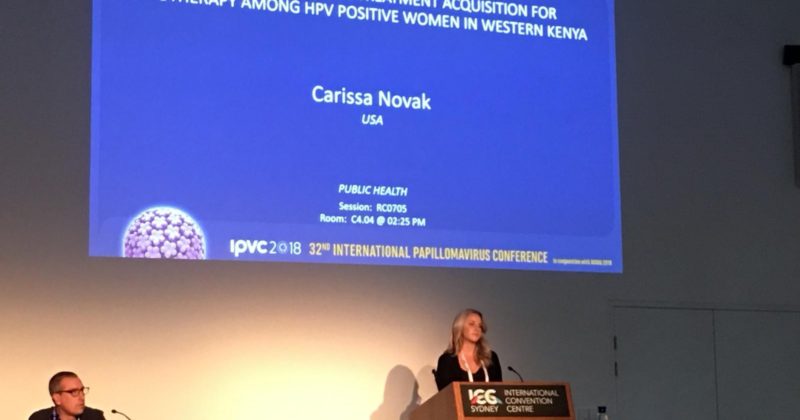
Guest Blog: Carissa Novak Throughout my recently completed Masters in Global Health Science, Duke’s Global Health Institute faculty regularly stressed the importance and potential impact of disseminating research findings. Therefore, I felt presenting the research findings from my thesis at the 32nd International Papillomavirus Conference inSydney, Australia, this fall was not only appropriate but necessary. Due to ongoing conversations regarding HPV vaccination coverage and HPV screening for cervical cancer communities are witnessing a tremendous increase in screening rates, especially in low-resource settings, where cervical cancer is most common. However, most programs still face significant challenges in addressing HPV positive women’s low rates of follow-up and treatment. My attendance at the conference was an opportunity to share the findings of my thesis work, in which we found that in western Kenya, a setting where resources were limited for all HPV positive women, stigma and isolation were the main differentiating features between women who accessed follow-up and those who did not. Interestingly, I presented...
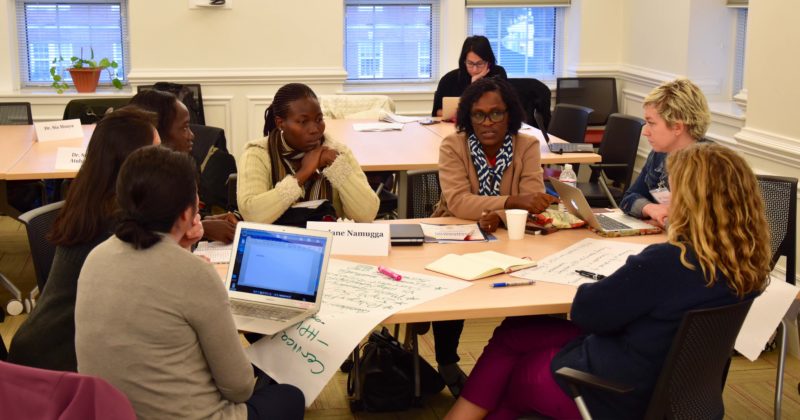
Our Ugandan colleagues at the Makerere College of Health Sciences have been busy over the past few months. Center members’ work has focused on various aspects of cervical cancer, from prevention to diagnosis and treatment. Dr. Miriam Nakalembe is still leading the NCI-funded effort to evaluate community-based strategies for cervical cancer detection, in partnership with Dr. Megan Huchko. Building on this work, she is a co-investigator on a recently funded two-year project through the Fogarty International Center. The grant seeks to develop a portable imaging technique, called a smartphone confocal endoscope. The new technology would visualize cellular details of human cervix in vivo without taking a biopsy, and after validation would be adapted to provide a low-cost diagnostic tool for other diseases in both resource poor and resource rich settings. Dr. Jane Namugga continues her work with Dr. Paula Lee. The pair have completed data collection for a project to determine rates of completion and adverse events associated with receiving chemotherapy...