Meet Our Research Team in Kisumu, Kenya This Summer

Meet Our Research Team in Kisumu, Kenya This Summer

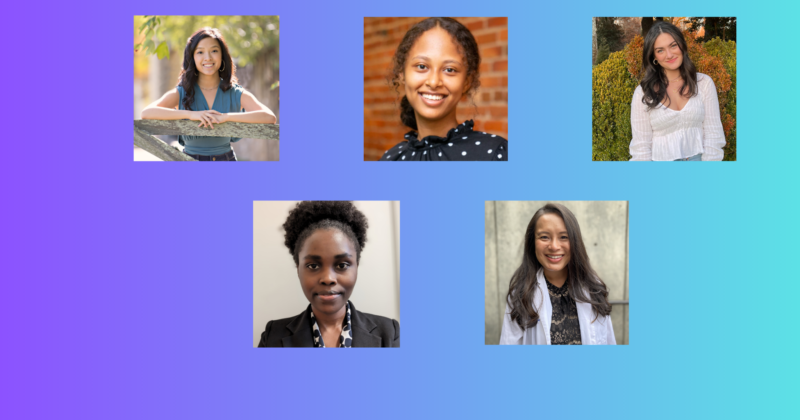
This summer, we have 5 Duke Scholars working with the Duke Center for Global Reproductive Health in Kisumu, Kenya. We have 3 undergraduate students joining the Center as part of the Student Research Training Program (SRT), a Masters of Global Health Student, and a 3rd year OB/GYN resident all conducting research in Kenya. Read below to learn a bit about these passionate students and hear about their work and what they are most looking forward to.    SRT Students: Sydney Chen (she/her) Sydney is a double major in Global Health and International Comparative Studies with a Biology Minor. She calls Herndon, Virginia home. When asked about what her time spent in Kisumu looks like, she reflected that “The team and I are working on various ways to improve an app called mSaada which helps women in East Africa receive screening for cervical cancer. I’m specifically working on the FAQ portion of the app by making sure that the answers are clinically accurate and using...
Read More
Reflection From the Field: SRT Student, Laya’s, Reflections in Kisumu

Reflection From the Field: SRT Student, Laya’s, Reflections in Kisumu

As we start our eighth and final week in Kisumu, the SRT team is finishing up the last stages of our on-the-ground research, and preparing for our trip back to the US!    At this point in time, we are almost finished with our clinic observations. Despite several scheduling changes, we will complete our project with five to six observation sessions at each of the six clinics. Additionally, we have set in motion the plans for the Kisumu team to conduct focus group discussions (FGDs) at the intervention clinics after we leave. The purpose of the FGDs is to understand women’s opinions about our educational intervention, and how they feel about incorporating peer navigation services into the clinics. Unfortunately, we will not be here to witness the FGDs as we originally anticipated, but we’ve been working on setting everything up so that they will run smoothly in our absence. That includes getting participant recruitment up and running, going over our questions and...
Read More
Reflection From the Field: SRT Student, Bentley’s, Reflections in Kisumu

Reflection From the Field: SRT Student, Bentley’s, Reflections in Kisumu

First and foremost, we have passed the halfway point of our time in Kenya! Time flies by, and we are discussing what we want to get out of the next four weeks. Insofar, we collected more than 20 observation data to evaluate the workflow of stigma education at the clinic. During this process, we faced multiple hiccups, especially scheduling a visit and clearing up logistics. Three of our observation clinics had a twelve-day-long CHV training, so we had to flip our schedule to ensure we could collect the data we initially planned. We spent the last couple of days creating a contingency plan so that our time in Kenya could contribute to the depth of our data. Listening to what other teammates thought helped us, as a team, solidify the future direction of our study, such as what variables to analyze in observation studies, codes for focus group discussion, and the focus of our manuscript.   Besides working on an observational study,...
Read More
Reflection From the Field: SRT Student, Haley’s, Reflections in Kisumu

Reflection From the Field: SRT Student, Haley’s, Reflections in Kisumu

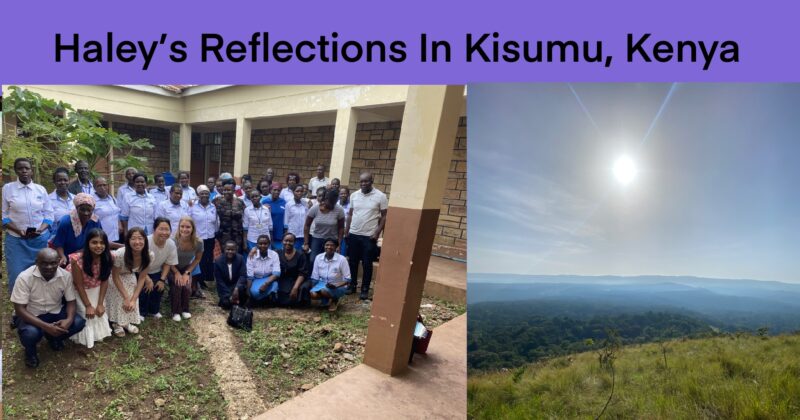
We have made it through week three of our time in Kisumu, Kenya! The weeks are truly flying by because our research is progressing, and we are enjoying our time in the city. The other SRT students and I officially started our workflow analysis observations at each of the six clinics this past week. There are three intervention clinics, at which community health volunteers (CHVs) display an educational video about human-papillomavirus (HPV) self-screening, and three control clinics, where CHVs provide health education talks about HPV and offer the self-screening. Through our observations so far, it is clear that all the CHVs are quick learning, adaptable, and passionate about increasing HPV screening for women in Kisumu! We have enjoyed our first week of observations because of all the positive aspects we have seen with our study. Fortunately, many women are opting into HPV self-screening, and we are able to increase prevention of cervical cancer in many of the Kisumu sub-counties! We...
Read More
Reflection From the Field: SRT Student, Michelle’s, Reflections in Kisumu

Reflection From the Field: SRT Student, Michelle’s, Reflections in Kisumu

Sunday marked the first full week that the rest of the students from the Kenyan Reproductive Health SRT team and I have been in Kisumu, Kenya. Our experience thus far has been full of introductions and familiarizations, and we have had an exciting time learning from the field while finding our footing in a new area. After we flew into Kisumu, we were able to get situated in our new living space and learn to make ourselves at home for the next two months, starting to cook for ourselves and establishing new rituals (like bonding through watching Suits together during dinner). We have learned to navigate some parts of the town with the help of our local partners, learning where to buy groceries and hot meals, and we have done a bit of exploring on the weekends and our walks to work. Although moving to an unfamiliar area has been challenging, we have been able to improvise and overcome to...
Read More
SRT Spring 2022 Reflection

SRT Spring 2022 Reflection

This summer, 4 students will join the Center as part of the Student Research Training Program (SRT). Hear their thoughts heading into the program.   Bentley Choi When I first applied to the SRT program, I merely expected to ‘conduct’ research abroad. In reality, I learned more important skills such as writing IRB amendments, scheduling a meeting with teammates, and communicating with a research team in Kisumu. My goal for this summer is to apply what I learned from Dr. Eric Green’s Global Health Research Methods class into a real-life setting, and I believe we are making our way to this goal since the team proposed a new way to evaluate the intervention! I look forward to conducting observational study and focus group discussions. Also, I am hoping to learn how to navigate myself in a new living environment and what are Kenya’s unique cultural factors that influence stigma and perception towards reproductive health since it is also related to my senior thesis...
Read More
From Dormmates to Research Collaborators

From Dormmates to Research Collaborators

In fall 2019, when Rachel Mundaden and Ramya Ginjupalli (T’22) applied to spend the following summer in Kisumu, Kenya, as part of the Center’s Student Research Training program, no one could have predicted the COVID-19 pandemic, and the resultant global disruptions in almost every aspect of people’s lives.  Travel and fieldwork were soon out of the question, but these two were able to pivot to develop the content expertise and skills in qualitative methods necessary to carry out an analysis of focus groups discussions designed to better understand stigma related to cervical cancer and human papillomavirus in Kenya.  They spoke to DGHI about their experience and how it felt to have a published manuscript resulting from this work. Check it out here: https://globalhealth.duke.edu/news/dormmates-research-collaborators    ...
Read More

Studying Global, Staying Local

By: Ema Kuczura and Sarah Hubner  When we entered the Student Research Training Program, we were preparing ourselves to deal with many challenges, including learning new research skills and navigating cultural differences. Working with DGHI Doctoral Scholar, Kelly Hunter, our goal was to understand the impact of the Global Gag Rule on health care providers and non-governmental organizations in Western Kenya. The Global Gag Rule formally referred to as the Protecting Life in Global Health Assistance Policy, “aims to ensure that US tax-payer funding does not support foreign non-governmental organizations that perform or actively promote abortion as a method of family planning” (Michael Pompeo, US Secretary of State). We were planning on using our time in Kisumu to conduct in-person interviews with stakeholders in the reproductive health sector. However, when we heard the news that pandemic would make it impossible to travel to Kenya as we initially anticipated, we knew achieving the goals we set forth for the summer would require newfound...
Read More
What I Learned

What I Learned

It’s been about a month since I returned from Kisumu, where I spent eight weeks working on the development of an mHealth pilot study at the Duke Center for Global Reproductive Health. I really feel that I gained so much out of those two months, and I’m hoping to bring these lessons with me to my senior year at Duke. I was able to experience what it really means to do research in the field, and that a lot of the time this means being flexible and prepared for plans to constantly change. The local team at the Center taught me the importance of communication and planning ahead, but how to also be ready for scheduling changes when working with outside teams. More than that though, the team showed me how easily one can feel connected to a new group of coworkers that welcome you with open arms. I think I speak for myself and the rest of the SRT...
Read More
Learning Backwards

Learning Backwards

I traveled this summer to Kisumu, Kenya expecting to work on a project we had poured hours of work into through the Center for Global Reproductive Health. After much time spent discussing our project, conducting literature reviews, and finalizing on our in-depth interview guides, it was disappointing to learn that we would not have our necessary IRB approvals for our project until after our departure from Kisumu. While we are glad to know that our project is in amazing hands here at the Center for Global Reproductive Health, it was frustrating to come to terms with the fact that we would not be the ones to carry out the interviews we had worked so hard on. As I look back on my summer, I am compelled to reflect on why this change of plans changed my trip for the better. Much discussion around research, especially when it comes to global health research, focuses on the importance of flexibility. Figuring out what...
Read More