Philippines to join its first World Contraception Day

Philippines to join its first World Contraception Day

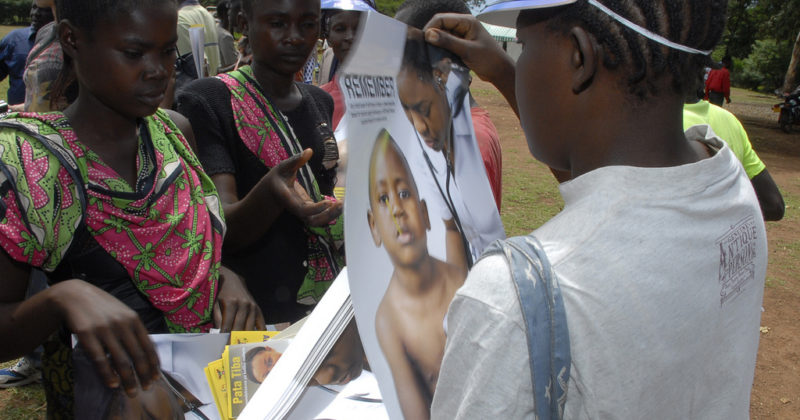
The Philippines announced Wednesday that it will be participating in the upcoming World Contraception Day on September 26th. In its first year joining the global campaign, the country will hold a forum at the University of the Philippines in Diliman to discuss the nation's treatment of reproductive health issues. With one of the world's fastest rates of population growth and a population that has tripled over the last fifty years, the Philippines faces a growing need of family-planning education; widespread awareness of safe and effective contraception methods may slow unsustainable population growth, with positive effects on public health, the economy and the environment. World Contraception Day is an international campaign, with the mission to educate younger generations about contraception so they can make informed decisions about their reproductive and sexual health. The Day is organized by a group of 17 international NGOs, governmental organizations, and medical societies, and is funded by Bayer AG. Held yearly since 2007, World Contraception Day envisions...
Read More

Notes from the Field: “If only I stepped up to the gate of a school” life could have been better

Reproductive health remains a health problem in Sub-Saharan Africa, Kenya included. Unless efforts to reduce maternal and newborn mortality and morbidity, improving access to family planning, and preventing HIV infection are scaled up, the majority of Kenyans remain at risk for poor health outcomes. Women face unsafe abortions, early marriage, and various forms of gender-based violence. They suffer silently from sexually transmitted diseases that make them vulnerable to cervical cancer and infertility, without access to the simple preventive measures like screening and vaccination. My experience working directly in the community and in health facilities has given me the opportunity to interact with various partners and many disadvantaged young men and women. Listening to their stories of teenage pregnancy, their beliefs in myths related to use of contraception, and experiences with HIV has made me keen to understand and try to address issues related to reproductive health. I met "Aisha" (not her real name) when her child was enrolled in a study I...
Read More
Combating Maternal Mortality with Midwives

Combating Maternal Mortality with Midwives

Article by Kayla Chee Despite the fact that maternal mortality dropped 44% between 1990 and 2015, maternal health mortality is still a problem our world faces today, with 99% of maternal deaths occurring in developing countries. A study performed by Homer, CS, Friberg, IK, Dias, MA et al in 2014 found that 83% of all maternal deaths, newborn deaths, and stillbirths could be averted through midwifery care and family planning, indicating the dire importance of midwifery services. To support midwifery programs and the fight against maternal health, The United Nations Population Fund (UNFPA), which is the United Nations sexual and reproductive health agency, has coordinated with over 40 global partners and over 300 national partners to improve access to quality midwifery education, training, and services. Since 2009, the UNFPA has worked in 120 countries, helped train over 105,000 midwives, and supported bachelor’s and master’s programs for midwives in 15 countries. UNFPA’s collaboration with national governments to ensure midwifery autonomy has prompted...
Read More
Baltimore’s Health Commissioner, Dr. Leana Wen, named President of Planned Parenthood

Baltimore’s Health Commissioner, Dr. Leana Wen, named President of Planned Parenthood

Article by Jessica Williams Planned Parenthood announced on September 12th that Dr. Leana Wen will become the organization’s next president. After current president Cecile Richards announced her resignation, Planned Parenthood organized a search committee in early February to find her replacement. Months later, Dr. Wen was selected to be her successor due to her extensive experience in the healthcare sector; she has been Baltimore's health commissioner since 2015, and is only the second doctor in the organization's 102-year history to take its leading role. Born in Shanghai, Dr. Wen immigrated to the United States with her family shortly before her eighth birthday. They were granted political asylum, and became U.S. citizens in 2003. While growing up in a low-income area in California, Dr. Wen relied on Planned Parenthood for healthcare. She later volunteered for a Planned Parenthood clinic during medical school in St. Louis. Dr. Wen's appointment comes at a critical time for Planned Parenthood. A target of Republican-led Washington over the past...
Read More
Between a Rock and a Hard Place: NGOs and Their Navigation of U.S. and Swedish Aid Policy

Between a Rock and a Hard Place: NGOs and Their Navigation of U.S. and Swedish Aid Policy

Article by Carly Jones Following the Trump administration’s reinstallment of the “global gag rule” in January 2017, non-governmental organizations (NGOs) within the sexual and reproductive health and rights sector have been forced to choose between United States and Swedish aid. With this gag rule, foreign NGOs are only able to access U.S aid if they do not perform or promote abortion within the context of family planning. Under this umbrella even falls such services as legal advice and counseling. Sweden, a firm critic of the rule and strong advocate of abortion accessibility as imperative to effective health policy, has stated that aid will be discontinued to those compliant with this gag-rule: “We are, of course, very important moneywise but we are even more important, I think, when it comes to setting moral standards around women’s rights.” This polarization of aid has made the work of activists increasingly difficult; while many NGOs stand with Sweden in support of safe abortion, to have...
Read More
Reports from the Field: Freedom House, a Safe Space supported by KMET

Reports from the Field: Freedom House, a Safe Space supported by KMET

By Faith Otewa: One of our goals of the Center is to highlight some of the important work in Sexual and Reproductive Health taking place in Kisumu and Nyanza. We were thrilled to sit down with the Director of KMET (Kisumu Medical and Education Trust), a Kisumu-based NGO working to promote innovative and sustainable reproductive health and education programs among underserved communities. KMET works in the areas of Maternal, Child, Adolescent and Child Health, livelihoods and nutrition, education and youth/adolescent empowerment and quality healthcare financing. The organization has adopted an integrated model to provide a holistic care to women by offering specialized diagnostic services like Family Planning Services (FP), Immunization, and HIV Testing, Cervical Cancer Screening and Laboratory services. A well-stocked dispensing pharmacy is also in place. KMET also houses a Youth Friendly Clinic for its youthful clients of reproductive age. The services offered at the center are affordable. With growing evidence that a substantial number of girls, children and women in Kisumu...
Read More
Texas Fetal Burial Law Claimed Unconstitutional by Federal Judge

Texas Fetal Burial Law Claimed Unconstitutional by Federal Judge

Article by Emily Woodrow Last week in Texas, federal Judge Ezra prohibited the legality of an abortion law that would have required hospitals, health care facilities, and clinics to bury or cremate fetal remains without consent of the patient. This law was planned to take effect this February as a part of the Senate Bill 8 which passed in July 2017 and was created by anti-abortion politicians. Whole Woman’s Health and other Texas abortion providers filed for a lawsuit against this abortion law on the basis that burial and cremation requirements were a “politically motivated attempt by the state to force abortion providers into closing because only a limited number of vendors would be willing or able to meet the onerous disposal requirements”. Additionally, president of Whole Woman’s Health Amy Hagstrom stated that the law was “designed to shame and stimatize patients and health care providers” in regards to the morality of abortion. Texas has a history of strong abortion regulation...
Read More

Teammate Spotlight: Sandra Oketch

Sandra Yvonne Oketch has been working with Dr. Megan Huchko and the FACES team the Nyanza Region of western Kenya for the past ten years. She has 10 years’ work experience in both health research and program set up in maternal reproductive health and HIV/ AIDS care and prevention. She started as a Clinical and Community Health Advisor at FACES, where she became interested in the cervical cancer screening and prevention program. After going back to school to complete her degree, she is now the study coordinator of a cluster randomized trial testing two implementation strategies for HPV testing. Her roles include managing the study team, partnering with the reproductive health team to implement study activities and evaluating some of the study data. The work of enrolling and following up almost ten thousand women is not without challenges. In addition to the inherent challenges of coordinating a study that size, Oketch has had to deal with flooding, flyaway tents, political...
Read More
One Woman, Her Dream, and Kenya’s Menstrual Revolution

One Woman, Her Dream, and Kenya’s Menstrual Revolution

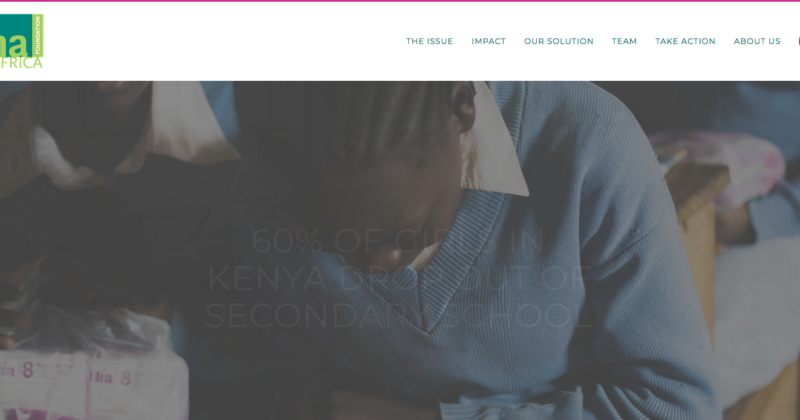
Article by Carly Jones Access to feminine hygiene products is the cornerstone of a woman’s ability to claim agency over her body. Yet, with the feminine hygiene product market generating billions of dollars in revenue, these products are often made inaccessible by their price. This disparity in access is especially profound within low- and middle-income countries, such as Kenya, begging the need for Megan White Mukuria’s non-profit foundation, ZanaAfrica. In Kenya, 60% of girls are unable to access menstrual products. As a result, they are forced to endanger both their physical health and security, resorting to fashioning homemade products from rags, or even exchanging sex for sanitary napkins. Additionally, because of the shame associated with menstruation within Kenya’s culture, girls often remain confined to their homes throughout their cycles, with 60% of this demographic eventually dropping out of high school. ZanaAfrica not only addresses this physical need, supplying menstrual products to marginalized girls, but also provides community resources necessary to educate...
Read More

Kavanaugh on Abortion: Many Questions, Few Answers

Article by Jessica Williams As Judge Brett Kavanaugh’s hearing in the Senate Judiciary Committee to become a Supreme Court justice began last Tuesday, it became immediately clear that his stance on abortion would take center stage. The Hart Senate Office building was filled with protesters dressed as ‘handmaids’ from Margaret Atwood’s dystopian “The Handmaid’s Tale,” reflecting fears that Kavanaugh’s appointment would lead to a country in which women do not have control over their reproductive decisions. As the hearing has progressed, though, little information about Kavanaugh’s stance on abortion has come to light. When asked about a woman’s right to abortion, Kavanaugh described the current precedent—Roe v. Wade’s 1973 establishment of abortion as a constitutional right, and Planned Parenthood v. Casey’s 1992 reaffirmation of that decision. While he did say that “precedent also reinforces the impartiality and independence of the judiciary,” new leaked documents suggest he may be willing to overrule the Roe precedent. In a 2003 email he stated “I am...
Read More