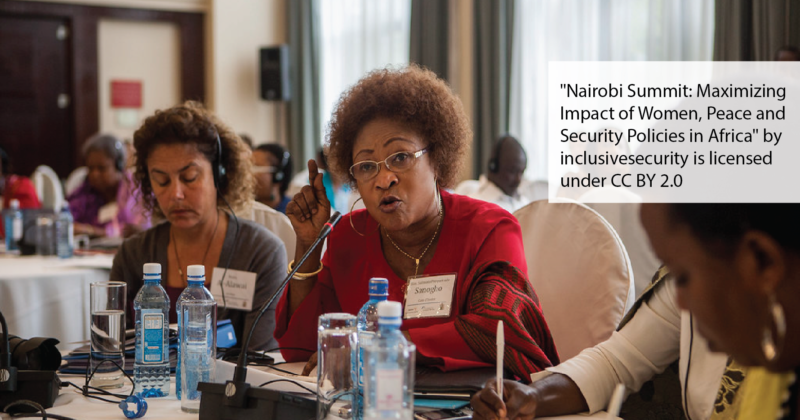
From November 10-12, Kenya hosted an international conference with over 9,500 participants from more than 170 countries with a single shared purpose: to achieve the ICPD25 goals. These goals were termed “the three zeroes” - zero maternal mortality, zero unmet needs for family planning and zero tolerance towards gender-based violence. The conference seemed to be a massive success, generating over 1,250 commitments by governments, donors, businesses, non-governmental organizations, civil society and other actors to support work towards the three zeroes. This summit marks the 25th anniversary of the first International Conference on Population and Development held in Cairo. It sought to ensure the continuation of the global promise to prioritize women made at that first conference, where the world agreed that sexual and reproductive health is a human right. Although the support initiated by the conference is promising, there are some challenges to meeting these ambitious goals. According to Dr. Joia Crear Perry, President of the National Birth Equity collaborative in the...
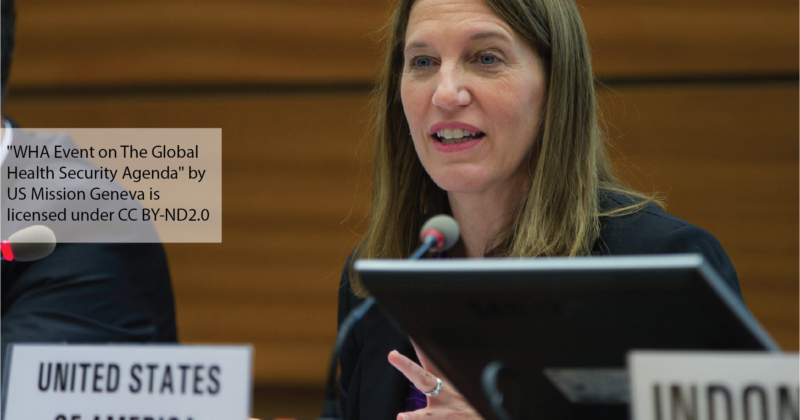
Article by Diya Ginjupalli In May of 2019, the White House released the first U.S. Global Health Security Strategy. This document outlined the United States Government’s approach to preventing and responding to infectious diseases both domestically and globally. In November of 2019, the White House released the annual report "Advancing the Global Health Security Agenda: Results and Impacts of U.S. Government Investments," which illustrated their continued efforts towards global health. The report specified the current strategies used by the United States Government to ensure global health security. The United States is currently partnering with 32 countries and has pledged over one billion dollars in funding for these countries. The focus for the upcoming year falls in eleven "Global Health Security Action Packages": antimicrobial resistance, zoonotic diseases, biosafety & biosecurity, immunization, national laboratory system, real-time surveillance, reporting, workforce development, emergency operations centers, linking public health with law enforcement & multisectoral rapid response, and medical countermeasures & personnel development. These action packages span...
Article by Jackie Vicksman In 2017, two weeks after Hurricane Irma, Hurricane Maria hit the already-struggling Caribbean. Hurricane Maria was a category 5 storm that affected several islands, including Puerto Rico. After a natural disaster, births rates normally rise due in part to increased sexual activity, but more-so a lack of access to adequate contraceptives and other reproductive services. With pharmacies, hospitals, and free clinics closed down, women have very limited options when it comes to family planning after a natural disaster. This includes abortion services. In the case of Puerto Rico, only one of six abortion clinics was still open after the hurricane hit. Vale Moreno, the director of the clinic, explained that the biggest challenge for women seeking abortions in the aftermath of the hurricane was transportation. The journey to the clinic from more rural areas was uncertain, as road conditions were often poor, which made getting an abortion much more difficult. Additionally, women were realizing that they were...
Article by Jackie Vicksman Since 2008, the UNFPA has been supporting “husbands schools,” where facilitators lead conversations and lessons with men in local communities in order to improve their general understanding of women’s unique experiences and hardships. Lessons focus on women’s health risks, empowerment, and human rights. The schools serve as a component of the Sahel Women’s Empowerment and Demographic Dividend project (SWEDD), a region-wide program financed by the World Bank and implemented in seven of the countries that make up the African Sahel region. Its objective is to reduce intimate partner violence, expand girls’ education, and generally improve the social standing of women and girls. One such school in the Mamboué village of Burkina Faso has had strong results. The school meets weekly, with 16 men and 2 facilitators. One woman whose husband participates in the program spoke of how his work improved their relationship. She explained that prior to his participation, “there was discord in [her] household,” and after,...
Article by Jackie Vicksman Population Council, a research-oriented NGO based in New York, has been pioneering research behind contraceptive multipurpose prevention technologies (cMPTs). Most recently, researchers have been developing a single product that combines contraception and Pre-Exposure Prophylaxis (PrEP) in order to reduce the risk of unintended pregnancy and HIV infection among young women in low and middle-income countries (LMICs). This product could contribute to both family planning initiatives and HIV prevention efforts. This project began in 2018 and is currently ongoing, yet researchers are unsure of when the product will be available to be tested and distributed. The team is particularly excited because one pill would make it easier for women to have control over their own reproduction and sexual health. The NGO is confident that this work will “confirm cMPT acceptability among young women and adolescent girls,” and will “explore the possibility of combining existing products into a single tablet and identify a clear pathway toward regulatory approval.”...
Article by: Diya Chadha On Monday, October 14, two women empowerment and health-focused student groups, Planned Parenthood Generation Action and Empower Her Voice, partnered with NARAL-NC, a pro-choice advocacy group to host a reproductive health panel on campus at the Freeman Center. Lynne Walter from NARAL-NC, Dr. Jonas Schwartz from Duke University Hospital, Gloria de los Santos from The Action Network, and Dani Hoffpauir from Planned Parenthood answered a series of moderated questions on the topics of the Hyde Amendment and the rising influence of pregnancy crisis centers/clinics in North Carolina. Two specific points that they brought attention to were the amount of funding directed from the state towards such emergency clinics and the subsequent negative impact that the clinics have on the healthcare options available to women, as well as the evolving narrative around the idea of abortion and healthcare access in the changing domestic political climate. In the state of North Carolina, crisis pregnancy centers receive nearly $1.3 million in state...
Article by: Sandra Y. Oketch The launch of the HPV vaccination into the routine immunization schedule available for all 10-year old girls from September 2019 onward is a great milestone for Kenya. The Kisumu County launched the HPV vaccine Program on October 25th, 2019 at the Kisumu County Referral Hospital, accompanied by several activities such as HPV health information, speeches and educational entertainment. The Chief Guest of honor was Dr. Dickens Onyang, the Kisumu County Director of Health Services. Onyango voiced that the vaccine has been successfully included in the healthcare cascade of all Government of Kenya health facilities, and that the Ministry of Health will work hand in hand with the Ministry of Education and all other partners to ensure an effective and efficient implementation of the program. He reiterated the benefits of the launch stating, “The HPV vaccine is the silver bullet to prevention of cervical cancer that will greatly reduce the cervical cancer burden as has been in the 115...
Article by Jackie Vicksman Illinois governor J. B. Pritzker signed a progressive reproductive rights bill into law on June 12, 2019. The Reproductive Health Act identifies abortion as a “fundamental right” for individuals, and states that a “fertilized egg, embryo, or fetus does not have independent rights.” It also explicitly does not permit the State to “deny, interfere with, or discriminate against these fundamental rights.” By repealing old restrictive laws such as the Illinois Abortion Law of 1975 and the Partial-Birth Abortion Ban Act, the Reproductive Health Act also removes barriers to abortion such as waiting periods, consent from a partner, and TRAP laws that incriminate doctors who provide abortions or post-abortion care. The new law also requires private insurance companies to cover abortions along with contraceptives. As several other states such as Georgia, Alabama, and Missouri have attempted to intensively restrict abortion access and other reproductive resources, the passage of this law is especially essential....
Article by Jackie Vicksman In March 2019, the Lancet published a study titled “Maternal and perinatal mortality and complications associated with caesarean section in low-income and middle-income countries: a systematic review and meta-analysis.” In one of the most comprehensive studies to date, a research group from the Queen Mary University of London found that a “disproportionately high” number of women in low-income and middle-income countries (LMICs) are dying due to caesarean sections, especially in Sub-Saharan countries. The mortality rate was 7.6 out of 1000 women who had the procedure and in Sub-Saharan countries the number rose to 10.9/1000. The study used a systematic review of online databases and analyzed information from 196 studies in 67 LMICs. The study found that risks arise when the procedure is not preceded by quality antenatal care, delayed during obstructed labor, or not considered for at-risk women until complications arise. The biggest risk was for women receiving emergency c-sections in the second stage of labor. In...
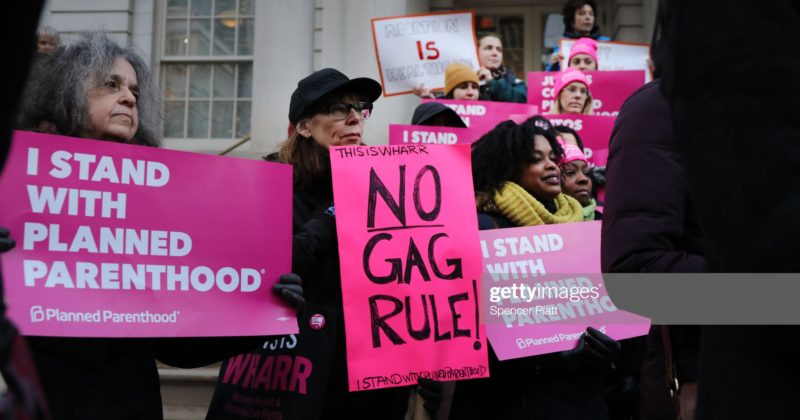
Article by Emmy Duerr In February of 2019, the Trump administration proposed changes to Title X’s family
planning program that forbid Title X-funded clinics, such as Planned Parenthood, from
performing some of their foundational services. Under the new propositions, providers and staff
are not permitted to refer patients for abortion or accept funds to provide cancer and STI
screenings, even if they use non-federal funds to fund abortion. In place of these services, the
rule recommends referral for prenatal care and social services such as foster care or adoption. The Trump Administration’s proposed changes, widely known as the “domestic gag rule”
went into effect on July 15, forcing Planned Parenthood to completely withdraw from the Title X
program. Although the intention of the new ruling is to decrease domestic abortion rate, the
consequences will likely reflect those of its international counterpart, the “global gag rule”. The
rule is unlikely to decrease abortion because it reduces women’s access to a broad spectrum of
reproductive health services including contraception, resulting in an increase in...