Reflection From the Field: SRT Student, Isabel’s Reflections in Kisumu

Reflection From the Field: SRT Student, Isabel’s Reflections in Kisumu

Starting right where Sydney left off, I, too, just had my first experience going into the field. As Sydney mentioned, each of us will get a chance to tag along for a site visit to a sub-county, and after spending thirty days in Kenya, it was finally my turn! I accompanied Breandan, Jennifer, and Purity to the Nyando sub-county. After meeting with the MoH representative at Ahero Hospital, we conducted site visits for Ahero and four other hospitals in the county. As I quietly took notes, I couldn't help but notice the passion and dedication of every director, community volunteer, doctor, administrator, and healthcare provider. Unlike the privatized systems in the U.S., the healthcare system in Kisumu relies heavily on community involvement. As a global health research team, it is our responsibility to work closely with the community, and our meetings have created a collaborative space where all parties are enthusiastic about our proposed project.   Our collaborative efforts aren't limited to...
Read More
Reflection From the Field: SRT Student, Sydney’s Reflections in Kisumu

Reflection From the Field: SRT Student, Sydney’s Reflections in Kisumu

Flew internationally totally alone; bargained for prices; saw a male lion (pictured); saw a dead, half-eaten buffalo that two lionesses just killed (not pictured); ate smokies (a hot dog with tomatoes, onion, and a spicy sauce inside). These are some highlights from my “first time ever” list since leaving the U.S.. Novelty and unfamiliarity were our neighbors for the first two weeks living in Kisumu, Kenya. At the end of the third week, we were off to another “first time ever”: a visit to the Lumumba Hospital. We – okay, hold on.  “We” refers to my fellow researchers (and now my friends) Isabel and Melat. They are both proud Seattlites (first time ever learning that’s how you refer to people from Seattle) which has led to times where I learn more about Seattle than I do Kenya. We’ve really gelled as a unit no matter how fast I walk, how many limes Melat eats, or how many random romcoms Isabel suggests.  Anyways,...
Read More
Meet Our Research Team in Kisumu, Kenya This Summer

Meet Our Research Team in Kisumu, Kenya This Summer

This summer, we have 5 Duke Scholars working with the Duke Center for Global Reproductive Health in Kisumu, Kenya. We have 3 undergraduate students joining the Center as part of the Student Research Training Program (SRT), a Masters of Global Health Student, and a 3rd year OB/GYN resident all conducting research in Kenya. Read below to learn a bit about these passionate students and hear about their work and what they are most looking forward to.    SRT Students: Sydney Chen (she/her) Sydney is a double major in Global Health and International Comparative Studies with a Biology Minor. She calls Herndon, Virginia home. When asked about what her time spent in Kisumu looks like, she reflected that “The team and I are working on various ways to improve an app called mSaada which helps women in East Africa receive screening for cervical cancer. I’m specifically working on the FAQ portion of the app by making sure that the answers are clinically accurate and using...
Read More
Deep Learning for Breast Cancer Diagnosis via MRI

Deep Learning for Breast Cancer Diagnosis via MRI

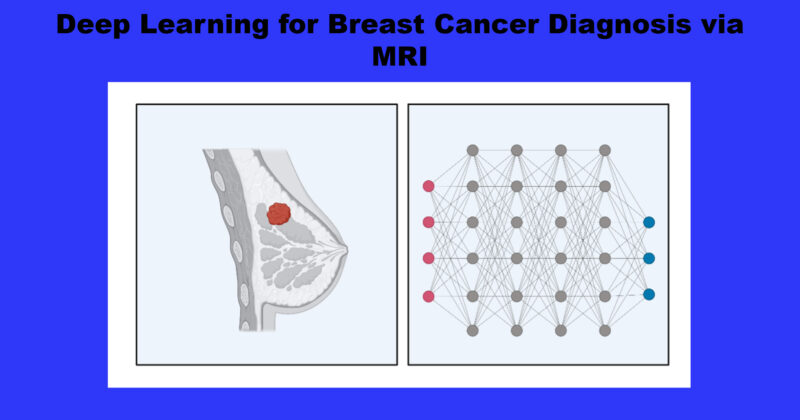
Magnetic resonance imaging (MRI) is a sensitive modality for detection of breast cancer; yet, as its use in screening is expanded from high-risk patients to intermediate- and average-risk individuals, positive predictive value deteriorates, leading to unnecessary biopsies and follow-up. To improve the overall accuracy of breast cancer diagnosis and allow for personalization of patient management, Witowski et al., reporting in Science Translational Medicine(1), propose an artificial intelligence-based solution. A system of deep neural networks was trained to output the probability of malignancy given the MRI sequences of a patient’s breast. The deep learning system performed equivalently to board-certified breast radiologists, generalized well to different patient populations in three external test sets, and was unbiased with respect to patient race. Importantly, the model predictions could serve as an aid for downgrading certain breast lesions from BI-RADS 4 to BI-RADS 3, enabling patients with lower risk of malignancy to opt of unnecessary biopsies. The results of the study underscore the value of...
Read More
The Use of Liquefaction Inhibitors as a Non-Hormonal Birth Control Method

The Use of Liquefaction Inhibitors as a Non-Hormonal Birth Control Method

A recent study from researchers at Washington State University has shown success in keeping semen in its gel form to block sperm movement and possibly prevent pregnancy. The methods used in this study may eventually materialize into a non-hormonal female contraception method that could be available for over-the-counter purchase. Past research on mice found that the use of a non-specific protease inhibitor called AEBSF prevented the degradation of the protein of Semenogelin 1. Semenogelin 1 (SEMG1) is a protein that traps semen and prevents movement; therefore, its degradation is necessary for sperm liquefaction, where semen is transformed from a gel-like consistency to liquid. By inhibiting the degradation of SEMG1, the researchers were able to prevent the female mice from becoming pregnant. To determine the efficacy of these inhibitors in humans for contraception, the study tested the effects of AEBSF on SEMG1 degradation, which prevented degradation and reduced sperm motility. They next tested the results of a neutralizing antibody that directly inhibited...
Read More
Hormonal Contraceptive Use and Risk of Sexually Transmitted Infection

Hormonal Contraceptive Use and Risk of Sexually Transmitted Infection

The global incidence of sexually transmitted infections (STIs) is high, which has adverse effects on sexual and reproductive health outcomes. Given the widespread use of hormonal contraceptives (HC), it is important to consider their potential etiological association with acquisition of STIs. In a systematic review and meta-analysis recently published in Scientific Reports(1), Akter et al. examined associations between HC use (progesterone-only, combined estrogen-progesterone, or unspecified) and prevalence, incidence, or recurrence of STIs, compared with a control group of non-users of HC. A positive association with HC use was observed for risk of chlamydia trachomatis and herpes simplex virus type 2, in contrast to a negative association for risk of trichomoniasis and bacterial vaginosis. Importantly, only around half of all associations included in the meta-analysis were adjusted for condom use. Furthermore, while a plausible biological explanation based on the interaction between pathogen, host immune response, and vaginal microbiome can be proposed for these findings, the effects of differential sexual behavior, testing,...
Read More
Self-administered contraception positively impacts women in Nigeria

Self-administered contraception positively impacts women in Nigeria

In 2021, the United Nations Children's Fund (UNICEF) found that only four out of every ten women use contraception in Nigeria. To help address this sexual and reproductive health disparity (SRH), the World Health Organization (WHO) has coordinated with Nigeria’s Ministry of Health employing a people-centered, and gendered approach to increase the accessibility of SRH services. In particular, WHO has found that self-administration of injectable contraception has already made strides in improving contraceptive uptake regionally. This method has been made available directly within communities through pharmacies and drug stores.   The UN reports that self-administered methods are popular because women can use it in any setting, whether they are in a community setting, refugee camp, or anywhere else. The injection provided by WHO allows up to three months of contraceptive cover, which assists women who desire long-lasting protection. The organization states that this intervention helps give women greater autonomy, and even reduces the pressure on health workers, especially in conflict settings where...
Read More
Why Bringing Back Midwives is Vital During the Pandemic

Why Bringing Back Midwives is Vital During the Pandemic

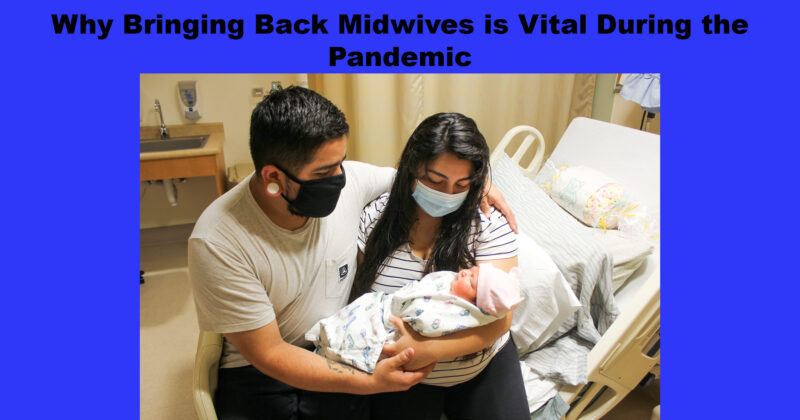
In “Midwives can alleviate the maternal health crisis. Here’s how,” The Hill reporters Lauren K. Hall and Elise Amez-Droz argue that bringing back midwives is an essential maternal health care initiative. Right now, the United States has the worst maternal mortality rate of developed nations and has a host of issues threatening delivery care. Medicaid covers 42% of births a year in the United States, but its poor reimbursement rates incentivize providers to opt out of the program. Because of low provider pay and COVID-19 overwhelming hospitals, 7 million Americans live in areas with limited access to maternity care, putting their health in danger. Hall and Amez-Droz argue that the United States should remove regulations to midwives practicing autonomously by splitting Medicaid reimbursement for birthing care, making it easier for non-medical providers to cooperate, and roll back some licensing laws around midwifery. Black mothers, who face the highest rate of maternal mortality in the United states, are increasingly seeking midwives...
Read More
International Conference on Family Planning 2022

International Conference on Family Planning 2022

The annual International Conference on Family Planning (ICFP) took place November 14-17 in Pattaya City, Thailand. This conference featured various stakeholders, organizations, government officials, and care providers who met to discuss the current global trends in family planning and reproductive health and discuss creative solutions to address some of the major issues. The conference designates itself as “a platform, a movement, and a community” where commitments, advancements, and achievements can be shared and made. The conference offered a wide array of sessions and speaker events, discussing relevant issues, such as “From idea to implementation: Delivering on the promise of contraceptive technology innovation,” “FP2030: An all-Inclusive Look: Tailored FP Services to Meet the Needs of LGBTI groups,” “Progress and Rollbacks: US restrictions on abortion rights in a global context,” and many more. Many organizations and researchers were able to present their current research on new family planning technologies. The 2022 conference theme explored Universal Health Coverage and how it relates to...
Read More
Why Women Face Difficulty Receiving PCOS Diagnoses

Why Women Face Difficulty Receiving PCOS Diagnoses

Image Credit to Flo Health Polycystic ovarian syndrome (PCOS) is a hormonal and metabolic disorder that results in enlarged ovaries (sometimes with small cysts on the outer edges). It effects 5-10% of women of childbearing age, and its symptoms can be extremely painful and difficult to deal with. The cause of PCOS is unknown, but it is often associated with insulin resistance, present within familial lines, and likely connected to an irregular production of the androgen hormone.   Despite its prevalence, PCOS is frequently misdiagnosed. This is due to the range of potential causes of its symptoms. Symptoms can include pelvic pain, missed periods, fatigue, excess hair growth, trouble getting pregnant, headaches, moodiness, heavy menstrual bleeding, trouble sleeping, excess weight gain and difficulty losing weight, and more. This range of symptoms make it difficult to identify PCOS, especially from the more common symptoms like heavy menstrual bleeding. For example, heavy menstrual bleeding can be caused by pelvic inflammatory disease, bleeding disorders, medications, polyps,...
Read More