
Isabella Banan is a sophomore double majoring in Global Health and Biology with a concentration in Pharmacology. Isabella is headed to Kenya with the 2026 SRT cohort in a few weeks!
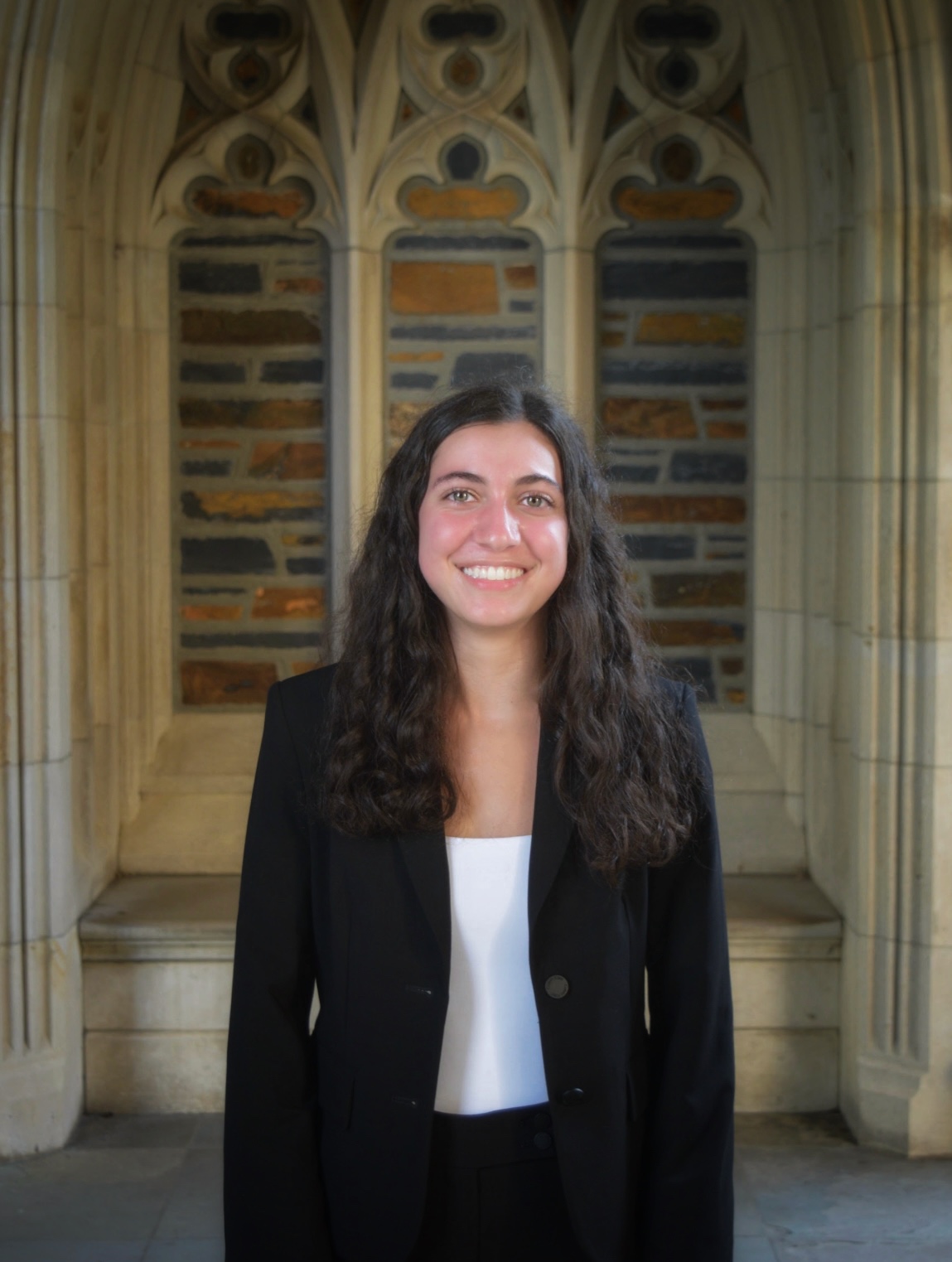
Question: What about your upcoming trip to Kenya are you most looking forward to?
Answer: I am most excited to meet the team in Kisumu and learn from the people directly involved in the project. After spending the past semester learning about and discussing this work, I am really looking forward to seeing it in practice and better understanding how it all comes together.
Q: What sparked your interest in global health?
A: I first became interested in global health during the fall semester of my freshman year when I took my first global health class at Duke. That course introduced me to the field, but more importantly, it challenged me to think about health as something shaped not only by biology and medicine, but also by broader social, economic, and structural forces. I became especially interested in the role that social determinants of health play in shaping access to prevention, treatment, and care, and in understanding why those opportunities can look so different across communities.
That interest deepened after I spent two months in Ghana through DukeEngage, where I was able to connect what I had been learning in the classroom to real-world experiences. Being there made it even clearer to me that health challenges do not exist in isolation but are closely tied to local context, infrastructure, education, environmental conditions, and the strength of health systems. That experience pushed me to think more seriously about what it means to design health interventions that are effective and also responsive to the realities and needs of the communities they are meant to serve.
Over time, I have become especially interested in global oncology because cancer care brings together many of the issues that first drew me to global health. Prevention and screening can save lives, but only when people are able to access them. Cancer prevention and treatment are shaped by many interconnected factors, including awareness, trust, affordability, transportation, trained providers, and reliable systems for follow-up care. I am especially interested in how research, medicine, and community-engaged work can come together to reduce disparities in cancer prevention and care.
Q: What do you hope to do after graduation?
A: I am an aspiring oncologist and clinician-scientist. After graduation, I hope to pursue Duke’s accelerated Master’s in Global Health program and then attend medical school. In the long term, I hope to build a career in global oncology that combines patient care, research, and community-engaged work to help address disparities in cancer prevention, screening, and treatment.
Q: What advice do you have for younger students interested in global health?
A: Be curious and take initiative! Global health is such an interdisciplinary field, and there is so much to learn by exploring different courses, research areas, and perspectives. I have grown a lot just by asking questions, seeking out opportunities, and learning from people whose work I admire. I would also encourage younger students to reach out to professors, mentors, and others in the
field. Those conversations can help you better understand the complexity of global health and the many different ways you can contribute to it. Duke also offers so many meaningful opportunities through classes, research, service, and immersive experiences that can help bring what you are learning to life.
Q: What are you involved in outside of your studies? Can you tell us more?
A: Outside of my studies, I spend much of my time involved in research, service, and student leadership at Duke. Through Bass Connections, I am part of a team studying disparities in HPV vaccination for head and neck cancer prevention, which has given me the opportunity to engage more deeply with questions of health equity, cancer prevention, and public health research.
I am also active in several student organizations, including The Backpack Project, Hearts for Hope, Harmonies for Health, and DukeLIFE. Through these experiences, I have been able to engage in community outreach, mentorship, and service while also building meaningful relationships with others on campus and in the broader Durham community. In addition, I volunteer with the Duke Benefits Enrollment Center and the Durham VA. Through the Benefits Enrollment Center, I help clients navigate insurance and benefits applications, and at the VA, I spend time engaging with veterans with dementia through supportive activities and conversation.
In my free time, I love playing the violin, especially through performances in nursing homes. I am also a huge Duke basketball fan and love tenting and going to games with my friends.
Q: Who inspires you and why?
A: As someone who hopes to pursue oncology, I find Dr. Jane Cooke Wright’s career especially inspiring. She was a pioneering oncologist whose work helped shape modern chemotherapy and transform cancer treatment. I admire both the impact of her research and the barriers she broke in medicine.
Q: What languages do you know?
A: I speak French! I started learning French in eighth grade, and I have had the opportunity to travel to France several times.
Q: Do you have a favorite quote or mantra that inspires you or guides you?
A: “Be the change that you wish to see in the world” – Gandhi